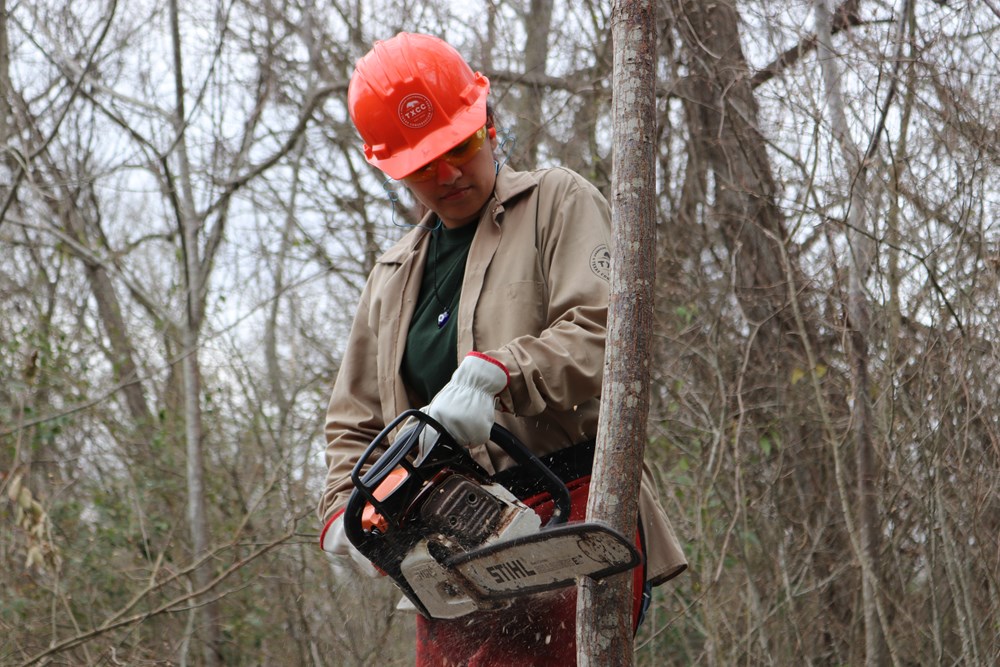
A high noise-reduction number on a package cannot tell you how well hearing protection fits your head, ears, glasses, and helmet. For chainsaw work, selection and fit need to work together with the rest of your protective equipment and communication plan.
Start with the saw's manual and an appropriate assessment of the noise exposure. This guide helps you ask better fit and compatibility questions; it cannot measure your exposure or certify that a particular protector is sufficient.
Separate the rating from your actual fit
A labeled rating describes performance under a stated test method. It does not prove that the same reduction reaches your ears when the protector is loosely fitted, damaged, or interrupted by other equipment.
NIOSH emphasizes individual fit testing to check whether hearing protectors provide the needed reduction. That is stronger evidence than choosing a package by the largest printed number alone.
Avoid subtracting a retail rating from a guessed chainsaw noise level and declaring the result safe. Real assessment requires the applicable method, actual exposure information, and correct fitting.

If you use a saw regularly at work, ask the employer or a qualified hearing-conservation professional about the appropriate assessment and fit-testing arrangements. A product review cannot replace that process.
Try the complete head-and-face setup
Wear the actual safety glasses, helmet, face protection, and hearing protectors together before operating equipment. Each item needs to retain its intended fit rather than simply coexist somewhere on your head.
NIOSH notes that earmuffs can interfere with other head-worn equipment, including some eyeglasses. The arms of your glasses, helmet components, hair, or clothing can affect how the pieces meet.
Do not modify a helmet or its earmuff mounts to make an unrelated component fit. Use the manufacturer's approved combination and adjustment instructions.
A forestry helmet sold as a system can simplify compatibility research, but the actual model and components still matter. Check the delivered package rather than assuming every accessory in an advertisement is included.
Evaluate earmuff seals and adjustment
Follow the earmuff maker's fitting method and inspect the cushions, headband or mounts, and moving parts. A cracked cushion or weak adjustment mechanism deserves the response specified by the manufacturer.
Position the cups as instructed so they fully enclose the ears and make the intended seal. Do not keep a cup tilted back for comfort while counting the product's full protection claim in your plan.

Swipe sideways to inspect the diagram, or focus it and use the arrow keys.
If the pressure feels intolerable, look for a suitable alternative that fits correctly. A protector you repeatedly remove during exposure is not a useful selection merely because its package carries an impressive number.
Try the setup over the kind of session and conditions you expect, while keeping powered equipment out of the fitting exercise. Heat, glasses pressure, and limited adjustment can become obvious before a running saw makes correction urgent.
Learn the fitting method for your earplugs
Different earplug designs have different insertion and care instructions. Follow the exact product method rather than assuming every plug can be pushed in the same way.
NIOSH identifies fit and cleanliness considerations with foam plugs, especially where dirty hands make insertion inconvenient. Choose a suitable product and maintain hygiene instead of improvising with contaminated fingers.
If you cannot achieve or maintain the intended fit, get help or choose an appropriate alternative. Repeatedly adjusting a plug while holding operating equipment creates another task competing for your attention.
Keep clean replacements and any required storage case available in the appropriate location. A single loose plug in a pocket of wood debris is not a dependable hearing-protection plan.
Think about protection and communication together
NIOSH cautions against both inadequate protection and unnecessary overprotection. Reducing sound too far can interfere with awareness and encourage people to remove protection to communicate.
The answer is an appropriate selection and communication plan, not leaving protection off so you can hear a shout. Arrange how work stops and how another person gains your attention from a safe location.
If you need communication equipment, confirm that its hearing-protection function and compatibility meet the relevant requirements. An ordinary music headset or consumer noise-canceling feature should not be assumed to provide the required occupational protection.
Discuss the actual working arrangement with a qualified adviser. Two people far apart on a large property have different communication needs from someone doing a controlled task with a helper outside the work area.
Do not assume a battery saw is quiet enough
A battery machine may sound different from a gas machine, but the chain, cutting task, and motor still contribute noise. Follow the exact saw's hearing-protection requirements rather than judging safety by comfort alone.
A noise source can be damaging without producing immediate pain. The absence of discomfort after a few cuts does not establish that your exposure was appropriate.
If you change saws, tasks, or work duration, review the protection choice. Familiar equipment can create a habit of assuming the old setup still answers a new exposure question.
Avoid phone-app readings as a replacement for a proper assessment where accuracy matters. They may help you notice that a question deserves attention, but they do not automatically validate your protector or exposure calculation.
Inspect and maintain the selected equipment
Use the maker's cleaning, replacement, and storage instructions for plugs, cushions, bands, and helmet-mounted components. Do not apply an unapproved chemical because it cleans the surface quickly.
Store equipment where it remains clean, dry, and protected from damage. A crowded case shared with sharp tools or leaking fluids can undermine a carefully selected protector.
Keep replacement parts specific to the exact model. A cushion that appears to fit does not necessarily preserve the original product's intended performance or compatibility.
Record recurring fit problems and component changes. If your glasses or helmet changes, revisit the combined fit instead of assuming hearing protection remains unaffected.
Know when to seek a professional answer
If you experience ringing, muffled hearing, pain, or another hearing concern after noise exposure, stop the exposure and seek appropriate medical advice. Sudden or severe hearing changes warrant prompt professional assessment.
Do not treat symptoms as a challenge to solve only by buying a higher-rated earmuff. The exposure, fit, and your hearing may each need attention.
For ongoing chainsaw use, a hearing-conservation professional can help connect exposure measurements, suitable protection, fit testing, and any recommended hearing checks. That provides an individualized basis a general article cannot supply.
Keep any professional recommendations with your equipment notes where they are available before the next task. Advice that stays in an old email is easy to overlook when the saw is already beside the wood.
Bring the exact glasses and helmet you normally wear when trying a different protector through a suitable retailer or adviser. A comfortable fit on a bare head can change when the real equipment is added, so evaluating a simplified setup can answer a different question from the one your work presents.
Record what caused an unsuccessful fit instead of only noting that the product felt wrong. A specific conflict at a glasses temple or helmet mount gives the next selection a useful starting point.
Make fit part of the pre-start routine
Before each session, inspect the protector, fit it with the rest of the required equipment, and confirm how communication will work. Correct any interference while the saw remains stopped and safely isolated.
If the fit fails or you cannot keep the protector correctly positioned, postpone the job until a suitable solution is available. The small size of a planned task does not remove the need to protect your hearing.
Do not rank comfort and protection as enemies. A suitable product needs both, because consistent correct use depends on a fit you can actually maintain.
The useful outcome is a verified, compatible setup matched to your actual exposure. The rating helps start that decision, while fit, maintenance, and appropriate professional assessment make it meaningful in practice.