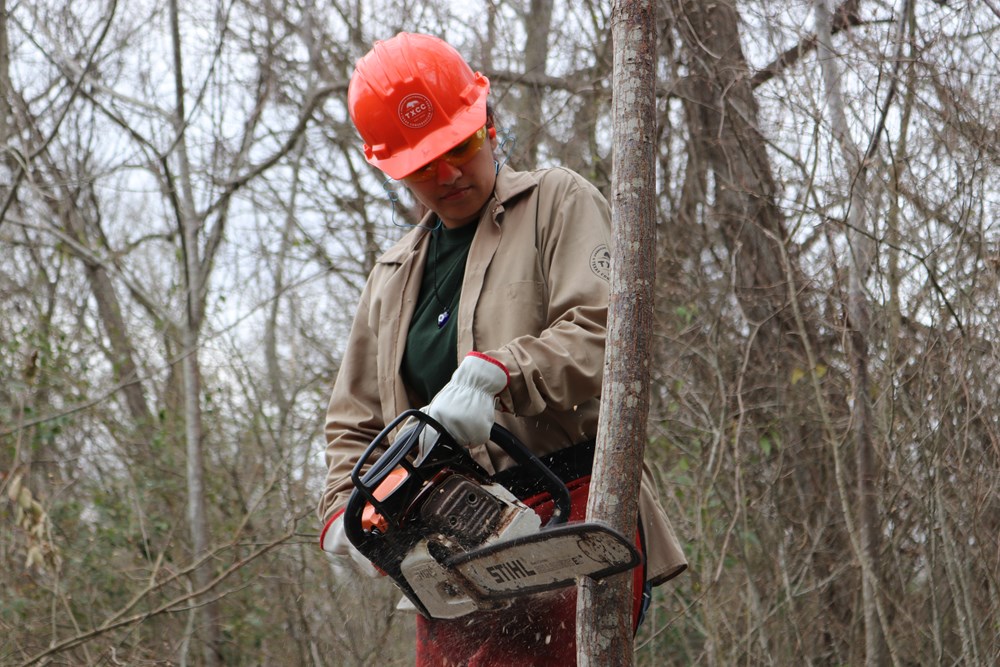
A forestry helmet system is useful only when the exact helmet, face protection, hearing protection, and your separate eye protection work together correctly. The word forestry does not make every assembly suitable for every chainsaw task or electrical hazard.
This research-based guide compares the Oregon 563474-21 yellow assembly and Husqvarna 592752601 slip-ratchet system. We have not tested impact resistance, sound attenuation on an individual wearer, comfort over a workday, or the condition of a delivered unit.
Start with the work, fit, and complete marking
Read the saw's PPE requirements and the instructions and marking for each component. A helmet rating, a visor claim, and an earmuff rating describe different parts of protection rather than one interchangeable safety score.
For ground-level homeowner work, fit and compatibility still need careful attention. Work involving overhead hazards, utilities, climbing, or storm damage can require qualified professional help regardless of the equipment you buy.
Do not choose a helmet as a way to expand the kind of tree work you are willing to attempt. The product cannot assess the scene or provide the practical competence missing from a written description.

If your task has workplace requirements, use the employer's qualified assessment and applicable rules. This shortlist does not certify a product or replace that process.
Oregon 563474-21: verify the specific revision

The inspected Amazon listing identifies model 563474-21 in yellow, with a mesh visor and earmuffs. It describes a six-point adjustable harness, ventilation openings, and a detachable sun peak.
Its stated helmet claim is ANSI Z89.1-2009 TypeI, ClassC. That is the retailer's claim for the specific listing, not our independent verification of the marking on the item you receive.
The manufacturer's accessible base 563474 page uses broader E/G/C wording, but we could not establish that those extra claims apply to the-21 revision. We therefore do not transfer the base page's additional electrical classifications or weight to this exact retail product.
Consider this assembly only after the actual marking and instructions meet your task's requirements and the complete system fits correctly. If electrical protection is part of the requirement, do not use a base-page description to work around the unresolved revision distinction.
This model is a less convenient choice when you need every current official claim matched to the exact revision before ordering. In that case, obtain written clarification or choose another fully identified approved system through a suitable dealer.
Husqvarna 592752601: slip-ratchet adjustment and identified components

Swipe sideways to inspect the diagram, or focus it and use the arrow keys.

Husqvarna's official page identifies 592752601 as the slip-ratchet Functional Forest Helmet configuration. Its listed assembly includes an HDPE shell, visor, earmuffs, and sun peak, with the neck guard purchased separately.
The manufacturer publishes an NRR 24 hearing-protection value for this configuration. That rating does not measure the reduction you personally achieve with the earmuffs fitted around your ears and other equipment.
Consider it when the exact component claims meet your requirements and the slip-ratchet arrangement fits you with your glasses and other required protection. Try the complete system rather than treating the adjustment mechanism's name as a guarantee of comfort.
Keep the model distinction visible at checkout:592752601 is not the wheel-ratchet 592752701 version or a multi-pack configuration. Similar product photographs can conceal a different package or adjustment system.
We excluded an implausible weight row on the official page rather than converting it into a specification. If weight or a missing component detail determines your purchase, ask the manufacturer or retailer for clarification before ordering.
A mesh visor does not finish eye protection
Check the saw and system instructions for the required separate glasses or goggles. Do not assume the mesh screen replaces suitable eye protection where both are specified.
Try the visor in its operating position while wearing your actual glasses, with the saw stopped and safely isolated. Inspect visibility, interference, and whether the other components retain their intended fit.
A screen raised for a briefing photograph is not an operating demonstration. Use the manufacturer's instructions for the task rather than copying the position of equipment in an unrelated scene.
If visibility is poor because of damage, contamination, fogging, or interference, resolve it before work. Lifting required protection during exposure is not a suitable way to make a disappointing purchase usable.
Hearing protection needs its own fit decision
Follow the earmuff instructions and confirm how the cushions meet your head with the actual helmet and glasses. An interrupted seal can undermine a comparison based only on a printed rating.
NIOSH recommends individual fit testing and considers compatibility and communication as part of selection. Keep that assessment separate from the convenience of buying several components in one retail box.
Arrange how another person will contact you from outside the work area before operating equipment. Do not solve communication problems by routinely lifting a cup during exposure or allowing a helper to approach unexpectedly.
For frequent or occupational use, obtain appropriate hearing-conservation advice and the required assessment. A product photograph cannot establish sufficient noise reduction for your exposure.
Inspect fit and condition before accepting the system
Read the helmet maker's instructions for shell, suspension, mounts, and accessory inspection. Check for damage and missing components rather than assuming a new box guarantees a serviceable assembly.
Follow the exact fitting method and replacement guidance. Do not drill the shell, improvise mounting adapters, or add padding that the maker has not approved to make an incompatible fit feel secure.
Keep the instructions and model identity for replacement parts. A different cushion, suspension, or visor that physically attaches does not automatically preserve the original system's intended claims.
If the helmet has suffered an impact or has an uncertain history, seek the maker's required response. A shell that looks acceptable in a quick glance should not overrule its inspection and retirement instructions.
Decide between them without inventing a winner
Choose the Husqvarna when its verified exact configuration, component information, and slip-ratchet fit meet your needs. Consider the Oregon only with the revision-specific marking and limitations understood, including the unresolved difference from the base manufacturer's page.
Do not rank one as safer because it has a more impressive color or a higher-looking collection of acronyms. You need the actual relevant claims, a serviceable product, proper fit, and a suitable task.
Choose neither if the complete system does not fit, a required claim remains unresolved, or the work belongs with a qualified professional. Buying another accessory does not necessarily repair a fundamental mismatch.
The same applies when an approved system you already own remains serviceable and meets the task. A new shortlist is not an instruction to replace equipment simply because a different product is available.
Keep the delivered component instructions together rather than discarding them once the helmet is assembled. Replacement cushions, suspension parts, and visors need their own exact compatibility, and a similar-looking accessory from another assembly should not be assumed to preserve the original claims.
If you cannot identify a replacement, contact the manufacturer with photographs of the actual model markings. That is a stronger basis for future maintenance than relying on a retail page whose options may change.
Confirm the delivered package and your next step
Check the full model number, selected variant, components, current seller, and return terms before purchase. On delivery, compare the actual marking and contents with the documentation you relied on.
The Amazon links are affiliate purchase links, and the site may earn from qualifying purchases. Recommendations remain conditional on the exact package and your ability to confirm fit and suitability.
Keep the system stored according to its instructions so shells, cushions, and visors avoid damage and contamination. Revisit the complete fit when your glasses, helmet components, or hearing protectors change.
A useful helmet choice is one you can identify, inspect, and wear correctly as part of the whole PPE plan. When you cannot establish that fit and scope, stop the purchase decision and resolve the missing information first.