Before you start a chainsaw, decide whether the work belongs in your hands at all. A clean cut through a supported log is a different job from removing a storm-damaged limb hanging over your driveway.
Use this checklist to organize a pre-start review, not to teach yourself tree felling or replace hands-on training. Your saw's operator manual supplies the model-specific starting method, maintenance instructions, required protection, and operating limits.
First ask what could move
Stand back and look at the whole scene before focusing on the piece you want to cut. A branch can be held under tension, a trunk can roll, and damaged material above you can fall without waiting for your saw to touch it.
Stop at downed utility lines, trees or limbs contacting lines, hanging branches, unstable trunks, and work that needs a ladder or climbing. Keep clear and contact the utility or a qualified tree professional as appropriate.
Do not use the fact that wood has already fallen as proof that it is safe to cut. A pile can contain pieces supporting other pieces, and removing the visible obstacle may release something much larger.
If you cannot explain where the wood will move, where you will stand, and how you will get clear, you have not finished the assessment. Choosing professional help is a completed decision, not a failed do-it-yourself project.
Match the task to your training
Be honest about what you have practiced under instruction. Online explanations can introduce terms, but they cannot check your grip, notice a changing tree, or correct the way you react when a saw begins to bind.
For unfamiliar work, arrange practical training before the job. Ask the instructor to cover the kind of saw and cutting task you actually intend to use rather than assuming a general demonstration transfers to every situation.
Do not let cleanup pressure turn into a deadline. A blocked corner of the yard can wait while you sort out the hazards, equipment, and competent help needed to clear it.
Make your own condition part of the assessment. Fatigue, distraction, alcohol, impairing medicines, and uncomfortable footing are reasons to delay or stop, even if the machine itself looks ready.
Lay out your protection before touching the starter
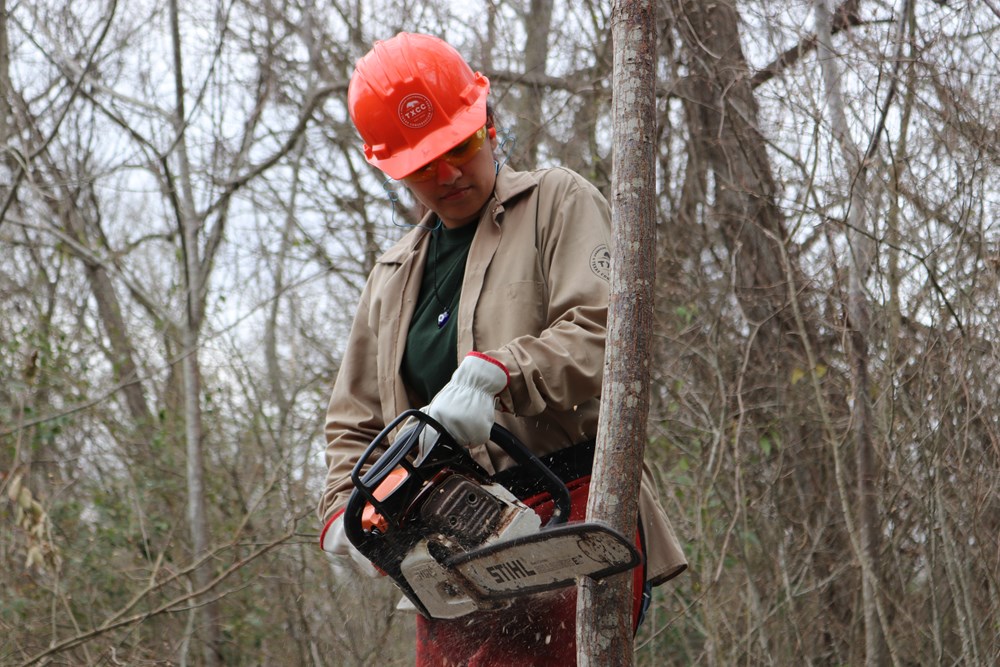
Use the protection specified for the task and saw, including suitable head, hearing, eye, hand, leg, and foot protection. Face protection does not automatically replace safety glasses where both are required.
Check the fit while you can move without holding a running machine. Secure loose straps, remove jewelry that can catch, and make sure clothing allows movement without dangling into the work.
Inspect chainsaw leg protection for damage and follow its label for sizing, cleaning, compatibility, and retirement. Ordinary work pants are not a substitute, and protective garments do not make contact with the moving chain safe.
Pay attention to your boots and the ground together. Even good tread cannot turn loose rolling branches, slick debris, or an unstable log pile into a reliable place to stand.
Identify the exact machine
Find the model designation and the correct manual, including any information for your bar, chain, battery, or other fitted components. A similar-looking saw may use a different tensioning system or starting sequence.
If the machine is borrowed, ask for its maintenance history and instruction materials. Do not treat a previous user's confidence as evidence that the chain brake, trigger lockout, or oiling system is working correctly.
Use only the manufacturer's approved bar-and-chain combinations and replacement parts. A longer bar or different chain that physically attaches is not automatically an approved or appropriate configuration.
Take the energy source out of the picture before maintenance: follow the manual's isolation procedure for fuel-powered, corded, or battery-powered equipment. A stopped chain and a safe-to-service saw are not the same thing.
Inspect the saw with the power safely isolated
Look over the handles, fasteners, guards, bar, chain, and visible body for damage or missing parts. A cracked handle or an improvised repair belongs on the stop list rather than the mental list of things to watch later.
Check chain condition, sharpness, and tension using the specific manual procedure. Do not borrow a universal gap measurement from another model, and do not check chain movement with an energized saw.
Verify the right bar-and-chain lubricant is present and follow the prescribed oiling check. Lubricant level alone cannot prove that oil reaches the chain during operation.
Test safety controls only by the method in the manual and within your training. If a control behaves unexpectedly, stop and have the machine assessed instead of bypassing it so you can finish one more cut.

Swipe sideways to inspect the diagram, or focus it and use the arrow keys.
Set up a work area you can keep clear
Move loose debris out of your footing and inspect the intended cut path for dirt, wire, nails, or other foreign material. Reclaimed lumber, fence lines, and old yard trees deserve particular caution because hidden metal may be present.
Keep bystanders, children, and animals outside the work area at the distances specified for your task. A helper should never hold the wood for you while you cut it with a chainsaw.
Arrange a way to summon help and make sure someone knows the location and plan. A phone buried in a vehicle beyond the work area is less useful than one you can actually reach after you stop.
Review your first-aid arrangements before starting and have suitable help available without placing anyone near the cutting zone. Knowing the street address or access point can save confusion if emergency responders are needed.
Fuel and start by the book
For a gasoline saw, use the specified fuel and an approved container, and keep ignition sources away. Shut the saw down and let it cool before refueling according to the manual.
Move to the designated safe starting place after fueling; OSHA's chainsaw safety guidance specifies at least ten feet from the fueling area. Use firm support and the manual's required body position with the chain brake engaged, rather than drop-starting the machine.
For a battery or corded saw, follow its own activation and starting instructions. Do not assume a quiet motor, a trigger that is not being pressed, or an installed battery means the chain cannot move unexpectedly.
Check that the bar and chain are clear of people and objects before startup. If you cannot maintain the specified position and control, stop and rearrange the setup rather than improvising while the engine is running.
Know the bar nose without testing it
The upper area near the bar tip is associated with kickback when it contacts an object. Keep track of the whole bar, including the section you cannot easily see on the far side of a log.
Training should cover kickback, pushback, pull-in, and how the wood's movement can pinch a chain. Reduced-kickback equipment and a brake reduce particular risks; they do not remove the need for control and correct technique.
Keep both hands on the intended handles during operation and stay within the reach and height limits in the manual. A branch just beyond comfortable reach is a reason to change the job plan, not extend yourself farther.
Give stopping clear triggers
Stop if your footing changes, somebody enters the area, the wood shifts unexpectedly, or you lose sight of the bar nose. Shut down and make the scene safe before investigating what changed.
Also stop for abnormal vibration, a damaged chain, smoke or heat that does not fit normal operation, or a control that fails its expected behavior. Do not keep cutting to diagnose a problem by feel.
Plan breaks before your hands and attention are tired. Leave enough time to inspect, clean, and store the saw safely rather than squeezing the last work into fading daylight.
Leave yourself a useful record
After the work, note problems, maintenance needs, and anything that made the task harder than expected. Keep a faulty machine out of service until the issue is properly resolved.
The goal of a pre-start checklist is a real decision every time. Sometimes that decision is to proceed within your training, sometimes to fix the setup, and sometimes to put the saw away and call someone else.