Choosing the right wood cutting axe involves balancing power, control, and comfort. The following selections focus on reliable steel blades, durable handles, and designs optimized for medium to large logs, branches, and kindling. Each option aims to deliver efficient splits, reduced vibration, and lasting performance whether you’re building a fire, camping, or tackling yard cleanup.
| Product | Brand |
|---|---|
| Fiskars X25 Splitting Axe, 28″ | Fiskars |
| INTERTOOL 36 Inch Chopping Axe HT-0264 | INTERTOOL |
| ESTWING Fireside Friend Axe, 14″ | Estwing |
| Fiskars X15 Splitting Axe, 23.5″ | Fiskars |
| INTERTOOL 36-Inch Wood Splitting Maul HT-0275 | INTERTOOL |
Introduction: In this guide, five top picks emphasize balance, shock reduction, and long-term durability. Each product is evaluated for efficiency in firewood splitting, ease of use for beginners and seasoned users alike, and practical features such as protective sheaths and non-slip grips. The following sections provide a deeper look at each axe, followed by a buying guide to help you compare options based on length, weight, and intended use.
Fiskars X25 Splitting Axe

The Fiskars X25 is designed for medium to large logs with a high-power, precision blade geometry. Its advanced bevel convex blade enhances splitting efficiency with fewer passes, making it a strong choice for firewood prep and yard work. The axe emphasizes balance and a favorable power-to-weight ratio to speed up swings, which helps deliver effective chops even when logs resist. The handle is engineered to reduce fatigue and improve control, supporting longer sessions without overwhelming the user.
INTERTOOL 36 Inch Chopping Axe HT-0264

This 36-inch model from INTERTOOL pairs a long, leverage-friendly fiberglass handle with a 2.8-pound carbon steel head. The extended handle length delivers increased swing speed and power to help cut through larger rounds efficiently. The design prioritizes balance between head and handle for confident control, with a protective coating that resists rust and corrosion. The shock-absorbing grip minimizes vibration, reducing fatigue during extended use in variable conditions.
ESTWING Fireside Friend Axe

ESTWING’s Fireside Friend is a compact, one-handed maul designed for light to moderate splitting tasks. Forged in one piece for durability, it emphasizes a robust construction intended for reliable performance when preparing firewood or splitting smaller rounds. A heavy-duty sheath helps protect the edge between uses, while the overall lightweight design supports easy maneuverability for shorter, controlled chops around the campsite or yard.
Fiskars X15 Splitting Axe

The Fiskars X15 balances efficient splitting with a compact design. Its multi-use capability includes a sharp blade suited for wood splitting and general yard tasks. The PermaHead design ensures the blade is securely integrated with the handle, eliminating the risk of separation during use. The X15’s balanced weight and geometry support quick, precise swings, making it a practical option for smaller to medium logs and kindling preparation from a stationary position or in tight spaces.
INTERTOOL HT-0275 36-Inch Wood Splitting Maul
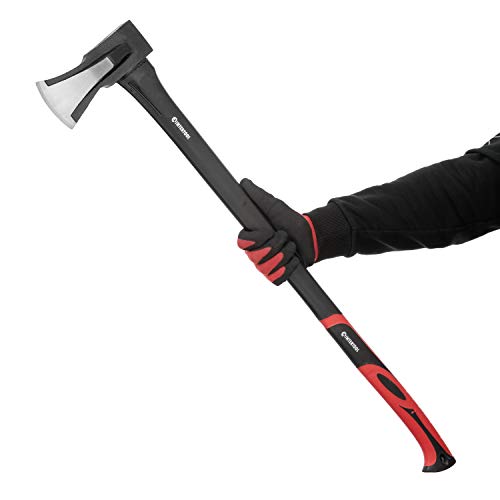
This 36-inch maul from INTERTOOL is built for heavy-duty firewood tasks, featuring a convex grind head designed to deliver maximum power in a single strike. The head is paired with a rust-resistant, heat-treated carbon steel blade and a shock-absorbing fiberglass handle. The long handle provides leverage for larger rounds, while the textured grip helps maintain control in diverse weather conditions. A protective blade sheath is included for safe storage between uses.
Buying Guide: Key Purchase Considerations
When selecting a wood cutting axe, several factors influence performance and comfort. Consider the following perspectives to tailor your choice to your needs.
- Head weight and size: Heavier heads (3–4 pounds) provide more splitting power on tough rounds, but require greater control and strength. Lighter heads are easier for beginners and reduce fatigue in longer sessions.
- Length and leverage: Longer handles increase leverage, aiding in powerful swings, especially for large logs. Shorter handles offer better maneuverability in tight spaces and for lighter tasks.
- Blade geometry and edge retention: Convex blades and sharp edge designs reduce the need for frequent resharpening and improve penetration. Materials like high-carbon steel balance edge retention with toughness.
- Handle material and shock reduction: Fiberglass and composite handles dampen vibration, reducing arm and wrist fatigue. Hickory handles (natural wood) provide classic feel and strength but may transmit more impact.
- Balance and comfort: A well-balanced axe reduces twisting forces in the user’s hands. Look for models with comfortable grips and well-integrated head-to-handle connections to minimize wobble.
- Durability and maintenance: Forged or drop-forged steel is typically durable; protective coatings prevent rust. Protective sheaths help maintain the edge and improve safety during storage and transport.
- Intended use: For camping and light firewood, compact axes may suffice, while heavy-duty splitting or felling tasks benefit from larger mauls and longer handles.
Performance comparisons among the listed models show a spectrum from compact, one-handed options suitable for kindling and campsite duties to long-handle, heavy-duty mauls designed for large rounds. For users prioritizing reduced vibration and extended use, models with fiberglass handles and shock-reduction grips stand out. Users seeking classic durability and one-piece construction may gravitate toward forged steel axes with hardy hickory handles. Always prioritize a secure head-to-handle fit and a protective sheath for safe handling and storage.