Finding the right tool to measure baseboard angles ensures clean corners and accurate cuts in trim work, molding, and carpentry projects. The following selections cover digital and manual approaches, including miter protractors, contour gauges, and combo measuring tools. Each option emphasizes accuracy, ease of use, and durability for American workshops. Use this guide to compare how these tools handle inside and outside corners, crown molding, and baseboard transitions, so you can pick the best match for your project needs.
| Product | Key Feature |
|---|---|
| 2-in-1 Mitre Measuring Cutting Tool – AUSTUFF | Measures and cuts with two moving arms from 85° to 180° |
| Saker Miter Saw Protractor – Saker | Laser-accurate inside/outside reading with “O” body design |
| JOREST Contour Gauge (10+5 Inch) – Jorest | Modular sizes up to 15 inches; includes locking and dual scales |
| Tirpheety Digital Angle Finder Protractor – Tirpheety | 360° range with large LCD and ±0.3° accuracy |
| TBVHOMM Digital Angle Finder Protractor – TBVHOMM | Dual ruler and digital protractor with hold and reverse-reading |
| LUVRD Miter Saw Protractor – LUVRD | Accurate inside/outside angles with durable ABS body |
Whether you’re aligning baseboards for a retrofit, fitting crown molding, or planning new trim around doors, these tools help translate angles from the wall to the saw. The following sections highlight five top choices, detailing how they work, what makes them reliable, and how they address common baseboard challenges in home improvement projects.
2-in-1 Mitre Measuring Cutting Tool – AUSTUFF
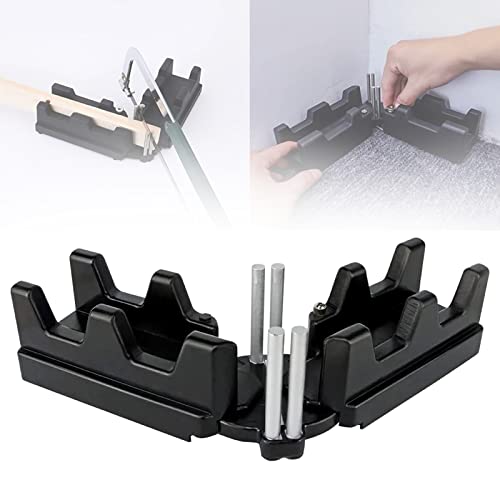
This 2-in-1 tool combines angle measurement with cutting actions, reducing the need to switch between devices when working on baseboards and trim. It uses ABS, PC, and stainless steel construction for durability and corrosion resistance, making it suitable for long-term shop use. The two moving arms measure angles from 85° to 180°, allowing direct reading for a full range of common baseboard corners. By transferring the exact angle to the saw and completing the cut in one step, it minimizes errors often introduced by multiple tools.
Saker Miter Saw Protractor – Saker

The Saker Miter Saw Protractor features precision laser-engraved scales for direct angle reading on the miter saw. Its aluminum alloy construction offers corrosion and wear resistance, making it a sturdy choice for frequent trim work and crown molding. The “O” body design supports smooth readings on inside and outside corners, helping ensure flawless baseboard transitions. Compact and easy to carry, it suits professional jobsites and DIY projects alike without sacrificing accuracy.
JOREST Contour Gauge (10+5 Inch) – Jorest

This contour gauge offers modular sizing by splicing 5-inch and 10-inch gauges to achieve 15 inches, a practical range for baseboard profiling around corners and irregular shapes. Its dual-scale measurements in inches and centimeters support quick documentation of angle profiles, while a precise blade and tightness-adjustable pins help maintain consistent traces on complex profiles. The included lock and alignment features reduce drift during transfers, which is valuable for seamless baseboard outlines and templating across different wall contours.
Tirpheety Digital Angle Finder Protractor – Tirpheety

Designed for accuracy and visibility, this digital angle finder provides a full 0–360° range with a large LCD display and ±0.3° precision. It’s useful for wood projects requiring precise inside and outside angles, including baseboards, crown molding, and framing. The robust ABS housing protects the electronics, while easy-to-use hold and reverse-reading features support measurements from complex angles. It integrates seamlessly into digital workflow when documenting cut angles for repeat jobs or multi-room installations.
Digital Angle Finder Protractor – TBVHOMM
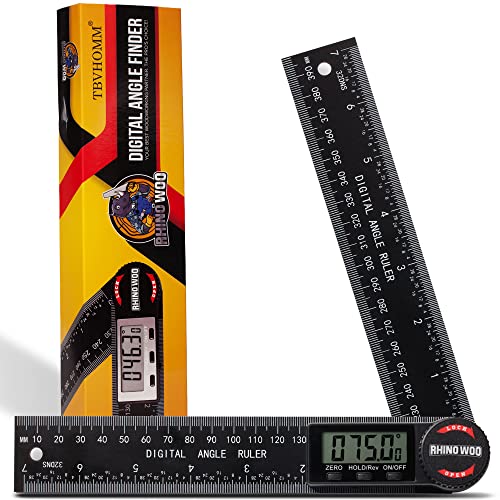
This tool combines a ruler with a digital protractor, offering measurements in millimeters and inches and a wide 0–999.9° range. It includes a locking knob to hold angles steady, and a hold function to preserve readings when large or reverse measurements are needed. Its dual-display capability and reset options support both rapid checks and detailed planning for baseboard layouts, especially in rooms with non-standard angles or architectural details.
Miter Saw Protractor – LUVRD

The LUVRD miter saw protractor emphasizes precise measurements for inside and outside corners, helping to trim crown molding or baseboard with consistent angles. Built from durable ABS, it resists scratches and daily wear, serving as a reliable alternative to heavier or more fragile tools. The device aims to minimize guesswork when transferring angles to the saw, supporting accurate trimming and repeatable cuts across multiple rooms or projects.
Buying Guide
Key purchase considerations for baseboard angle tools include accuracy, ease of use, and durability. For manual gauges like contour gauges and protractors, look for:
– Measurement range: Ensure it covers common interior and exterior corners (roughly 0–180° for most baseboard work, with full 360° capability beneficial for complex profiles).
– Readability: Clear scales, laser-engraved markings, or large LCD displays improve quick reads on the job site.
– Locking mechanisms: A secure lock prevents drift while transferring measurements to the saw.
– Build quality: Materials such as aluminum, ABS, and stainless components support longevity in a workshop or job site.
– Compatibility: Some tools pair with saws or guide plates for direct cutting alignment, reducing steps and miscuts.
For digital tools, consider:
– Battery life and power source: Batteries should be easy to replace and last through several projects.
– Hold and upside-reading features: Useful for large or reverse measurements, especially in tight spaces.
– Data retention: The ability to recall or zero at a reference angle can simplify multi-room or repeated installations.
From a value perspective, hybrid tools offering both measurement and cutting guidance can save time and reduce tool clutter. For baseboard work, prioritize tools that translate angle data directly to the saw during cutting to minimize transfer errors and ensure clean, accurate joints. Compare based on whether you frequently work in renovated spaces with irregular walls or standardized rooms, as well as whether you need portable options for on-site use or a more robust shop setup.