Choosing the right cutter for thick rubber and other dense materials requires evaluating blade design, durability, and versatility. The following selections emphasize industrial-grade power, replaceable blades, and ergonomic handling to help you complete tough cuts with confidence.
Summary of chosen products:
| Product | Brand | Best For | Key Feature |
|---|---|---|---|
| Ronan Multi-Cut Industrial Cutter | Ronan | Thick plastics, rubber, wood, leather | Replaceable blades; offset pivot for power |
| Ronan Multi-Cut 401 Cutting Tool | Ronan | Thick, dense materials; DIY and industrial | Flat anvil, large 4″ blade; rust-resistant |
| RONAN Multi-Cut Quick Change Utility Cutter | Ronan | Carpet, vinyl, leather, rubber | Razor-sharp blade; quick-change |
| Goldblatt Roofing & Flooring Knife | Goldblatt | Linoleum, carpet, vinyl, wallpaper | Dual honed edge; heavy-duty stainless steel |
| SEESII Reciprocating Saw Cordless | Seesii | Wood, PVC, flexible materials | Brushless motor; 2×4.0Ah batteries; 8 blades |
Ronan Multi-Cut Industrial Cutter

Industrial-Grade Cutting Power is the centerpiece of this tool. Its blade-to-anvil action and offset pivot deliver strong cutting leverage for thick rubber, plastic, wood, and leather. The design aims to keep material splintering and fraying to a minimum, producing clean cuts across dense substances. The tool ships with three extra blades stored in the handle, extending blade life and reducing downtime. A safety lock and ergonomic grip help maintain control during demanding cuts.
Ronan Multi-Cut 401 Cutting Tool
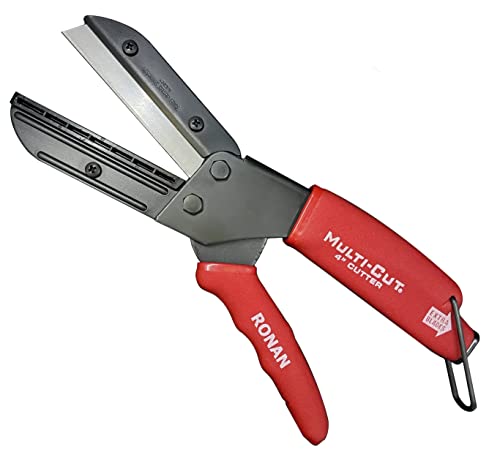
The Multi-Cut 401 uses a distinct mechanism where the razor-sharp 4-inch blade meets a flat anvil from an offset pivot. This setup is designed to cut thick, rigid, and dense materials, including various plastics, linoleum, rope, leather, and dense woods. The high-impact plastic anvil minimizes splintering and corrosion risk, while the steel blades offer long life—about 18 months—with three extra replacement blades included for quick swaps.
RONAN Multi-Cut Quick Change Utility Cutter

This versatile cutter emphasizes speed and adaptability. Its ultra-sharp blade handles a range of materials, including leather, plastic, rope, rubber, and soft trims like linoleum. It supports PEX/plastic tubing, wood dowels, and light pruning. It is not intended for very thick metal or overly hard substances, so users should match material density to the blade’s capability for optimal results.
C.JET TOOL 10″ Heavy Duty Scissors

These heavy-duty scissors deliver effortless precision with a stainless steel blade and curved-blade design. They are suitable for cutting cardboard, leather, pruning, and gardening tasks while maintaining a comfortable grip. The wide-angle design helps keep fingers away from the cutting zone, improving safety and control during use. They’re not specialized for ultra-dense rubber, but they provide efficient performance for mixed-material tasks.
Goldblatt Stainless Steel Roofing & Flooring Knife
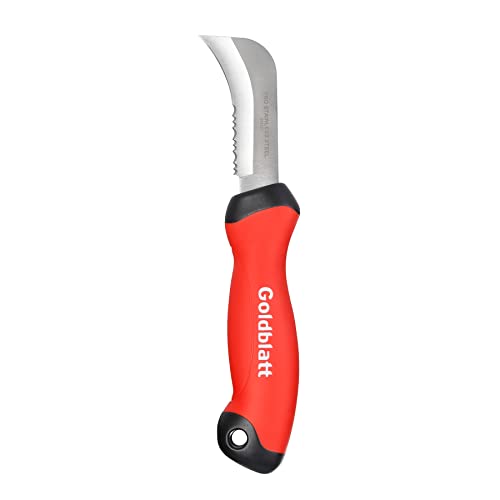
This linoleum knife is designed to cut through flexible materials like linoleum, wallpaper, carpet, vinyl, and turf. The serrated and dual-honed edge provides smooth, precise cuts with reduced binding. A heavy-duty stainless steel blade with a high hardness rating minimizes the need for frequent sharpening. The knife’s shape supports extended control over long, straight cuts, common in flooring and roofing tasks.
SEESII Reciprocating Saw Cordless

This cordless reciprocating saw emphasizes extension-friendly power with a brushless motor, 3500 RPM, and 15mm stroke length. Included 2 x 4.0Ah batteries and 8 blades cover a broad array of materials, including wood, PVC, and light structural tasks. The tool-free blade change adds convenience for switching tasks quickly, and a lightweight design supports one-handed use for longer sessions.
Buying Guide
When selecting a cutting tool for thick rubber and similar materials, consider these factors:
- Blade design and material compatibility: Look for replaceable, high-hardness blades rated for rubber, plastics, and dense composites. An offset pivot and anvil can improve cutting leverage for thick materials.
- Cutting action and control: Tools with a flat anvil, blade-to-anvil action, or a curved blade offer cleaner cuts on dense substrates. Safety locks and ergonomic grips reduce fatigue and improve control.
- Power source and motor: Corded cutters deliver continuous power; cordless options offer mobility. For frequent heavy cuts, brushless motors tend to last longer and deliver steadier performance.
- Blade life and maintenance: Long blade life reduces downtime. Models often include extra blades—verify how easily blades swap and whether maintenance tools are included.
- Versatility: A single tool that safely handles rubber, foam, carpet, and wood can lower total cost of ownership. Pay attention to material-specific cautions (e.g., not for very hard metals).
- Safety features: Safety locks, guards, and non-slip grips are essential for controlling kickback and accidental contact during aggressive cuts.
- Ergonomics and weight: Lighter, well-balanced tools reduce user fatigue. For extended projects, weight distribution and handle design matter for precise cuts.
- Brand and support: Reputable brands often provide blade replacements, accessories, and customer support, which helps maintenance and long-term reliability.
Overview conclusions assume typical use cases: for ultra-dense rubber or multi-material work, tools with replaceable industrial blades and robust pivot mechanisms tend to perform best. For mixed-light to mid-duty tasks, versatile utility cutters and multitool blades offer practical value. Always match the tool’s capability with the expected material hardness and cut length to maximize efficiency and safety.