Choosing the right crown molding cutting tool can simplify complex angles and improve results on trim projects. This guide highlights five top crown molding jigs and cutting aids, each designed to help with precise angles, repeatable results, and easy setup on common miter saws. The selections emphasize universal fit, built-in protractors or setup guides, and rigidity to reduce miscuts and material waste. Whether you’re a DIYer tackling a small room or a professional finishing a long run, these tools cover the most practical options for crown molding cuts.
Summary of selected products:
| Product | Brand | Key Benefit | Angle Flexibility |
|---|---|---|---|
| Cut Crown Molding Cutting Jig | Bench Dog | Universal fit, adjustable fence risers | Up to 6″ crown, adjustable angles |
| Crown-Pro Crown Molding Tool | Kreg | Eliminates guesswork, reliable base | 30°–60° spring base |
| Crown45 Jig | Milescraft | Three common angles, simple setup | 38°, 45°, 52° |
| 2-in-1 Crown Molding Jig & Protractor | AltitudeCraft | Math-free protractor, precise stops | Fixed spring angles with concrete stops |
| Crown King Molding Cutting Jig | General Tools | Four easy steps, professional joints | Up to standard crown angles |
Bench Dog Cut Crown Molding Cutting Jig
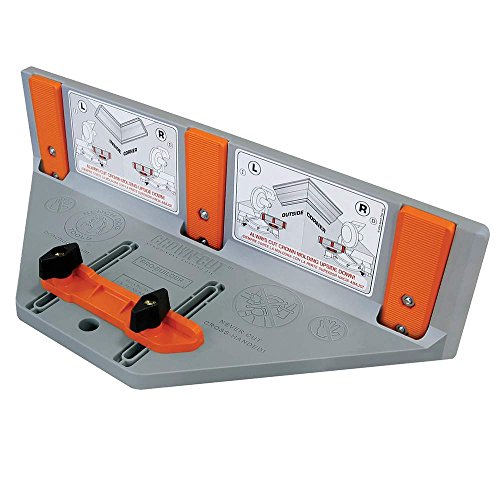
The Bench Dog crown molding jig is designed for universal compatibility with 10″ and larger miter saws, including sliding models. It features adjustable fence risers to hold crown or cove molding up to 6″ wide at the desired angle, helping to achieve accurate cuts with less setup time. A built-in setup guide reduces miscuts, making it suitable for both beginners and seasoned woodworkers. The tool emphasizes effortless precision for consistent miters on crown projects.
Kreg KMA2800 Crown-Pro Crown Molding Tool

The Kreg Crown-Pro tool aims to remove guesswork from crown molding cuts. It offers a spring-based angle range from 30° to 60° and is compatible with 10- and 12-inch miter saws. This tool focuses on eliminating compound-angle cuts and supports molding up to 5 1/2 inches wide. Its design centers on achieving clean coves and corners with predictable, repeatable results across a variety of common crown profiles.
Milescraft 1405 Crown45 Jig

The Milescraft Crown45 jig is built around three common crown angles: 38°, 45°, and 52°. It’s designed to cut crown molding in the same orientation as it’s mounted on the saw, which simplifies setup and improves consistency. The jig supports crown molding sizes from 2″ to 5 1/2″, making it a versatile option for standard to medium-width profiles. The three-angle system provides a straightforward path to precise results for most residential trim projects.
AltitudeCraft 2-in-1 Crown Molding Jig & Protractor Set

AltitudeCraft combines a protractor with precision stops to remove math and guesswork from corner joints. The aluminum protractor provides exact settings for common joints, while the heavy-duty stops lock the crown upside down or backwards at the chosen spring angle. This setup aims for repeatable 45° cuts and tight joints across longer runs, with compatibility across popular DEWALT miter saws for quick, stable setup and accurate trim work.
General Tools Crown King Molding Cutting Jig #881
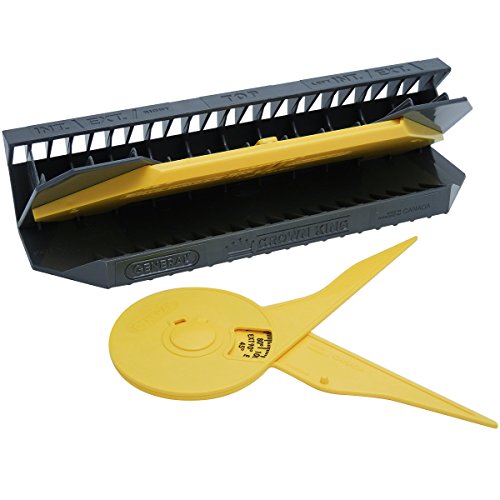
The Crown King Molding Cutting Jig from General Tools offers a straightforward four-step process to achieve perfectly mitered joints. It’s designed to reduce trial and error and supports professional-grade joints for interior and exterior corners. The kit emphasizes ease of use and efficiency, helping users produce accurate crown cuts with minimal setup time, making it a solid option for typical home trim projects.
Buying Guide: Key Purchase Considerations
- Compatibility: Check whether the jig fits your miter saw size (10″, 12″, or larger) and whether your saw is fixed or sliding. Some jigs are optimized for specific ranges, while others advertise universal compatibility.
- Angle Flexibility: Consider the crown profile you commonly work with. Tools offering adjustable springs or preset angles (38°, 45°, 52°, 30°–60°) cover most residential crown profiles and baseboard trims.
- Setup and Repeatability: Look for built-in setup guides, protractors, or locking stops. Tools that lock angles and provide clear references reduce miscuts and waste on long runs.
- Material and Build: Aluminum or steel constructions provide rigidity during cuts. Heavier, sturdier jig builds generally deliver consistent results, especially on larger jobs.
- Ease of Use: For DIYers, simpler 2–3 angle setups with intuitive instructions can save time. Professionals may prioritize repeatable performance on multiple rooms and runs.
- Accessories: Some kits include protractors, stops, or extra supports. Consider whether you need these extras to complete your trim project efficiently.
- Maintenance: Check for replaceable parts (blades, stops, or risers) and ease of replacement to extend tool life between jobs.
In evaluating these tools, users generally weigh universal compatibility against the precision offered by built-in guides and stops. For short runs or occasional projects, a simpler jig with preset angles may be sufficient. For longer installations or more complex molding profiles, a protractor-based system or heavy-duty stops can reduce material waste and improve uniformity across all joints.