When selecting a tile cutting saw, versatility, cutting depth, and water control matter most. The following picks cover compact handheld models to robust benchtop configurations, emphasizing reliability, dust control, and accuracy for both DIY projects and professional installations. Use this guide to compare features like cutting depth, rust resistance, and angle adjustment to choose the right saw for your tile type and workspace.
| Product | Brand | Key Feature |
|---|---|---|
| SKIL 7-Inch Wet Tile Saw – 3540-02 | Skil | Corrosive resistant stainless steel top; adjustable rip fence; blade cooling reservoir |
| Skil 3550-02 7-Inch Wet Tile Saw | Skil | HydroLock water containment; supports up to 18 x 18 inches; aluminum table |
| DEWALT Wet Tile Saw, Masonry, 4-3/8-Inch (DWC860W) | DEWALT | 10.8A motor; cuts stone and ceramic; compact and lightweight |
| DEWALT Wet Tile Saw with Stand, 10 Inch (D36000S) | DEWALT | Cutline indicator; rigid frame; large rip capacity |
| PORTER-CABLE Tile Saw, Wet Saw (PCE980) | Porter-Cable | Onboard miter square; roll cage; splash guard |
SKIL 7-Inch Wet Tile Saw – 3540-02

The SKIL 7-Inch Wet Tile Saw offers a durable stainless steel top designed to resist corrosion while supporting ceramic and stone tiles up to 12 x 12 inches. Its adjustable rip fence and built-in miter gauge enable precise straight and miter cuts for diagonal layouts. A blade cooling water reservoir reduces heat buildup and minimizes dust and debris, helping to extend blade life and improve cut quality. The compact footprint suits small workspaces, making it a practical option for DIY kitchens or bathrooms.
Skil 3550-02 7-Inch Wet Tile Saw
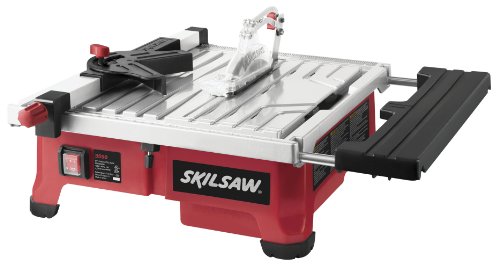
The Skil 3550-02 features the HydroLock water containment system to keep water near the blade and reduce cleanup time. Its sliding side extension supports tiles up to 18 x 18 inches, and the aluminum table top provides a durable, rust-resistant surface. This model balances portability with a generous cutting surface, making it suitable for mid-size tile installs and detailed bathroom projects.
DEWALT Wet Tile Saw, Masonry, 4-3/8-Inch (DWC860W)

This DEWALT model delivers strong cutting power with a 10.8 amp motor (1,300 watts), enabling efficient cuts through granite, porcelain, concrete, and other stone materials. It is lightweight at about 6.6 pounds, emphasizing portability for on-site work. The premium 4-3/8″ diamond blade supports ceramic and stone materials up to 1 3/8 inch deep when wet or dry, making it versatile for quick tile repairs or smaller installations.
DEWALT Wet Tile Saw with Stand (D36000S)

DEWALT’s D36000S pairs a 10-inch wet tile saw with a sturdy stand and integrated features for larger projects. It boasts cutline indicators, a rigid frame, and stainless-steel rollers for consistent accuracy over long cuts. With a 37-inch rip capacity (41 inches with plunge) and 18 inches of left-side clearance, it can handle sizable tiles and large-format sheets, making it ideal for bathroom remodels and kitchen floor tiling tasks.
PORTER-CABLE Tile Saw (PCE980)

The PCE980 from Porter-Cable includes an onboard miter square to help align miter cuts and repeatable rip cuts, along with a roll cage for easy transport and added protection of the cutting cart. A splash guard helps prevent water spray, keeping the work area cleaner and reducing slips on the job site. This model is suitable for both occasional DIY tasks and more frequent tile installations in compact spaces.
Buying Guide: Key Considerations For Choosing A Tile Saw
- Cutting capacity and depth: Determine the maximum tile size you will work with and whether you need full-depth cuts at 1/2 inch, 3/4 inch, or more for stone tiles.
- Water management: Look for a built-in water reservoir or hydro-lock system to minimize dust, blade wear, and cleanup time on site.
- Table quality and alignment: A rust-resistant, stable table with an accurate rip fence and miter gauge improves precision for straight and angled cuts.
- Weight and portability: Heavier benchtop saws offer stability; lighter models with stands or wheels facilitate transport to jobsites.
- Power and motor: Higher amperage motors provide faster, cleaner cuts through dense materials like porcelain and stone; consider whether dry or wet cutting is preferred for the project.
- Angle versatility: A bevel or 0–45 degree miter range expands the ability to create corner cuts and skirting joints without re-cutting.
- Durability and armor: Stainless steel components and rust-resistant surfaces extend equipment lifespan, especially in wet environments.
- Portability vs. capability: Balance the need for onsite mobility with the tile sizes you routinely handle; compact units excel in tight spaces, while larger saws handle bigger tiles.
- Maintenance support: Availability of replacement blades, guides, and service options can reduce downtime during projects.
- Safety features: Look for blade guards, splash guards, and clear safety guidelines to minimize risk during cutting tasks.