When precision, finish quality, and material efficiency matter, a thin kerf table saw blade can make the difference. This guide highlights five top options designed for fine finish work, smooth crosscuts, and efficient ripping. Each blade is chosen for its balance of kerf width, tooth design, and durability, making them suitable for hobby shops and professional setups alike. Best for woodworkers seeking clean edges and reduced waste, with clear reasons to choose each product based on cutting needs.
| Product | Best For | Why It Stands Out |
|---|---|---|
| FOXBC 10 Inch Fine Finish Crosscut Blade | Fine finish crosscuts | 60 teeth, ATB grind, thin kerf for smooth, minimal tear-out |
| Freud LU83R010 Industrial 10-in 50T | General-purpose crosscut and precision cuts | TiCo carbide, anti-stick coating, vibration reduction |
| CMT 256.050.10 Combination Blade | Versatile crosscut and rip | ATB geometry with 15° peak cutting performance |
| Freud LM75R010 Glue Line Rip Blade | Ripping with stable performance | Thin kerf, heavy-duty plate, TiCo carbide |
| Diablo D1060X Fine Finish Blade | Ultra-smooth finish cuts | Hi-ATB geometry with shock-resistant carbide tips |
FOXBC 10 Inch Fine Finish Crosscut Blade

Colorful, precise cuts define this FOXBC blade. The 10″ blade features 60 teeth and a 5/8″ arbor, delivering a fine finish across crosscuts. The kerf measures 0.087″, reducing waste and easing feed without sacrificing stability. The ATB (Alternate Top Bevel) tooth geometry helps produce clean, crisp edges on hardwood and softwood alike. This blade is best for buyers prioritizing a high-quality finish and low noise in a standard Miter Saw or Table Saw setup.
Best for: hobbyists and professionals needing smooth crosscuts with a premium finish. It’s a strong pick for cabinetry, trim work, and finish carpentry where edge quality matters most. The high-density tungsten carbide increases durability, helping extend blade life under routine use. A potential limitation is that the 0.087″ kerf, while thinner than standard blades, may remove more material on very thick stock compared with full-kerf blades.
Freud LU83R010 Industrial 10-in 50T
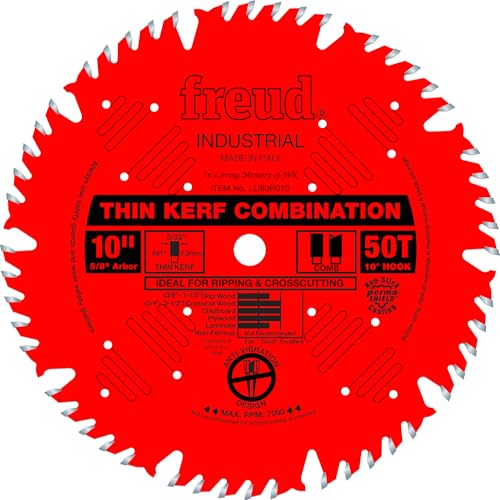
This Freud blade blends versatility with performance. The 50-teeth configuration suits crosscutting and combination tasks, supported by TiCo high-density carbide for toughness. The non-stick Perma Shield coating helps resist gumming during cuts, and the anti-vibration design reduces chatter, facilitating smoother finishes. The result is reliable, predictable results across a range of lumber types.
Best for: woodworkers who need a reliable crosscut blade that also handles light ripping without swapping tools. The trade-off is that 50 teeth may not yield the absolute finest finish on intricate joinery; for the smoothest crosscuts, consider dedicated fine-finish blades when the project calls for ultra-clean edges.
CMT Orange Tools 256.050.10 Combination Blade

The CMT blade provides a practical all-around option with its combination design. The 10″ blade suits soft and hardwoods and plywood, with a 5/8″ arbor. The text describes softwood, hardwood, and plywood suitability, signaling versatility for workshop setups where a single blade handles multiple tasks. Its ATB geometry supports cleaner crosscuts, though some users might still prefer dedicated ripping or finishing blades for extreme tasks.
Best for: buyers seeking a budget-conscious, mid-range option for mixed tasks. Choose this if you frequently switch between materials and want a blade that covers primary crosscut and plywood cuts without specialized tools. Limitation: ATB performance may not match high-end finish blades on very demanding joinery.
Freud LM75R010 Glue Line Rip Blade
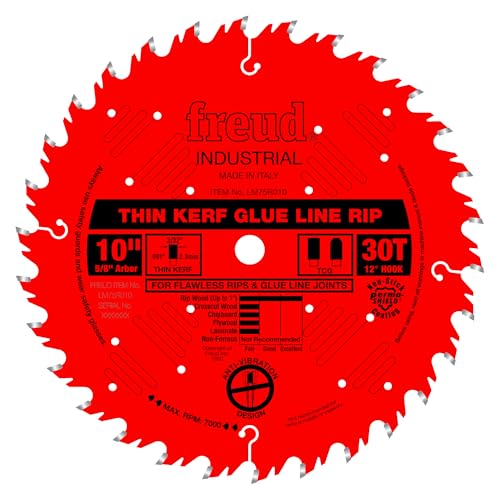
This Freud blade is designed for ripping with precision, featuring a robust 0.071″ plate and a 0.091″ kerf. The heavy-duty thick kerf and plate help maintain stability during long rips, while the TiCo HI-density carbide blend provides durability. The 5/8″ arbor aligns with standard saws, and the 10″ diameter fits many shop tables and miter saws. The blade’s glue-line rip focus supports longer, straighter cuts in plywood and solid stock alike.
Best for: users who need stable ripping performance with a focus on flat, consistent cuts over longer runs. The trade-off is a thicker kerf compared to ultra-fine blades, which may remove more material on light stock and reduce overall yield in sheet goods.
FOXBC 10-Inch Flat Tooth Ripping Blade

This FOXBC blade focuses on ripping, offering a 24-tooth configuration with a flat tooth design. The thin kerf is 0.094″ and the blade uses a 5/8″ arbor. The combination of a thin kerf and aggressive gear helps reduce resistance and vibration, enabling faster feed rates while preserving a satisfactory finish on clear stock. The flat tooth design emphasizes quick removal and clean edges on straight cuts.
Best for: buyers prioritizing fast ripping with reduced waste and steady performance on long boards. Avoid this if you need very fine crosscut finishes; the 24 teeth may leave more noticeable tear-out on delicate joinery compared with finer finishing blades.
Freud LU88R010 Thin Kerf Fine Finish Crosscut Blade

Named for its crosscut emphasis, this Freud LU88R010 blade features 60 teeth on a 10″ platform with a .090″ kerf. The ATB geometry and 15° hook angle support fast, clean crosscuts with a smooth finish. The TiCo HI-Density carbide blend enhances wear resistance, extending blade life under typical workshop tasks. The design aims to deliver bright, precise faces on hardwoods and softwoods alike.
Best for: those who need a reliable, fine crosscut blade with a balance of speed and edge quality. If you primarily cut large boards or thick stock, this blade suits those jobs while maintaining a quality finish on visible surfaces. Limitation: thinner kerf still produces more waste than ultra-thin options on very thick material runs.
Buying Guide: Thin Kerf Table Saw Blades
- Kerf width matters: Thinner kerfs reduce material waste and typically allow faster feed rates but may be less durable in very demanding tasks. Consider your material types and cutting technique when choosing between 0.087″ and 0.094″ kerfs.
- Tooth geometry: ATB teeth provide smoother crosscuts and finishes;Alternate Top Bevel helps with edge quality. For ripping, flat-tooth or combination designs may perform better depending on the stock.
- Carbide quality: TiCo and high-density carbide blends offer improved wear resistance and longer blade life. This translates to consistent cuts and fewer resharpenings over time.
- Arbor and plate stability: Most blades here use a 5/8″ arbor. Ensure your saw supports this standard and that the plate is robust enough to resist vibration during long cuts.
- Intended use: Decide whether you need fine finish crosscuts, aggressive ripping, or all-around performance. A dedicated finish blade excels in edge quality, while a ripping blade prioritizes speed and stability for long cuts.
FAQ
- What is a thin kerf blade? A thin kerf blade has a smaller cutting width, reducing material waste and allowing easier, faster cutting in many woods.
- Are thin kerf blades compatible with all table saws? They are compatible with most 5/8″ arbor saws and many miter saws, but always verify arbor size and plate thickness for your model.
- Why choose a 60-tooth crosscut blade? A 60-tooth configuration enhances edge quality and reduces tear-out on finish cuts, especially in hardwoods and plywood edges.
- Is a higher tooth count always better for finish work? Higher tooth counts improve finish quality but can slow cutting and increase heat. Balance tooth count with stock type and machine capability.
- What is ATB tooth geometry? ATB stands for Alternate Top Bevel; it creates a sharper edge on both sides, improving crosscut finish and reducing tear-out on grain orientation.
- Do I need different blades for ripping vs. crosscut? Yes. Ripping blades favor aggressive teeth and thicker kerf for stability, while crosscut or finish blades emphasize clean edges and smoothness.