When aiming for flawless finish work, a thin kerf circular saw blade can deliver smoother cuts with less power. This guide highlights five leading thin kerf blades that balance clean edge quality, durability, and efficiency for American woodworkers. Each option is selected for versatile performance across plywood, hardwood, and laminated materials, while minimizing material waste and heat build-up. Below, you’ll find practical insights, product highlights, and a buyer’s guide to help you choose for your saw and project needs.
| Product | Brand | Teeth | Kerf | |
|---|---|---|---|---|
| Freud Thin Kerf Fine Finish Crosscut | Freud | 60 | Thin kerf | 10″ |
| Diablo Framing Saw Blade, Thin Kerf | Diablo | 24 | Thin kerf | 7-1/4″ |
| SHUZIYU 7-1/4″, 60T Thin Kerf | SHUZIYU | 60 | 1/16″ kerf | 7-1/4″ |
| Diablo Ultra Finish 6-1/2″ | Diablo | 60 | Thin kerf | 6-1/2″ |
| FOXBC Ultra-Thin 6-1/2″ | FOXBC | 60 | 0.059″ kerf | 6-1/2″ |
Product selection considers kerf width, tooth geometry, coating, and blade compatibility. The five blades below offer a blend of finish quality, speed, and versatility for framing, cabinetry, and decorative woodworking. Each entry includes a concise summary of what makes it stand out for thin-kerf cutting tasks.
Freud Thin Kerf Fine Finish Crosscut

The Freud LU88R010 thin kerf blade emphasizes a positive hook angle to accelerate feed rates while delivering smoother, cleaner crosscuts. Its Premium TiCo carbide blend is designed for edge retention and durable performance, enabling reliable results across dense hardwoods and plywood. The Think Kerf design minimizes material removal, reducing horsepower demands and helping machines run cooler during heavy crosscut workloads. This blade is well-suited for finish work in cabinetry, furniture, and trim projects where pristine edges matter.
Diablo Framing Saw Blade, Thin Kerf

Diablo’s D0724A blade is designed for framing and heavy-duty wood cutting, with a thin kerf and a Tracking Point tooth design that promotes straight, controlled cuts. The blade’s anti-vibration stability and coating help extend life and reduce chatter, all while delivering more cuts per battery charge in cordless tool setups. It’s a practical choice for site work and rapid framing tasks where consistent tracking and long blade life matter.
SHUZIYU 7-1/4″, 60T Thin Kerf

SHUZIYU’s 7-1/4″ blade features a 60-tooth, ATB crosscut design with a true 1/16″ thin kerf. The blade uses an arbor-compatible 5/8″ shaft and is built with laser-cut, anti-vibration features to minimize noise and resonance during operation. The combination makes it a versatile option for finish and cabinet work, particularly where clean crosscuts and minimized tear-out are essential on laminate, veneer, and hardwood sheets.
FOXBC Ultra-Thin 6-1/2″
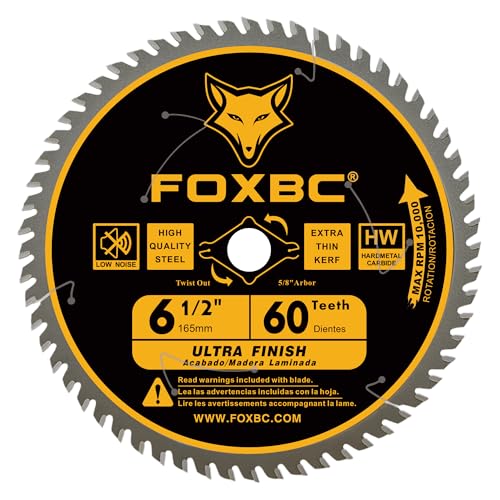
FOXBC’s 6-1/2″ blade offers an ultra-thin kerf of 0.059″ with a 60-tooth configuration. It’s designed for smooth crosscuts and fast, precise framing tasks across a range of wood products, including softwood, hardwood, plywood, and laminates. With compatibility for both corded and cordless saws, this blade is a flexible option for portable job sites and small-shop setups where waste reduction and cut quality are priorities.
Diablo Ultra Finish 6-1/2″

Diablo’s D0660A blade is crafted for ultra-finish work, with a TiCo Hi-Density carbide blend and a fast, clean, crosscut focus. The 6-1/2″ blade uses a traditional 60-tooth arrangement and a TiCo composition designed to improve edge retention and cut precision for delicate finish work, moldings, and panels. The combination delivers smooth cuts on hardwoods and engineered woods where finish quality is a priority.
Freud Thin Kerf Ultimate Plywood & Melamine

This Freud LU79R010 blade is designed for plywood, melamine, and veneer-based applications, boasting a high-density TiCo crosscutting blend and a Hi-ATB tooth geometry for cleaner edges. The 10″ diameter and 80 teeth configuration emphasize ultra-finish cut quality, particularly helpful in cabinetmaking and fine carpentry where sheet goods and laminated boards require precise, tear-out-free crosscuts.
Buying Guide: Key Purchase Considerations
Thin kerf blades are not universal across all saws, so match blade width, arbor size, and diameter to your equipment. Consider these factors when selecting a blade for your next project:
- Wood type and work: Choose a blade with the correct tooth geometry (ATB, FTG, or Hi-ATB) for finish work, crosscuts, or ripping. Higher tooth counts yield smoother finishes on plywood and veneer.
- Kerf width and power: Thin kerf blades reduce horsepower requirements and waste but may require precise feed control to avoid deflection. Heavier cuts benefit from stiffer blades with robust body construction.
- Coatings and coatings benefit: TiCo and other carbide blends improve edge retention in dense woods. Consider non-stick or heat-resistant coatings to reduce gumming on resinous species.
- Blade diameter and arbor: Ensure compatibility with your saw’s max diameter and arbor size. Some blades specify 5/8″ or 1″ arbors and require adapters or specific saw designs.
- Finish vs. speed: For ultra-finish work, prioritize Hi-ATB geometries and larger tooth counts. For framing and rough cutting, fewer teeth and strong kerf clearance reduce resistance and heat buildup.
- Maintenance: Keep blades clean and free of pitch. A light wipe-down after use extends life and maintains cut quality.
- Cost vs. value: While premium blends like TiCo offer extended edge life, assess your typical project mix to determine if investing in higher-end blades yields meaningful throughput gains.
In summary, the best thin kerf blade depends on your saw, material, and finishing goals. For cabinetry and fine woodworking, blades with higher tooth counts and Hi-ATB geometry often deliver the cleanest edges. For framing or rugged plywood work, a thin kerf blade with reliable anti-vibration features can improve productivity without sacrificing too much edge quality. Always verify compatibility with your tool and test on a scrap piece before committing to a full project run.