Choosing the right height gauge for your table saw or router table can dramatically improve cut accuracy and repeatability. This guide highlights five top options designed to help you set blade depth and alignment with confidence. Each product below includes key features, ideal use cases, and practical tips for getting the most from your gauge. The quick-reference table summarizes the core specs to compare at a glance.
| Product | Key Use | Measuring Range / Scale | Special Benefit |
|---|---|---|---|
| Wixey Mini Digital Height Gauge | Blade depth and router table setup | 0.001″ precision; metric/imperial | Compact, easy readout |
| DFM Tool Works Saw Height Gauge | Table saw alignment | 1/4″ steps in 1/8″ increments; 1/4″ thick | High precision, self-standing |
| Lyshujli 2 in 1 Router Depth and Saw Gauge | Router and saw depth gauging | 2 in 1; laser-engraved marks | Dual-function versatility |
| Milescraft 8601 Depth Gauge | Blade and bit depth setting | Self-standing base; brass thumb knob | Stable stand for quick setups |
| GOINGMAKE Table Saw Gauge | Dial indicator alignment | 0.01mm accuracy; fits 3/4″ slots | Easy setup, stable base |
These gauges are designed to deliver consistent results across woodworking tasks—from dado and mortise planning to setting blades for precise rips. Each option supports both metric and imperial measurements (where applicable), helping American woodworkers integrate with standard shop tools and manuals. In the sections below, you’ll find product-specific details, setup tips, and use-case recommendations to choose the right gauge for your shop.
Wixey Mini Digital Height Gauge

The Wixey digital height gauge provides precise measurements for router tables and saw blades, achieving accuracy to 0.001 inches. Its clear digital readout makes it straightforward to set exact depths for dadoes, mortises, and joinery tasks. The device is compact and versatile, fitting into tight spaces while serving as a height measuring tool for router bits, fences, and table saw setups. A single button switches between metric and imperial units, and a locking screw keeps measurements secure during use. This gauge is ideal for small shops or fieldwork where space is at a premium.
DFM Tool Works Saw Height Gauge
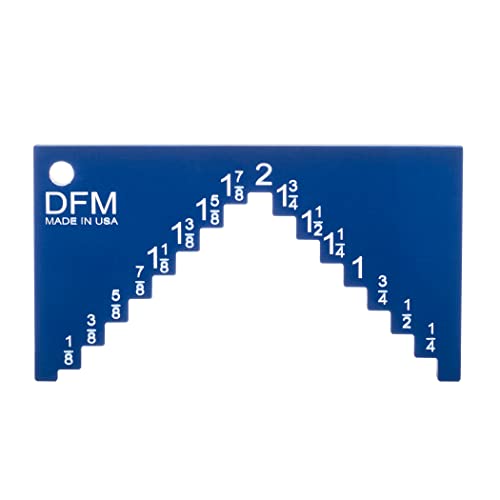
DFM Tool Works offers exceptional accuracy for table saw calibration, delivering heights under 1/64 inch for precise cuts. It provides 1/4″ steps in 1/8″ increments, with a sturdy 1/4″ thickness that helps ensure repeatable alignments. The gauge is designed for router table compatibility and smooth operation, making it a central tool for achieving exact table saw settings and reliable performance across projects. It’s well-suited for workshops that require tight tolerances and robust build quality.
Lyshujli 2 in 1 Router Depth and Saw Gauge

Lyshujli combines a 2-in-1 design as a step gauge and a router depth gauge, offering laser-engraved markings for quick reading. The aluminum construction is blue-anodized and CNC-machined for durability, corrosion resistance, and consistency. This gauge enables fast, accurate adjustments on the table saw without guesswork and is particularly useful for setups that require frequent depth changes between operations. It’s a solid choice for hobbyists and professionals who value compact versatility in a single tool.
Milescraft 8601 Depth Gauge
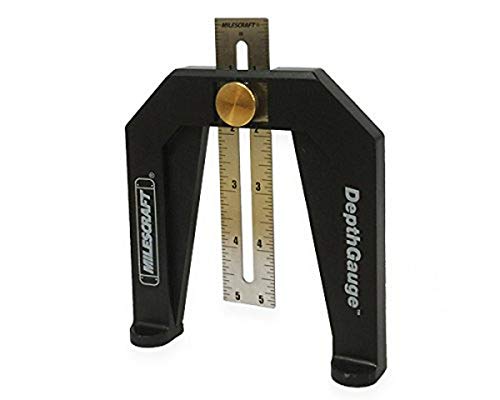
Milescraft’s 8601 depth gauge offers a self-standing frame with a wide base for stability when setting blade depths on routers, router tables, and table saws. It helps measure, mark, and locate blades and fences with a brass thumb knob that tightens the ruler for secure readings. The design focuses on reliability in shared workspaces and repetitive tasks, where a stable, easy-to-read gauge minimizes setup time and reduces error during critical cutting operations.
GOINGMAKE Table Saw Gauge Dia Indicator

GOINGMAKE offers a precision dial indicator gauge designed to align the table saw blade with the miter slot. With 0.01mm accuracy and an adjustable miter bar, you can set the gauge to sit flush against the blade and rip fence for a parallel setup. It fits most table saw configurations with a 3/4 inch slot and includes an extra base support for stability. This gauge is best for garages or shops seeking highly repeatable alignment between blade and fence for clean, straight cuts.
Buying Guide: Key Considerations For Choosing A Table Saw Height Gauge
When selecting a table saw blade height gauge, consider the following factors to ensure you get the right tool for your workflows:
- Accuracy and resolution: Look for gauges with fine resolution (0.001″ to 0.01mm) to set precise blade depths and achieve repeatable results on joinery and dado cuts.
- Compatibility: Check that the gauge works with your equipment—router tables, table saws, and miter slots of standard sizes. Some gauges are specifically designed for 3/4″ slots or universal fits.
- Measurement units: Having both metric and imperial readouts is advantageous in a workshop that uses mixed standards or when following plans that specify one system.
- Ease of use: A clear display, locking mechanism, and intuitive setup reduce setup time and mistakes during alignment tasks.
- Build quality: Aluminum or stainless steel constructions offer durability and resistance to wear in a shop environment with dust and moisture exposure.
- Portability vs. stability: Weigh the balance between a compact gauge for tight spaces and a self-standing design for quick reference in larger setups.
- Maintenance: Consider whether the gauge requires calibration, or has moving parts prone to loosening, as this affects long-term accuracy.
- Price and availability: Value is determined by precision, durability, and the tool’s ability to integrate with your existing equipment. Balance budget with expected usage.
In practice, choose a gauge that minimizes guesswork during blade height adjustments, supports repeatable settings across multiple machines, and remains reliable under everyday woodworking tasks. For beginners, a digitally readable gauge can simplify learning, while seasoned woodworkers may prefer a rugged, self-standing model for rapid setups in a busy shop. Consider pairing a high-precision tool with a simple maintenance routine to sustain accuracy over time.