The right stationary belt sander can speed up finishing tasks, smooth rough stock, and handle large projects with stable performance. This guide highlights five top models, covering budget-friendly to pro-grade choices. Each option offers a belt-and-disc or belt-only setup, variable speed, and features that support precision sanding, dust control, and versatility in workshop environments.
Summary of selected products:
| Product | Brand | Key Benefit | Typical Use |
|---|---|---|---|
| 3 × 21-Inch Belt Sander with Dust Bag | Jellas | Variable speed, bench mode, included sanding belts | General woodworking, hobby projects |
| Benchtop Belt & Disc Sander 4×36 / 6″ Disc | WEN | Two-in-one sanding with adjustable belt/tilt | Precision shaping and finishing |
| 4 x 36 in Belt & 6 in Disc, Direct-Drive | Bucktool | Maintenance-free drive, multi-angle sanding | Curved pieces and extended belt usage |
| 6 Amp 3″x18″ Belt Sander | Skil | Pressure control for consistent contact | Flat stock finishing |
| 7-Amp Belt Sander with Dust Bag | WEN | High power, compact design, efficient dust collection | Heavy stock removal and finishing |
Jellas 3 × 21-Inch Belt Sander With Dust Bag
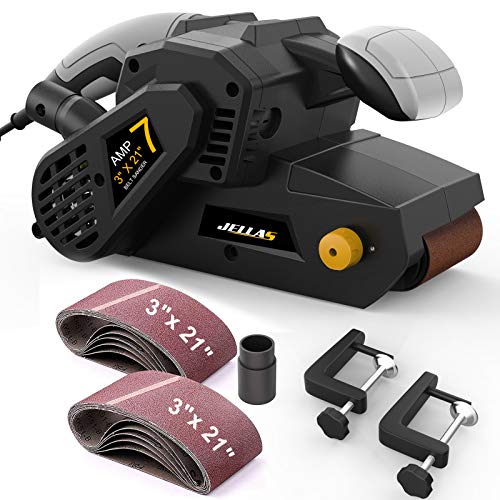
The Jellas unit combines a 7A motor with a 3″ x 21″ belt, offering a six-dial variable-speed range from 120 to 400 rpm for precise material removal. A 2-in-1 function lets you convert the sander into a bench model with included clamps, enabling hands-free operation for longer work sessions. A lock-on feature supports continuous running, and the package includes a complete belt assortment (40–180 grit) to cover initial stock removal through final finishes. This model suits hobbyists seeking flexibility in a compact footprint.
WEN Benchtop Belt and Disc Sander (6502T)
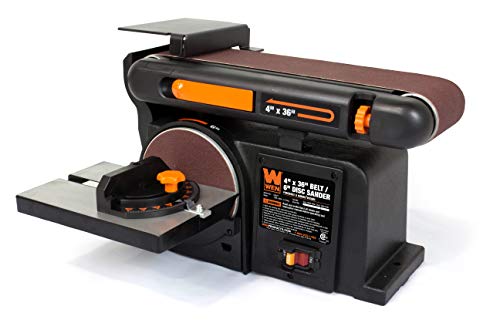
WEN’s benchtop model integrates a 4″ by 36″ belt with a 6″ disc, giving users two sanding surfaces in a compact frame. The belt tilts from 0 to 90 degrees for versatile sanding angles, and a sturdy cast-iron base minimizes vibration for steady results. This configuration is ideal for users needing a reliable all-around sander that can handle flattening edges and grinding large surfaces with consistent feedback.
BUCKTOOL 4×36 Belt & 6″ Disc Sander (BD4603)
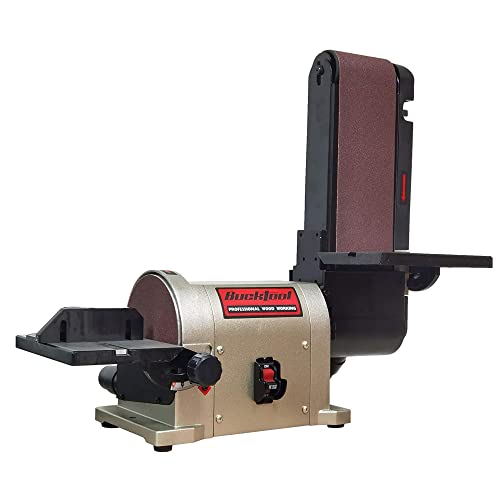
Bucktool’s BD4603 emphasizes a maintenance-free direct-drive motor with claimed efficiency gains. The belt tilts 0 to 90 degrees, supporting horizontal and vertical work, while a quick belt replacement design and track control simplify belt changes during production runs. The included 3/4 HP motor keeps noise lower and power delivery steady, making it a practical option for shop projects that require consistent belt performance on both flat and curved pieces.
SKIL 6 Amp 3″x18″ Belt Sander

SKIL’s model integrates 6 amps of power with a 3″ x 18″ belt, including pressure control technology that alerts users when excess pressure is applied. The machine emphasizes dust containment via micro-filtration to capture fine particles. It is suited for precise edge work and flat surfaces where consistent contact pressure and dust management matter most for finishing tasks.
WEN 7-Amp Belt Sander with Dust Bag (6321)
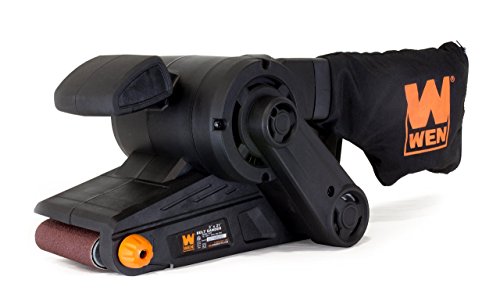
This WEN model combines a 7-amp motor with a belt speed that exceeds 13 feet per second, delivering aggressive material removal. Weighing about six pounds, it aims to minimize user fatigue, and the detachable dust bag helps simplify cleanup after long sanding sessions. The compact design makes it easy to place in smaller workshops while still producing solid results on larger stock pieces.
WEN 6307 Variable Speed Detailing File Sander
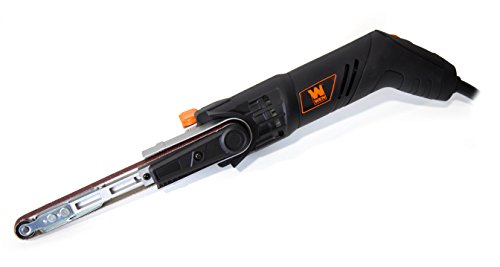
The WEN 6307 provides a variable-speed option for the detailing niche, with a 1/2-by-18″ belt and a belt-tracking system that reduces maintenance. Its design supports angles up to 50 degrees and tilting up to 55 degrees, making it suited for contour work and small, precise shaping tasks where control is paramount. This sander fills roles from model making to fine-tinish work on curved profiles.
Woodskil 4.3A Belt Sander

The Woodskil sander combines a 3/4 HP motor with a 4×36″ belt and a 6×6″ disc, offering dual exhaust ports to manage dust during heavy sessions. The belt is adjustable from 0 to 90 degrees, and the work table can tilt 0–45 degrees, accommodating miters and angled surfaces. The kit includes two sanding belts, providing an immediate setup for primary stock removal and finishing tasks.
DEWALT 20V Max Belt Sander (DCW220B)

DEWALT’s cordless belt sander offers a brushless motor for efficient power delivery and longer runtime on battery. The design emphasizes dust collection compatibility with an optional tool-free system, aiming to minimize cleanup and exposure to dust. With a belt size of 3″ x 18″, this model suits portable use on job sites as well as workshop tasks that require mobility without sacrificing finish quality on larger sanding jobs.
Buying Guide: Key Considerations for Stationary Belt Sanders
- Power and belt size: Larger belts remove material faster but require more bench space. Models in the 3″ x 21″ to 4″ x 36″ range typically balance aggressiveness with control for bench setups.
- Two-in-one functionality: Benchtop belt-and-disc combinations can reduce needed tools and expand versatility for flattening edges and shaping curved pieces.
- Variable speed control: Critical for softer woods or finishing tasks, reducing heat buildup and tear-out while enabling aggressive stock removal when needed.
- Dust management: Look for integrated bags or ports and consider compatibility with shop vac systems to maintain a cleaner work area and healthier air.
- Stability and vibration: Heavy cast-iron bases or well-braced frames minimize movement, improving precision and surface quality on large boards.
- Maintenance features: Direct-drive designs reduce belt tension adjustments and improve reliability, while quick belt-change mechanisms speed up setup for different projects.
- Ergonomics and safety: Consider weight, handles, dust protection, and user-friendly controls to ensure comfortable long sessions and reduced injury risk.
- Accessory ecosystem: Belts in a range of grits, plus optional discs and tables, extend the life of the tool by enabling ready responses to different stock conditions.
When selecting a stationary belt sander, consider your typical project sizes, the types of woods you work with, and how important dust control is to your workflow. If you regularly switch between rough stock removal and fine finishing, a two-in-one belt-and-disc model with adjustable belt tracking and a stable base can save time and space. For portable job-site work, a cordless option with solid dust management and a comfortable grip provides flexibility without sacrificing performance.