Answering the most common buyer question: what compact, vertical-air compressors deliver reliable airflow without taking over your workshop? The following picks are ideal for tight spaces, DIY projects, light nailing, inflation, and spray painting. They emphasize vertical tanks to save floor space, oil‑free pumps to reduce maintenance, and manageable noise for indoor or garage use. Below, you’ll see who each model suits best, plus a quick buying guide and FAQs to help you choose smartly.
| Product | Tank Size | Best For | Key Benefit |
|---|---|---|---|
| RyanTek 15-Gallon Vertical | 15 gal | Homeowners and hobbyists with limited space | Quiet, oil-free dual-cylinder design |
| Campbell Hausfeld 15 Gal Vertical | 15 gal | Inflation, light-nailing, DIY projects | High delivery with oil-free pump |
| CRAFTSMAN 33 Gallon Vertical | 33 gal | Medium-duty garage and shop use | High max psi with vertical footprint |
| HASIENDA 12 Gallon Vertical | 12 gal | Budget-conscious small shop tasks | Brushless motor for lower noise |
| California Air Tools 10020C | 10 gal | Noise-sensitive environments | Ultra-quiet operation with oil-free pump |
RyanTek 15-Gallon Vertical Air Compressor
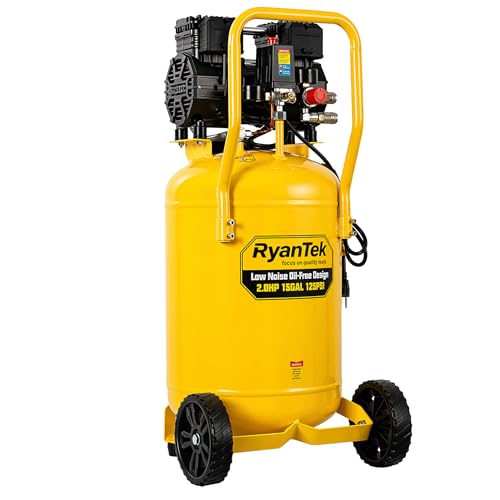
The RyanTek model features a 15-gallon vertical tank paired with a dual-cylinder pump that delivers 4.5 CFM at 90 PSI. It operates at a quiet 66 dBa, making it a strong choice for garages, basements, or apartments where noise matters. The oil-free design reduces maintenance and eliminates the mess of oil changes. It’s best for inflation tasks, nail guns, light painting, and small woodworking jobs where a steady, predictable air supply is beneficial. A potential limitation is that its continuous runtime depends on tool demand; heavy, sustained use may require longer recovery periods.
Campbell Hausfeld 15 Gallon Vertical Air Compressor
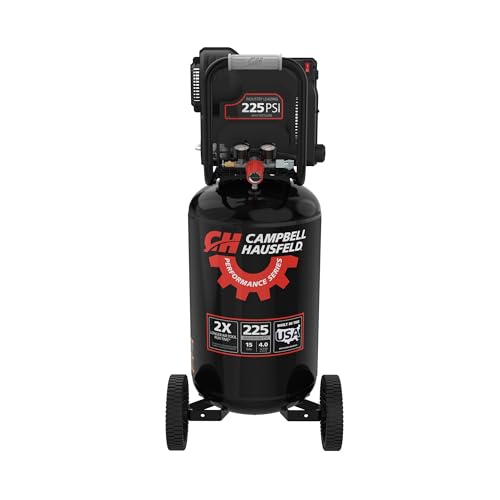
This Campbell Hausfeld model emphasizes high air delivery with a 15-gallon vertical tank and an oil-free pump. It offers 4.0 CFM at 90 PSI and 5.2 CFM at 40 PSI, which supports quick recovery during inflation, nailing, and light-to-medium pneumatic tooling. It’s best for DIY enthusiasts and home garages seeking reliable duty with less maintenance. Cautions include monitoring for heat during extended use and ensuring adequate space for vertical storage to maintain good airflow around the unit.
CRAFTSMAN 33 Gallon Vertical Air Compressor

The Craftsman 33-gallon vertical compressor provides a higher max PSI (175) for more demanding tasks. Its vertical footprint helps conserve workshop space while offering robust capacity for studio-grade inflation, spray work, and heavier nail/fastening applications. It’s best for more frequent or higher-demand use in a home shop. A limitation to consider is that larger tanks can be bulkier to move, though the vertical design minimizes floor space consumption.
HASIENDA 12 Gallon Vertical Workshop Compressor
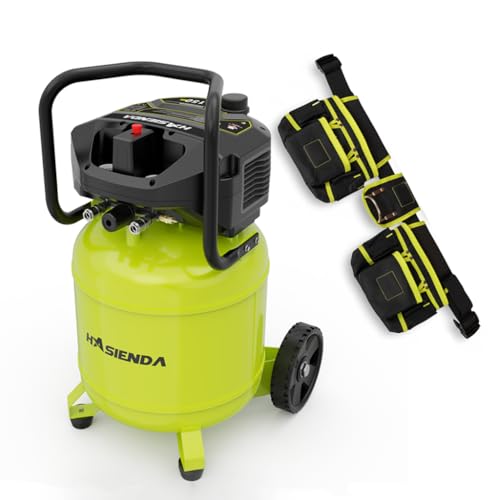
The HASIENDA 12-gallon vertical model targets budget-conscious shoppers needing a compact, maintenance-light solution. It features a brushless motor for lower operational noise and a 150 PSI maximum, with a 3.9 SCFM at 90 PSI recovery rate. It’s best for tire inflation, light-nailing, and painting where space and noise are considerations. A caution: brushless motors may have different runtime characteristics under heavy continuous load, so plan tool use accordingly.
California Air Tools 10020C Ultra Quiet Air Compressor

The California Air Tools 10020C is designed for quiet operation, ideal for shared spaces or noise-sensitive environments. It runs at a low 70 dBa, with flow ratings of 6.40 CFM at 40 PSI and 5.30 CFM at 90 PSI. The 2.0 HP motor operates at a reduced speed to reduce wear and noise. It’s best for users who prioritize a serene workshop while performing light to medium pneumatic tasks. A consideration is that its tank size is smaller, which may require more frequent cycling for high-demand tools.
Buying Guide: Small Vertical Air Compressors
- Space and footprint: Vertical tanks save floor space. Look for integrated wheels or handles for easy repositioning in tight shops.
- Tank size and duty cycle: Larger tanks provide longer operation between fills, but take more space. Choose 12–33 gallon models for a balance of capacity and footprint.
- Air delivery and PSI: Consider CFM at your typical working PSI. Jobs like nail guns and spray painting need steady airflow; higher PSI is useful for tougher tasks.
- Oil-free versus oil-lubed: Oil-free pumps reduce maintenance and oil residue, but verify durability and noise levels for your environment.
- Noise level: If you’ll operate in a garage or shared space, target models around 70–66 dBa. Ultra-quiet options exist for quieter environments.
- Portability: Look for models with wheels, compact footprints, and balanced weight for easier movement around a shop or yard.
- Reliability and maintenance: Oil-free designs simplify upkeep, while brushless motors can offer longer life and lower noise. Consider local temperatures and startup capability in cold weather.
- Best-use scenarios: If you need frequent tooling like brad nailers or light painting, a model with quick recovery and higher CFM at 90 PSI is preferable.
Frequently Asked Questions
- What is a vertical air compressor good for?
Vertical tanks maximize floor space, making them ideal for small garages, sheds, or crowded workshops where space is at a premium.
- Should I choose an oil-free or oil-lubed compressor?
Oil-free models reduce maintenance and oil mist, suitable for indoor use and light-duty tasks; oil-lubed units often offer longer life for heavy-duty work.
- Is a lower noise level important for home use?
Yes. Lower noise makes operation in living spaces or shared areas more comfortable and reduces disruption during tasks.
- What CFM do I need at 90 PSI?
For typical nail guns and light pneumatic tools, 3–5 CFM at 90 PSI is common. Taller tasks may require higher CFM with a larger tank.
- How big a tank should I get for framing or spray tasks?
Framing or heavy spray often benefits from 20–33 gallon tanks to minimize cycling and maintain steady airflow.
- Do vertical compressors move easily?
Many models include wheels and handles that facilitate moving between work zones, especially when you have multiple tasks.