Choosing the best sliding miter saw blade is crucial for achieving clean, precise cuts whether you’re a professional carpenter or a DIY enthusiast. Below is a concise comparison of top-rated sliding miter saw blades available on Amazon, highlighting their key features to help you find the one that suits your specific cutting needs.
| Product | Brand | Blade Diameter | Teeth | Key Features |
|---|---|---|---|---|
| Freud Thin Kerf Sliding Compound Miter Saw Blade | Freud | 12″ | 72 | Negative hook angle, premium TiCo carbide blend, thin kerf design |
| Oshlun SBW-100060N 10-Inch 60 Tooth Negative Hook | OSHLUN | 10″ | 60 | Thin kerf, negative hook angle, professional grade C-4 carbide |
| Freud D0860S Diablo 8-1/2″ 60T Fine Finish Miter Saw Blade | Diablo | 8-1/2″ | 60 | Fine finish for trim carpentry, smooth cutting surface |
| Diablo General Purpose Saw Blade 10″ 40 ATB Teeth | Diablo | 10″ | 40 | High-performance TiCo carbide, Perma-SHIELD coating, laser-cut kerf |
| Oshlun SBW-085060 8-1/2-Inch 60 Tooth Negative Hook Finishing | OSHLUN | 8-1/2″ | 60 | Thin kerf, negative hook angle, professional grade C-4 carbide |
Freud Thin Kerf Sliding Compound Miter Saw Blade – 12″ 72 Teeth

This Freud sliding compound miter saw blade features a 12-inch diameter with 72 teeth, designed to deliver maximum performance with a premium TiCo high-density carbide blend. Its 5° negative hook angle prevents the blade from being too aggressive, pushing the workpiece downward and towards the fence for increased safety and control.
The thin kerf design removes less material during cuts, reducing the power needed while maintaining precise results. This blade is highly suitable for tough wood types and produces consistent, clean crosscuts. Its durable construction ensures long-lasting edge retention for repetitive woodworking tasks.
Oshlun SBW-100060N 10-Inch 60 Tooth Negative Hook Blade
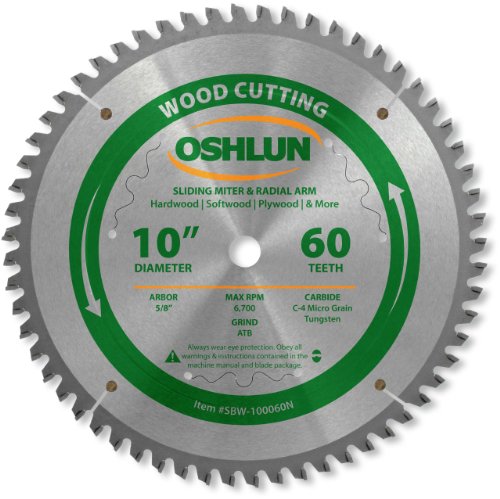
The Oshlun SBW-100060N is a professional-grade 10-inch blade featuring 60 finely ground teeth with a negative hook angle for reduced kickback and superior cut control. Its thin kerf design allows fast cutting with less power consumption, making it an excellent choice for sliding miter and radial arm saws.
Made of C-4 carbide, this blade offers enhanced durability and sharpness. It is versatile enough for finish work, cabinetry, and molding, delivering smooth, precise cuts in various hardwood and softwood materials.
Freud D0860S Diablo 8-1/2″ 60T Fine Finish Miter Saw Blade

This 8-1/2-inch Diablo blade is designed specifically for trim carpenters. With 60 teeth set in an alternate top bevel (ATB) configuration, it produces an exceptionally smooth surface with minimal sanding required after cutting. It performs well on oak, pine, melamine, plywood, and moldings.
The blade excels at fine finishing cuts, making it ideal for cabinetry, furniture, and detailed woodworking projects where accuracy and a polished look are paramount.
Diablo General Purpose Saw Blade 10″ 40 ATB Teeth

The Diablo D1040X is a versatile 10-inch blade having 40 ATB teeth designed for both rip cuts and crosscuts. It features high-performance TiCo carbide teeth for a sharp, long-lasting cutting edge suitable for various wood types.
With a Perma-SHIELD non-stick coating, the blade resists heat buildup, gumming, and corrosion, extending its life. The super thin laser-cut kerf ensures quick, clean cuts making it suitable for remodeling and demolition tasks where speed and durability matter.
Oshlun SBW-085060 8-1/2-Inch 60 Tooth Negative Hook Blade
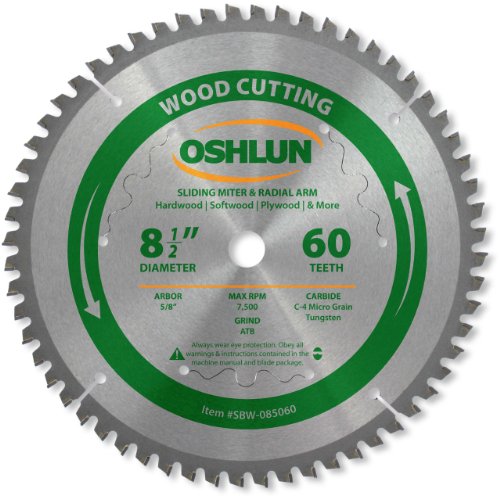
This Oshlun 8-1/2 inch saw blade is built for finishing with 60 teeth optimized with a negative hook angle which improves safety and cut quality, especially on sliding miter saws. The thin kerf design enables faster cuts requiring less motor power.
Constructed from professional grade C-4 carbide, it offers a durable cutting edge ideal for cabinetry, furniture making, and fine woodworking sectors demanding precision and clean edges.
Buying Guide for Sliding Miter Saw Blades
When selecting the best sliding miter saw blade, consider these essential factors to ensure you get the right tool for your cutting applications:
Blade Diameter and Teeth Count
The blade diameter must be compatible with your miter saw (commonly 8-1/2, 10, or 12 inches). A higher tooth count, such as 60 to 72 teeth, typically provides smoother finishes, ideal for fine woodworking and trim. Lower tooth counts, like 40 teeth, cut faster and are suited for rough cuts.
Kerf Thickness
Thin kerf blades remove less material, reducing the power required and limiting waste. They are beneficial for saws with lower horsepower and for reducing strain during extended use. However, thicker kerfs can offer more durability under heavy-duty conditions.
Hook Angle
A negative hook angle helps reduce blade aggressiveness, increasing safety and control on sliding miter saws by pushing the workpiece downward during cuts. Positive hook angles are generally avoided on these saws as they can cause kickback.
Carbide Quality and Coating
Look for blades with premium carbide teeth such as TiCo blends or professional-grade C-4 carbide for sharpness and longevity. Coatings like Perma-SHIELD prevent heat buildup and resin accumulation, which keeps the blade cleaner and extends its lifespan.
Cutting Application
Choose a blade designed for your primary materials: fine finish blades are best for cabinetry and trim, while general-purpose blades handle a wider range of woods. Some blades are optimized for plywood, melamine, or composite materials.
Compatibility with Saw Type
Ensure the blade fits sliding compound miter saws with the correct arbor size and blade diameter. Compatibility also affects cut quality and safety, especially with dual-bevel and sliding mechanisms.
By balancing these factors, you can select a sliding miter saw blade that offers precision, durability, and smooth cutting performance to meet your woodworking needs.