Answering the needs of woodworkers looking for precise, smooth crosscuts with a sliding miter saw. This guide highlights blades ideal for fine finishes, steady cuts, and reliable edge retention. The top picks here suit different buyers: contractors seeking fast throughput, hobbyists chasing cleaner finishes, and professionals requiring long-lasting carbide blends. Below is a quick summary of five blades, followed by in-depth sections and a practical buying guide.
| Product | Best For | Key Benefit |
|---|---|---|
| Freud LU91R012 | General crosscuts and finishing | Premium TiCo carbide blend with negative hook angle for controlled cuts |
| Freud LU91R010 | Fine finish crosscuts | ATB grind, negative hook for reduced climbing |
| CMT ORANGE TOOLS 253.060.10 ITK COMP Miter | Soft and hardwoods, laminates | Glass-smooth finish with 0.098 kerf and 7° hook |
| OSHLUN SBW-085060 | Finishing cuts, sliding saws | Thin kerf, negative hook, professional-grade carbide |
| WEN BL1060 | Budget-friendly clean cuts | Ultra-thin kerf for efficient cuts, 10″ blade |
Freud Thin Kerf Sliding Compound Miter Saw Blade LU91R012
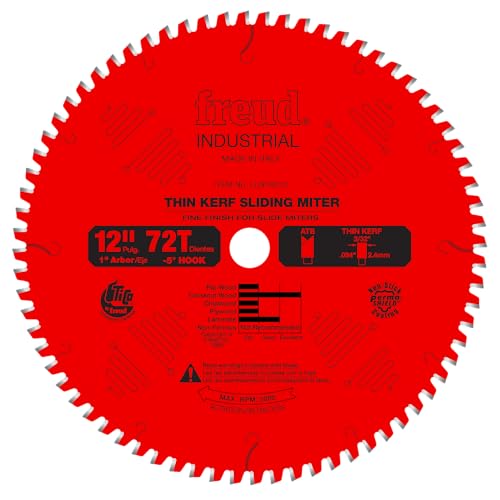
The Freud LU91R012 is a 12″ blade designed for sliding compound miter saws with a 5° negative hook angle. It uses a premium TiCo carbide blend, delivering high-density crosscut performance and edge retention for consistent results through tough woods. The thin kerf design minimizes material waste and reduces horsepower requirements, making it a practical choice for portable or shop setups.
Who this is best for: Carpenters and finish carpenters needing clean crosscuts with less chatter, especially when cutting hardwoods. Why selected: Combines high-density carbide with a negative hook angle for controlled cuts and long-lasting durability. Caution: Thin kerf blades require precise setup to prevent deflection on very thick stock.
Freud LU91R010: 10″ Thin Kerf Sliding Compound Miter Saw Blade

The Freud LU91R010 is a 10″ thin kerf blade with ATB grind and a -5° hook. It uses the same high-performance TiCo HI-Density carbide blend for precise crosscuts and improved edge retention. The negative hook angle helps minimize climb and is favored when fine finishing cuts are required on a sliding miter saw.
Who this is best for: Professional finish cuts where precision and surface quality trump heavy stock removal. Why selected: Lightweight kerf and negative hook provide stable cuts and reduced kickback in delicate layouts. Caution: Slightly smaller diameter may limit use on thicker stock or certain 2x stock applications.
CMT ORANGE TOOLS 253.060.10 ITK COMP Miter 10″

The CMT ORANGE TOOLS 253.060.10 ITK COMP Miter blade is a 10″ option intended for fine finish crosscuts. It features a 0.098″ kerf and 0.071″ plate thickness with a 7° hook angle, designed for smooth, glass-like finishes on wood, plywood, and laminates. The blade is optimized for compound miter saws and soft/hardwood cutting, with a specialized grind to reduce tear-out.
Who this is for: Woodworkers prioritizing ultra-smooth finishes on crosscuts and laminates. Why selected: The grind and geometry aim for clean, almost glassy cuts. Caution: Slightly heavier stock removal may occur on dense hardwoods compared to thicker kerf blades.
OSHLUN SBW-085060 8-1/2-Inch Negative Hook Finishing Blade
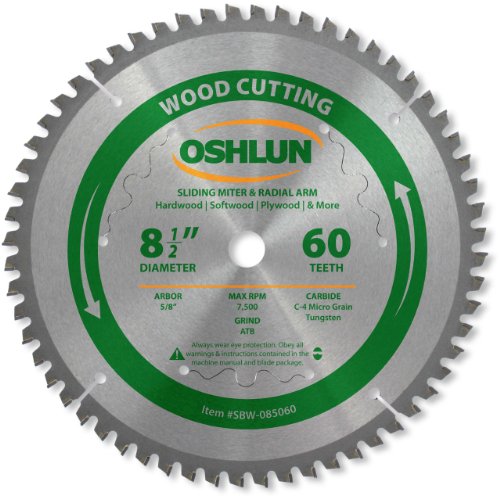
The Oshlun SBW-085060 is an 8-1/2″ blade with 60 teeth, designed for finishing cuts on sliding miters. It features a negative hook angle and a C-4 carbide composition for durability and edge retention. The thin kerf helps minimize power draw, enabling smoother passes through soft and hardwoods alike.
Who this is for: Hobbyists and professionals needing clean crosscuts in narrow rails or cabinetry with a compact saw setup. Why selected: Its smaller diameter makes it suitable for compact saws while still delivering finishing-grade results. Caution: For very large stock or heavy ripping, consider a larger blade with more teeth for stability.
WEN BL1060 10-Inch 60-Tooth Fine-Finish Blade
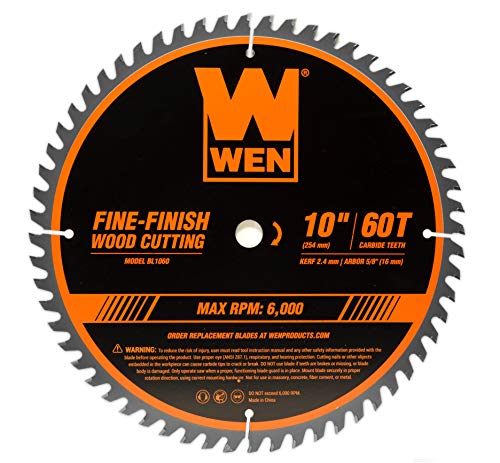
The WEN BL1060 is a 10″ blade with 60 teeth, designed for fine finishing on miter and table saws. It features a 5/8″ arbor and an ultra-thin kerf of 1/10 inch, enabling cleaner cuts with less material removal and reduced resistance. It supports up to 6000 RPM, suitable for a range of soft and hardwoods.
Who this is for: Budget-conscious buyers seeking clean finishes without sacrificing basic performance. Why selected: The ultra-thin kerf provides efficient cuts, making it a practical option for shop setups with limited horsepower. Caution: It can be more sensitive to fast feed rates; take your time during heavy cuts to avoid deflection.
Buying Guide: Sliding Miter Saw Blade Essentials
Choosing the right blade depends on material types, desired finish, and your saw’s capabilities. Consider kerf width, hook angle, grind type, and carbide quality to balance cut quality and power use.
- Kerf width matters. Thin kerfs reduce material removal and horsepower needs but can be less forgiving on heavy cuts. Thick kerfs are more robust for dense stock.
- Hook angle affects control. Negative hook angles help prevent chopping and climbing on crosscuts, providing smoother finishes.
- Grinding and carbide blends influence longevity. TiCo and similar premium carbides offer better edge retention for hardwoods.
- Number of teeth and tooth geometry shape finish. Higher tooth counts yield smoother finishes but may cut slower in dense stock.
- Blade diameter and arbor compatibility with your sliding miter saw. Ensure the blade matches your saw’s spindle size and maximum RPM.
How to Choose By Use Case
- Fine finish crosscuts in cabinetry or trim: look for ATB grind with negative hook and high-density carbide blends.
- General-purpose crosscuts through softwoods and plywood: a balanced 60-80 tooth blade with a moderate hook angle.
- Compact saws or tight spaces: 8-10 inch blades with thin kerf and negative hook angles for control.
Maintenance and Safety Tips
- Keep blades clean and free of pitch. Clean to maintain stable performance and reduce heat buildup.
- Inspect teeth for chipping or dullness before use. Replace blades showing significant wear for consistent results.
- Use appropriate feed rate to avoid overheating and redirection of the workpiece.
- Wear safety gear: eye protection, hearing protection, and a tight-fitting sleeve to prevent snagging.
Frequently Asked Questions
- What is the benefit of a negative hook angle on a miter blade? Answer: It reduces blade climb and helps maintain a controlled, straight cut, especially on crosscuts.
- How does kerf width affect cuts? Answer: Thinner kerfs remove less material and require less horsepower but can be more sensitive to deflection under heavy stock.
- Is a higher tooth count always better for finishing? Answer: Higher tooth counts generally yield smoother finishes but may cut more slowly in dense woods.
- Can I use a 10″ blade on a 12″ saw? Answer: Not safely; blade diameter must match the saw’s design and arbor size. Always refer to the saw manual.
- What is the advantage of premium carbide blends? Answer: They offer better edge retention and longer life under crosscutting stress, especially in hardwoods.
- Do I need PTFE coating on a blade? Answer: PTFE coatings can reduce resin buildup and improve glide in some environments, but performance varies by material.