Choosing the right sandpaper for paint removal depends on the surface, the paint thickness, and how fine a finish you want. This guide highlights five well-reviewed options that cover rough stripping, smoothing, and final prep for repainting projects. Each selection balances grit, material, and compatibility with common power tools and hand sanding methods.
| Product | Grit | Best For | Notes |
|---|---|---|---|
| 3M Sandpaper, 220 Grit (9000NA-20) | 220 | General paint removal and surface prep | Aluminum oxide; 9×11 inches; versatile |
| 3M Performance 3000 Grit Sandpaper | 3000 | Detailed finishing and polishing | Trizact technology for consistent, refined finish |
| 3M Sandpaper, 60 Grit (9003NA-20) | 60 | Heavy paint/finish removal and rapid material removal | Coarse aluminum oxide; good for hand or power sanding |
| 60 PCS 5 Inch Sanding Discs – Giying6 | 40-800 (assorted) | Wide surface prep with a random orbital sander | Durable, universal fit, anti-clog and anti-static |
| 320 Grit Sandpaper Sheets – eQualle | 320 | Final smoothing and light prep | Silicon carbide; multi-surface versatility |
3M Sandpaper 220 Grit 9×11

The 220-grit sheet from 3M is suitable for removing paint from wood, metal, or composite surfaces. Made with aluminum oxide, this general-purpose sandpaper balances cut speed and finish quality. It works well for hand sanding or on a sanding block, and is compatible with most household tools.
Key takeaways
Use 220 grit for initial paint removal on flat surfaces. For edges or rounded profiles, consider pairing with a sanding block to maintain even pressure and avoid gouging. This sheet is a solid all-around choice when you’re prepping for primer or a new coat of paint.
3M Performance 3000 Grit Sandpaper
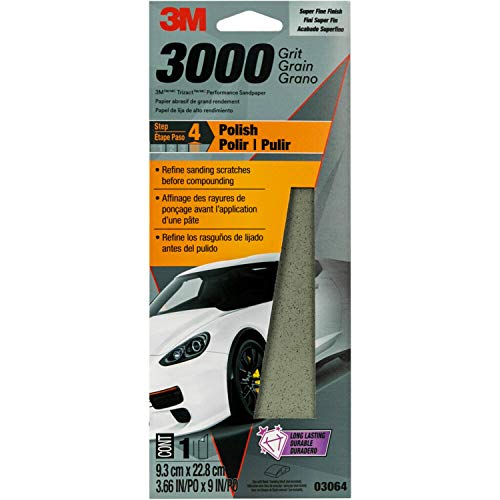
Designed for refined finishes, the 3000-grit paper uses Trizact technology to deliver a fast, consistent cut with a smooth, polished look. This sheet is ideal for polishing clear coats and removing very fine imperfections after initial stripping. It’s best used with a light touch and regular cleaning to prevent loading.
Key takeaways
Reserve 3000 grit for the final pass or after compound polishing. It produces a near-gloss finish on auto clear coats and helps reveal a pristine base before repainting.
3M Sandpaper 60 Grit 9×11

The 60-grit sheet provides aggressive material removal for heavy paint layers, rust, or primer. It’s well-suited for use with a sanding block or power sander to speed up the stripping process. Aluminum oxide ensures durability and consistent performance under tough jobs.
Key takeaways
Pair with higher grit sheets for a staged approach: start with 60 grit for heavy removal, then transition through mid grits to prepare for finishing. Avoid over-aggressive grit on delicate surfaces to minimize gouging.
60 PCS 5 Inch Sanding Discs – Giying6
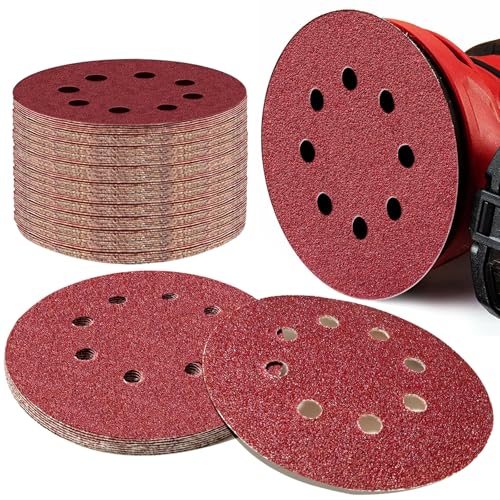
This assorted pack includes nine grits from 40 to 800, offering a complete spectrum from heavy stripping to fine finish work. The discs fit most random orbital sanders and feature an anti-static, anti-clog design to keep surfaces clean and maintain cutting efficiency over many passes.
Key takeaways
Use the coarser grits (40–80) for initial paint removal on larger surfaces, then move to finer grits (120–320) for smoothing. The 5-inch discs are compatible with most popular brands, making this a versatile option for many projects.
320 Grit Sandpaper Sheets – eQualle

The 320-grit sheets are ideal for final smoothing, blending edges, and preparing a surface for primer or paint after major stripping. Silicon carbide provides a durable, consistent cut, helping to minimize visible scratches and produce a ready-to-paint surface.
Key takeaways
Use 320 grit as part of a finishing sequence after heavier grits. This grit helps achieve a uniform texture that minimizes issues during painting and promotes better adhesion of primers and coatings.
Buying Guide: Key Purchase Considerations
- Surface type and paint thickness: Start with coarse grits (40–60) for heavy removal on metal or wood, then step up to mid grits (120–180) and finish with fine grits (220–320) for prep.
- Material and durability: Aluminum oxide is common for general purpose sanding; silicon carbide offers good finishing options for metal and hard surfaces. Choose products with anti-clog designs for messier projects.
- Tool compatibility: Check your sander’s disc size and hook-and-loop system. The 5-inch discs fit many random orbital sanders; 9×11 sheets fit standard hand blocks or sanding boards.
- Finishing goals: For paint removal, plan a progressive approach—rough removal, smoothing, and final prep to maximize adhesion of the next coat.
- Surface sensitivity: Delicate substrates require slower, lighter passes and cross-checking with a masking plan to prevent gouges or cross-scratching.
- Cost and availability: Bundles or multi-pack sets can offer more value for larger projects, while individual sheets are convenient for spot work.
For best results, tailor your sandpaper selection to the project’s scope. Begin with a coarse grade to remove the bulk of the paint, then refine with mid and fine grits to achieve a smooth, paint-ready surface. Keep the work area clean and protect surrounding areas from dust and debris during the process.