Choosing the right sander can dramatically improve finish quality and reduce project time. This guide highlights five highly regarded options that cover corded and cordless styles, different sanding motions, and variations in dust management. Each model is evaluated on motor power, orbital speed, ergonomics, and dust control to help American woodworkers select a tool that fits the task at hand.
| Product | Brand | Key Features |
|---|---|---|
| SKIL 5” Random Orbital Sander with Cyclonic Dust Box | Skil | 2.8A motor, 13,000 OPM, cyclonic dust container, variable speed |
| DEWALT Orbital Sander Kit, 5 inch | DEWALT | 3.0A, 12,000 OPM, low vibration, compact profile |
| SKIL Corded Multi-Function Detail Sander | Skil | 1.2A, 13,500 OPM, micro-filter dust box, 4-in-1 versatility |
| WEN Benchtop Belt and Disc Sander | WEN | 4×36 belt + 6×6 disc, tilting belt, cast iron base |
| DEWALT 20V MAX Orbital Sander (Cordless) | DEWALT | Brushless motor, 8,000–12,000 OPM, cordless convenience |
Note: All products listed are available on Amazon with specification details provided by manufacturers. This overview is for comparison purposes and does not constitute a purchase recommendation.
SKIL 5” Random Orbital Sander SR211601

The SKIL SR211601 uses a 2.8 amp motor to deliver up to 13,000 orbits per minute, enabling smooth results across wood species and thicknesses. Its cyclonic dust box helps reduce airborne dust by guiding particles into a transparent, easy-to-empty container, simplifying cleanup between passes. The sander provides variable speed control, letting users dial in the right amount of aggressiveness for the material and grain orientation. Ergonomic handling reduces user fatigue on larger refinishing projects, while the compact form facilitates access to tight spaces and curved profiles.
DEWALT Orbital Sander Kit, 5 inch, 3 amp

DEWALT’s 5-inch orbital sander features a 3.0 amp motor delivering up to 12,000 OPM. Its shorter height design helps the user get closer to the workpiece for precise control on edges and contours. A separate counterweight design reduces vibration, contributing to longer smoothing sessions with reduced hand fatigue. The kit typically includes essential accessories that support immediate use on finishing and prep work, aligning with DEWALT’s reputation for robust, professional-grade tools. This model suits mid-sized woodworking projects where consistent, even sanding is required.
SKIL Corded Multi-Function Detail Sander SR232301
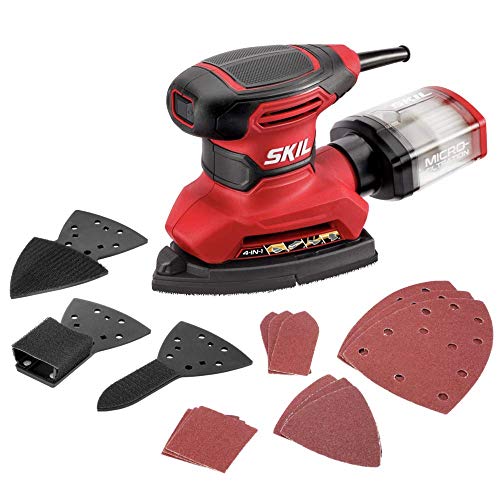
The SKIL SR232301 is a versatile 4-in-1 detail sander with a 1.2 amp motor capable of 13,500 OPM. It comes with three additional detail attachments for finishing large surfaces, corners, and contours, and features a tool-free attachment system for quick swaps. Its micro-filtration dust box and 1-1/4 inch dust port offer flexible dust management for bag-based vacuum systems or shop vacs. This sander shines for intricate work, such as cabinet edging, trim work, or repairs where controlled, precise material removal is essential.
WEN Benchtop Belt And Disc Sander 6502T
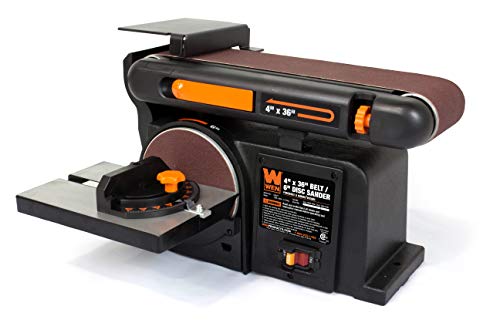
The WEN 6502T combines a belt and disc sander in a single benchtop unit, featuring a 4-by-36 inch belt and a 6-by-6 inch disc. The belt can tilt from 0 to 90 degrees, accommodating straight and bevel sanding as well as contour work. Its sturdy cast iron base minimizes vibration and enhances stability during heavy sanding tasks. This option suits projects that require aggressive material removal with the flexibility of both belt and disc sanding, such as furniture legs, table tops, and panel work.
DEWALT 20V MAX Orbital Sander (Cordless)

This 20V MAX cordless orbital sander from DEWALT uses a brushless motor to maximize runtime and efficiency. The variable speed dial ranges from 8,000 to 12,000 OPM, allowing users to tailor the sanding aggressiveness to the material and task. The low-profile body design supports closer proximity to the work surface, aiding precision on curved panels and edges. Being cordless, it adds portability for projects without easy access to outlets or for outdoor refinishing tasks where power cords are inconvenient.
Buying Guide: Key Purchase Considerations
- Power and speed range: Higher amperage and broader OPM ranges enable faster material removal but require more control on delicate finishes. Choose multitaskers with adjustable speeds for flexibility across woods and coatings.
- Motion type and finish goals: Random-orbit sanders minimize swirl marks on flat panels, while belt sanders excel for aggressive stock removal and shaping. Detail sanders are ideal for tight corners and intricate trim work.
- Dust collection: Systems with cyclonic dust boxes or integrated micro-filtration improve visibility and reduce cleanup time. Compatibility with shop vacs can further enhance dust management on busy projects.
- Ergonomics and weight: A low-profile body and balanced weight reduce fatigue during extended sessions. A comfortable grip and vibration control are important for precision and sustained use.
- Corded vs cordless: Corded sanders provide steady power for longer sessions; cordless models offer portability for outdoor or scaffold work. Battery life and charger compatibility should be considered for ongoing projects.
- Dust port and attachments: Compatibility with common sanding papers, hooks-and-loop systems, and dust bags or vacuums influences setup speed and ongoing maintenance.
- Safety: Look for features like anti-vibration design, secure clamps, and easy-to-clean dust boxes to minimize exposure to fine dust and operator fatigue.
Across different woodworking tasks—from cabinet refinishing and trim work to flattening tabletops and shaping legs—the right sander choice hinges on matching the tool’s sanding action, power, and dust management to the project demands. Cordless options add mobility for fieldwork, while corded models deliver consistent performance for workshop-intensive jobs. For beginners, a versatile model with adjustable speed and a reliable dust collection system provides a solid starting point for achieving professional-looking finishes.