Choosing a corded reciprocating saw for demanding demolition, remodeling, or construction tasks requires evaluating power, speed, durability, and versatile blade options. This guide highlights five top corded models, summarizing key features and practical considerations to help you pick a tool that remains reliable under tough jobs and long hours.
| Product | Brand | Key Feature |
|---|---|---|
| DEWALT DWE305 | DEWALT | 12 Amp, 4-position blade clamp |
| SKIL 9206-02 | Skil | 7.5 Amp, tool-less blade change |
| SKIL SPT44A-00 | Skil | 13 Amp, BUZZKILL vibration suppression |
| BOSCH RS325 | Bosch | 12 Amp, compact and light |
| WEN 3630 | WEN | 10 Amp, 8-position variable speed |
Note: Each option offers strong cutting performance across wood, metal, and plastics. Review the blade compatibility and vibration control features to suit your typical workload and preferred handling style.
DEWALT DWE305 Reciprocating Saw

The DEWALT DWE305 delivers a robust 12-amp motor designed for heavy-duty applications. It features a 4-position blade clamp to enable flush cuts and increased versatility, along with a keyless, lever-action blade clamp for quick blade changes. The model balances power with a manageable weight for prolonged use, making it suitable for demolition and rough-cut work where reliability matters most.
SKIL 9206-02 7.5-Amp Reciprocating Saw
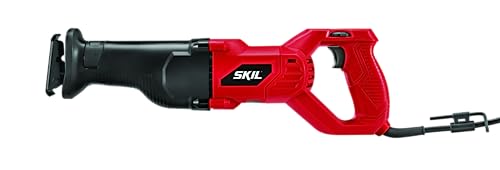
The SKIL 9206-02 offers 7.5 amps of cutting power and a convenient tool-less blade change system. Its rugged metal gear housing contributes to durability under rough use, while a variable speed trigger provides control for different materials, from wood to metal, helping users adapt to changing job-site requirements.
SKIL SPT44A-00 13 Amp Corded Saw
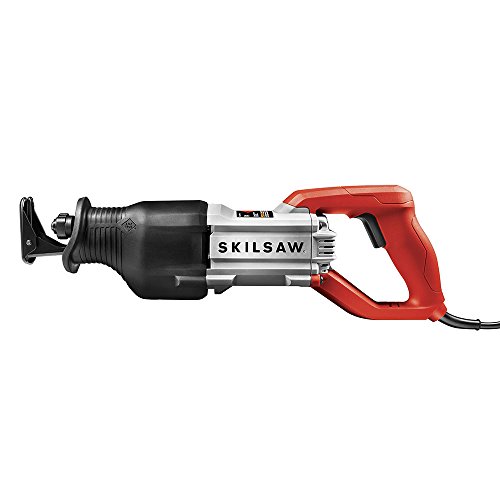
The SKIL SPT44A-00 rises with a 13-amp motor, designed for demanding applications. It incorporates BUZZKILL technology to suppress vibration by up to 35% compared with the competition, improving comfort on extended cuts. The variable speed trigger supports precise control when cutting specialized materials, helping reduce blade wear.
BOSCH RS325 120-Volt Reciprocating Saw
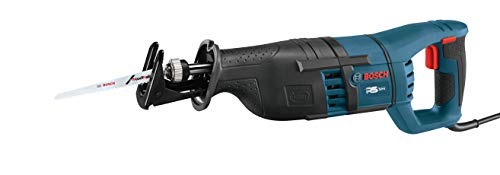
The BOSCH RS325 emphasizes a high power-to-weight ratio with 12 amps of power at about 7 pounds, designed for extended operations without excessive fatigue. Its compact size (approximately 17.8 inches) allows cutting in tight or overhead positions, while its orbital action promotes fast cutting across various materials for efficient demolition tasks.
WEN 3630 10-Amp Reciprocating Saw
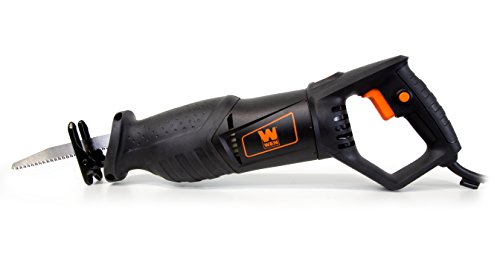
The WEN 3630 features a 10-amp motor capable of 0 to 2600–2800 SPM with eight pivot stops for versatile cutting angles. The variable speed trigger enables precise control, while the eight-position pivoting head helps you adapt to awkward cuts and confined spaces, making it a practical option for a broad range of demolition tasks.
Buying Guide: Key Considerations For Corded Reciprocating Saws
Power and speed are the core of corded reciprocating saw performance. A higher amp rating generally translates to more aggressive cutting through tough materials, but it should be balanced with weight and ergonomics to avoid fatigue on long jobs.
- Motor power and speed range: Look for 7–12 amps and adjustable speeds to handle wood, metal, and plastics efficiently. Some models offer up to 3000 SPM for fast material removal.
- Blade change system: Tool-less or lever-action blade clamps save time on blade swaps, especially when working with multiple materials or blade types.
- Vibration control: Features like BUZZKILL or other dampening technologies reduce fatigue and improve control during extended use.
- Non-marking and pivoting features: Pivoting shoes, adjustable front shoes, and anti-slip grips help stabilize cuts in tight or overhead positions and protect surfaces.
- Weight and balance: A lighter tool reduces user fatigue; consider models around 6–8 pounds for versatility without sacrificing power.
- Durability and build: Metal gear housings and reinforced components extend service life in demanding environments like construction sites.
Choosing between a compact, lighter model and a heavier, high-power unit depends on your typical tasks. If you frequently cut in overhead positions or in confined spaces, prioritize compactness and a good balance. If you regularly tackle aggressive demolition or metal cutting, a heavier model with a robust motor and vibration control will pay off in long-term performance.
All selections above are corded, providing consistent power without battery downtime. When evaluating blades, ensure compatibility with common blade types (wood-cutting, metal-cutting, demolition blades) and consider investing in a blade kit tailored to your most frequent materials.