Your best choice depends on whether you’re cutting wood with nails, remodeling window frames, or demolishing pallets. The top five products below are selected for durability, nail-embedded wood performance, and overall cutting life. This guide helps identify which blade suits your project, from heavy demolition to precise removal of nail-embedded material. The summary table highlights who each blade is best for and why it stands out.
| Product | Best For | Why It Stands Out |
|---|---|---|
| GOSHINE 10 Pack 9″ 6/12 TPI | Heavy nails, outdoor wood, pallets | Thick 0.05″ blade with 6/12 teeth for fast, smooth cuts and long life. |
| WORKPRO 6-Piece 6″ Set | General nail-embedded wood and plastics | Bi-metal mix with versatile nail-cutting and metal blades. |
| TOLESA 5 Pack 6″ 6TPI Bi-Metal | Window/door demolition, nail-embedded wood | 8% cobalt teeth for durability and aggressive cutting. |
| jinmg 10 Pack 9″ 8/14TPI | Metal, nail-embedded wood, PVC | Thick 1.27 mm blade with cobalt-enhanced teeth for longevity. |
| Diablo Demo Demon 9″ 5/7 TPI | Nail-embedded wood, heavy demolition | Carbide-tipped teeth with Perma-SHIELD coating for long life. |
GOSHINE 10 Pack 9″ 6/12 TPI Bi-Metal Demolition Blades

These blades are designed to cut wood and wood embedded with nails, making them suitable for fences, windows, and reclaimed lumber. They feature a thicker blade body to resist bending and a 6/12 tooth pattern to balance fast rough cuts with smoother finishes. The three-stage heat treatment enhances hardness and toughness for longer service life. Best for buyers who frequently encounter nail-containing wood and need a durable, go-to blade for outdoor or demolition projects. Caution: heavy nails or unexpected metal may still require alternate blade types to avoid blade damage.
WORKPRO 6-Piece 6″ Reciprocating Saw Blade Set
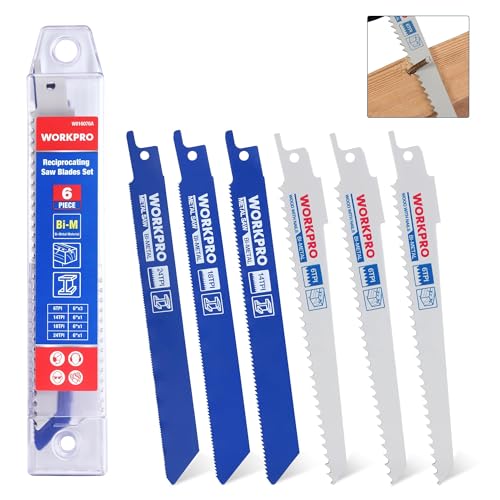
This set mixes nail-embedded wood blades and metal blades in bi-metal construction, offering faster cuts and longer life. The nail-embedded wood blades are designed to tackle wood with nails up to about 50 mm thick, while metal blades cut through metal up to 3 mm thick. Best for users who want a versatile kit for both nail-containing wood and nearby metal components. Caution: not all blades in the set are ideal for extremely dense metals; separate metal-specific blades may be preferred for precise metal work.
TOLESA Nail Embedded Wood Blades 5 Pack

TOLESA blades feature a bi-metal body with 6TPI teeth and cobalt-enhanced edges for durable cutting in nail-embedded wood, engineered lumber, and some plastics. They excel at aggressive cutting in corners and tight spaces thanks to a slimmer profile and strong chip expulsion. Best for demolition tasks like window or door frame removal where nails are present. Limitation: designed primarily for wood and related composites; not ideal for very hard metals.
jinmg 10 Pack 9″ 8/14TPI Blades

JINMG blades use a thicker 1.27 mm bi-metal construction with 8/14TPI teeth, designed for nail-embedded wood and metal-cutting tasks. They emphasize longevity due to higher-density bi-metal and cobalt content, reducing the risk of blade breakage during heavy cutting. Best for projects requiring a longer blade life and steady performance across mixed materials. Caution: extremely dense metals may still demand dedicated metal blades.
GOSHINE 6-Inch 6/12 TPI Bi-Metal Demolition Blades

This shorter variant mirrors the 9-inch blade’s nail-embedded wood capability with a robust 6/12 TPI setup, aimed at tight spaces and quick, rough cuts. The thicker blade body adds durability. Best for trim work, smaller demolition tasks, and projects with nails near corners. Caution: shorter blades may require more passes on large nails or thick material.
Diablo Demo Demon Carbide Teeth 9″ Blades

The Diablo Demo Demon blades use carbide-tipped teeth with a new variable tooth design and Perma-Shield non-stick coating. They are engineered for extreme nail-embedded wood demolition and offer up to substantially longer cutting life than standard bi-metal blades. Best for demanding projects that require long life and steady performance with nail-embedded wood. Limitation: carbide-tipped blades can be more brittle under impact; use with appropriate care in rough work.
Buying Guide
Key considerations help choose the right blade for nail-embedded wood and demolition tasks:
- Blade material and construction: Bi-metal blades balance flexibility and durability; carbide-tipped blades offer longer life on tough materials but may require careful handling.
- Tooth configuration: Lower TPI (fewer teeth per inch) cuts faster for rough demolition; higher TPI yields smoother cuts but can slow progress when nails are present.
- Blade thickness: Thicker blades resist bending when cutting through nails but may require more effort in tight spaces.
- Length and fit: Longer blades handle deeper cuts; ensure compatibility with your saw model and available clearance.
- Special coatings: Non-stick or low-friction coatings reduce gum and heat buildup, improving cut speed in resinous woods.
- Application scope: Separate blades for wood with nails, metal, and mixed materials often deliver better results than all-in-one sets.
Frequently Asked Questions
- What blade is best for nail-embedded wood? A blade designed for nail-embedded wood, typically Bi-Metal with reinforced teeth, offers reliable cuts and longer life when nails are common.
- Can I cut metal with these blades? Some blades are designed for metal; verify the blade’s tooth pattern and material before attempting metal cuts.
- Should I use a carbide-tipped blade for nails? Carbide tips provide longer life in dense materials but can be more brittle; use in controlled demolition scenarios.
- How do I know if a blade is too thick for a space? Check blade width and overall length; narrower, shorter blades fit inside tight corners and confined areas.
- Are there blades optimized for fast plunging? Yes, blades with slender tips and optimized tooth geometry enable quicker starts in nail-embedded wood.
- What maintenance helps blades last longer? Avoid overheating by using appropriate speed settings, clear dust, and stop cutting when binding occurs to prevent tooth damage.