Whether you’re trimming edges, smoothing boards, or flattening stock, a portable wood planer helps you achieve professional results without a full workshop. This guide highlights five top options that balance power, portability, and precision for both casual DIYers and hobbyist woodworkers. Each pick prioritizes reliable blades, adjustable depths, and solid construction to handle a range of woods. Use the buying guide to compare key features and choose the right tool for your workflow.
| Product | Brand | Key Benefit |
|---|---|---|
| VEVOR Power Benchtop Planers | VEVOR | Two speeds, extended infeeding, coplanar table |
| JORGENSEN 3.5″ Mini Wood Planer | Jorgensen | Compact, adjustable depth, robust ductile iron body |
| JORGENSEN No.60-1/2 6-1/4″ Wood Planer | Jorgensen | Professional blade, adjustable mouth, durable construction |
| Cordless Handheld Planer (Funnywhale) | Funnywhale | Battery-powered convenience, 15,000 RPM |
| Cordless Electric Hand Planer (MtiolHig) | MtiolHig | 0–2 mm depth control, Dewalt 20V compatibility |
Note: All products listed are portable planers suitable for hobbyist and professional use, with a mix of benchtop and handheld designs for versatility on the job site or at home.
VEVOR Power Benchtop Planers
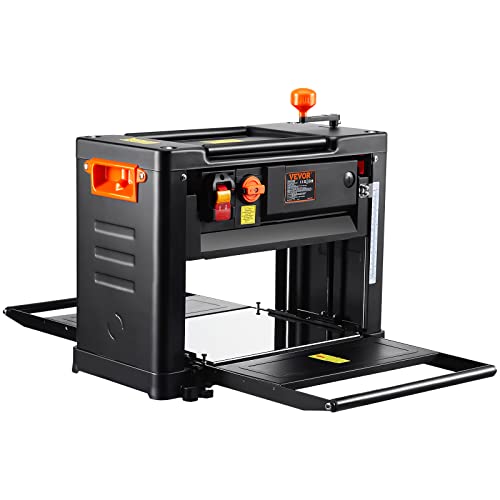
The VEVOR benchtop planer features a 13″ widened worktable that supports boards up to 6″ thick and 13″ wide, with coplanar alignment aided by pull-out extensions totaling 35″ of length. A precision machined cast iron bed and steel plate help keep stock flat, reducing snipe and miscuts. The three-knife cutter head is quick-change and solid steel, hardened to HRC55-60 for durable, smooth planing. Two adjustable speeds let you switch between fast material removal and fine finishing, helping minimize tear-out on figured stock. The material removal gauge and large thickness scale provide repeatable results pass after pass.
Features to consider: long worktable support, sturdy bed construction, fast blade changes, and dual feed speeds. This model excels when working with longer boards or stock that benefits from steady, coplanar feeding. Ideal for workshops needing a robust, mid-width planner without sacrificing portability.
JORGENSEN 3.5 Inch Mini Wood Planer

This mini hand planer uses a professional O1 tool steel blade for efficient cutting with reduced blade wear. Its ductile iron body offers rugged durability, reinforced by a zinc alloy lever cap and stainless steel components for longevity. The depth adjustment is straightforward—simply rotate the knob to set the desired cut depth and secure it. The compact width and adjustable mouth enable precise trimming and detail work, making it suitable for small-scale joinery, moldings, and decorative work. The design emphasizes accuracy and repeatability in a compact form factor.
Considerations: small footprint, high-precision blade, and durable materials. Best for trimming, detail planing, and situations where space is at a premium while still requiring solid performance.
JORGENSEN No.60-1/2 6-1/4″ Wood Planer

The No.60-1/2 model combines a professional blade setup with a ductile iron body to withstand heavy-duty use and occasional drops. A robust lever cap and stainless steel components contribute to a high-quality user experience. The cutting depth is adjustable via a simple knob, and the mouth width can be adjusted as needed to accommodate different stock sizes. This planer’s design emphasizes stable performance, precise depth control, and durable construction for smoother planning and better edge yields on a range of woods.
Key points: adjustable depth, adjustable mouth, and durable construction. Suitable for precise smoothing and trimming tasks where dependable manual planing is essential.
Cordless Handheld Planer Compatible With Dewalt 20V Max

This cordless handheld planer is designed to run on Dewalt 20V Max batteries (battery not included). It delivers up to 15,000 RPM with a 3-1/4″ (82 mm) planing width, making material removal quick and efficient for home DIY projects or on-site work. A dual-switch safety feature requires both on/off and safety activation to operate, helping reduce accidental starts. The portability and cordless operation are advantageous for edge work on shorter boards or fast surface prep where a power outlet isn’t readily available.
Important considerations: battery compatibility, safety design, and planing width. This option is ideal when mobility and quick touch-ups are needed without dragging a corded setup to the work area.
Cordless Electric Hand Planer (MtiolHig)
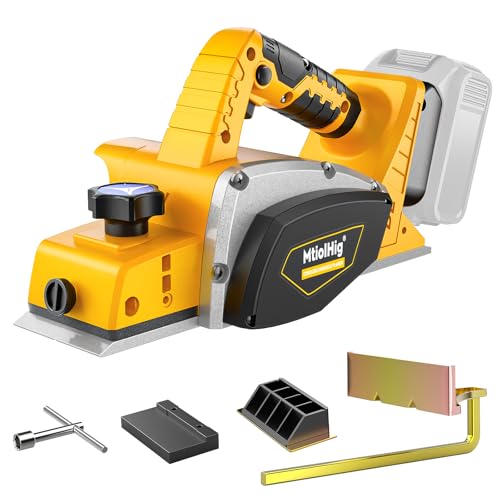
The MtiolHig cordless planer offers a no-load speed of 15,000 RPM with a 3-1/4″ planing width. It supports depth adjustments up to 2 mm (0–2 mm) with a precise accuracy of 0.01 mm. Designed to work with Dewalt 20V batteries (battery not included), this model emphasizes a balance of power, precision, and cordless convenience. The tool is intended for controlled material removal in a range of woodworking tasks, from door edges to trim work and small stock prep, with a focus on accuracy and efficiency for rapid project progress.
Key considerations: depth precision, battery compatibility, and planing width. Best for cordless convenience with disciplined depth control on smaller to mid-sized stock.
Amazon Basics Woodworking Hand Planer No. 4

The Amazon Basics No. 4 adjustable bench plane features a cast iron body for stability, an impact-resistant plastic handle for comfortable control, and a durable steel blade for clean cuts. While small in size, this bench plane focuses on precise smoothing and trimming for fine woodworking, moldings, and edge finishing. It’s a solid option for beginners and hobbyists needing a reliable, low-profile plane to pair with bigger shop tools.
Considerations: build quality, blade durability, and comfortable handling. A dependable option for those who want a traditional hand plane with consistent results in small tasks.
VEVOR Thickness Planer, 13-Inch Benchtop
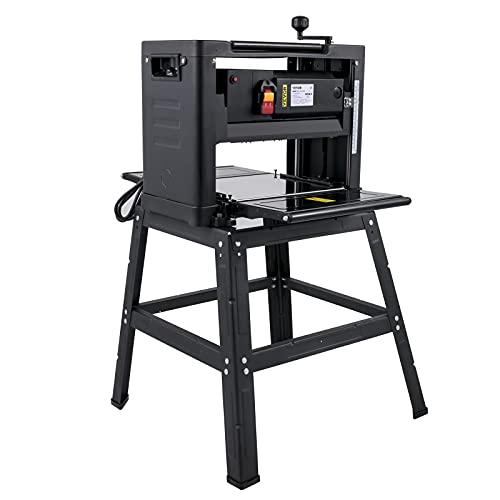
The VEVOR thickness planer delivers 2000W power with an 8,000 RPM cutter head, enabling up to 6 m/min feed speed and a maximum 13″ cutting width. The depth range is 0-0.12″ (0-3 mm), with a planing height of 6-160 mm. A foldable workbench and detachable stand provide extra workspace, and automatic feeding helps move stock smoothly through the cutter. The design aims to make large planing tasks more manageable in a portable package, with a clear thickness gauge to monitor material removal, ensuring consistent results across repeated passes.
Key takeaways: robust power, adjustable feed, foldable setup, and easy thickness control. Suitable for users needing higher throughput and the flexibility of a foldable, space-saving workstation.
Buying Guide: Key Purchase Considerations
- Planing width and thickness: Choose models that match your stock size. Benchtop 13″ planners handle broader boards, while minis excel at trimming small stock and detail work.
- Blade quality and replacement: Professional-grade blades (e.g., O1 tool steel) last longer and stay sharper with less frequent sharpening. Check availability and cost of replacement knives.
- Depth adjustment accuracy: Precision depth control (down to 0.01 mm) ensures repeatable results, especially for fine finishing tasks.
- Power source and portability: Corded adults offer consistent performance; cordless models provide mobility on-site but depend on battery availability and runtime.
- Speed and feed: Two-speed systems can optimize material removal versus finish, reducing tear-out on figured woods.
- Bed and table stability: A cast iron bed or reinforced steel plates help maintain board flatness, minimizing snipe and uneven cuts.
- Dust management: Integrated dust exhaust or clean-out features reduce cleanup and improve accuracy by maintaining a clear work surface.
- Adjustability: Look for adjustable mouths, extendable infeeding tables, and foldable stands to accommodate different stock sizes and workflows.
- Intended use: For DIY or occasional projects, a compact mini or cordless planer may suffice. For frequent, longer stock, a heavier benchtop with a larger table area is advantageous.
Buying the right portable planer involves balancing size, power, and versatility with the tasks you perform most. For hobbyists, a compact model with adjustable depth and a good blade is often enough. For more serious woodworkers, models offering larger stock support, durable construction, and multiple speed options can speed up workflows while maintaining finish quality.