When cutting plexiglass or other plastics on a table saw, choose blades designed to minimize heat buildup, edge chipping, and melting. This guide highlights five blades that balance fast material removal with smooth finishes, making them suitable for hobbyists and professionals alike. Best for acrylic sheets, polycarbonate, and other plastics, these blades reduce heat and protect edges. The buyer who values clean edges, fewer melt marks, and reliable performance will find these options compelling.
| Product | Blade Size | Notable Benefit |
|---|---|---|
| Freud LU94M010: 10″ Plastic Blade | 10″ diameter | Low heat melt control with MTCG grind |
| MASTEC 10-Inch 100T Carbide Tooth TCG | 10″ diameter | Triple Chip grind for smooth plastic cuts |
| CMT Orange Tools 222.080.10 | 10″ diameter | Plexiglass and thin plastics specialist |
| Freud LU94M012: 12″ x 96T Plastic Blade | 12″ diameter | High tooth count for clean finishes on plastics |
| WEN BL1080 10-Inch 80-Tooth | 10″ diameter | Ultra-fine finish for hard and soft woods and plastics |
Below you’ll find concise product sections with direct links, image previews, and practical notes to help you pick the right blade for plexiglass work. For each blade, the “best for” guidance clarifies who benefits most and why the choice stands out.
Freud LU94M010: 10″ Plastic Blade
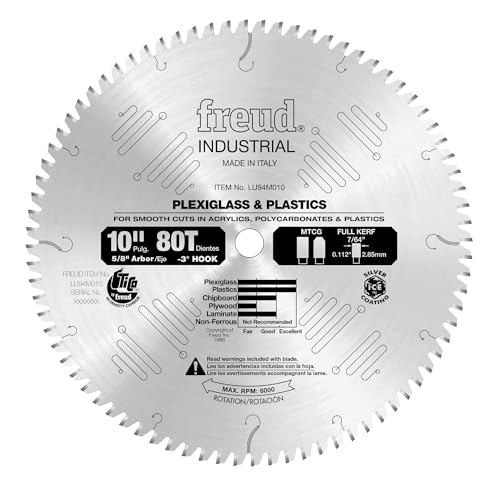
Specs: Arbor 5/8″, Diameter 10″, Grind MTCG, Hook Angle -3°, Kerf .110″, Plate .087″, Teeth 80. This blade uses a premium TiCo HI-Density carbide plastic blend and a Modified Triple Chip Grind (MTCG) designed to keep plastics cool during cutting, reducing melting. Best for: users who need reliable, consistent cuts in plexiglass with minimal heat buildup. Limitation: may be overkill for very thin plastics where a lighter cut is sufficient.
MASTEC 10-Inch 100T Carbide Tooth TCG

Specification: 10-inch, 100 carbide teeth, 5/8-inch arbor. Application highlights include durable, smooth cutting and clean finishes. The TCG tooth design makes it suitable for cutting Plexiglass, Plastic, Aluminum, and non-ferrous metals. Best for: users cutting plexiglass sheets that require extra tooth count for a smoother finish and efficient chip evacuation. Caution: ensure correct feed rate to avoid edge chipping on very brittle plastics.
CMT Orange Tools 222.080.10 Plexiglass Blade

Materials: Ideal for Plexiglass and thin plastics. Compatible with slide miter saws, squaring machines, and stationary table saws. Features laser-cut premium steel plate, heat expansion slots, and tensioning ring with tri-metal brazing. Best for: users needing specialized plexiglass cutting with strong plate integrity. Limitation: may have a higher cost and a narrower availability compared to standard wood blades.
WEN BL1080 10-Inch 80-Tooth

Features: 10-inch diameter, 5/8-inch arbor, up to 6000 RPM, ultra-thin 1/10-inch kerf for clean, efficient cuts. Best for: finishing cuts in plastics and soft woods where a fine edge is desired. Caution: not all users report the same performance with extremely hard plastics; test on scrap first.
FOXBC 10-Inch Table Saw Blade, 80-Tooth

Attributes include 10-inch diameter, 80-tooth ultra-finish, 0.098″ kerf, 5/8″ arbor, and ATB grind. Best for: achieving a high-quality finish on plastics and thin wood panels with minimal fuzz. Limitation: high tooth count can slow cutting speed on thicker plastics; use for finishing tasks rather than roughing passes.
Buying Guide: Plexiglass Blade Essentials
What to look for when cutting plexiglass
Choose blades with a fine or specialized tooth geometry to minimize heat and edge tearing. A carbide blade offers durability, but a blade designed specifically for plastics, such as MTCG or TCG tooth patterns, can dramatically reduce melting and heat buildup.
Blade size and compatibility
Most plexiglass work uses 10″ or 12″ blades with 5/8″ arbors. Check your saw’s compatibility before buying. Larger diameters remove more material per pass but require greater stabilization and feed control.
Tooth configuration questions
- What is the benefit of a higher tooth count? Better surface finish, more precise cuts, and less chipping on brittle plastics.
- Should you choose ATB or special plastic teeth? Plastic-specific teeth designs, like MTCG or TCG, improve heat management and edge quality.
Practical tips for best results
- Use slower feed rates and light cuts to reduce heat buildup when cutting plexiglass.
- Clamp the workpiece firmly and support cut-off sections to prevent pinching and chipping.
- Consider a blade with a reduced kerf to minimize waste and reduce material heat generation.
What about safety and maintenance?
Always wear eye and hearing protection. Keep blades sharp and clean to prevent heat buildup and ensure smoother cuts. Replace blades showing signs of glazing or excessive wear promptly to maintain cutting quality.
Summary of recommended choices
- Best for low-melt cuts: Freud LU94M010 (10″ Plastic Blade)
- Best for budget-friendly plexiglass work: WEN BL1080 (10″ Ultra-Fine Finish)
- Best for smooth, dense plastics: MASTEC 10-Inch 100T TCG
- Best for plexiglass with edge clarity: CMT Orange Tools 222.080.10
- Best for larger projects on table saws: Freud LU94M012 (12″ Plastic Blade)
Frequently asked questions
- Can I cut plexiglass with a standard wood blade? It’s not ideal. Plastic-specific blades reduce heat buildup and minimize melt marks.
- Is max RPM important for plastic blades? Yes; blades are designed to perform at specific speeds. Operating within recommended ranges helps avoid melting and edge chipping.
- Should I use masking tape on plexiglass? Masking tape can help reduce chipping along the cut line but is not a substitute for a proper blade.
- What if I see heat marks after cutting? Pause, allow the material to cool, and consider a blade with a higher tooth count or one designed for plastics.
- How do I know if a blade is “plastic-friendly”? Look for tooth patterns like MTCG or TCG and a designation that mentions plexiglass or plastics.
- Can these blades cut other plastics besides plexiglass? Yes, most are suitable for various plastics and non-ferrous metals with appropriate feed rates.