Finding the right non-ferrous circular saw blade depends on material, cut quality, and durability. This buyer’s guide highlights top options designed for aluminum, brass, copper, plastics, and other non-ferrous metals. The selections balance clean cutting performance with wear resistance, helping both DIY enthusiasts and professionals. The table below summarizes five suitable picks, including blades for 7-1/4″ and 10″ saws, with key attributes to compare at a glance.
Summary table
| Product | Diameter | Teeth | Arbor | |
|---|---|---|---|---|
| TOMAX 7-1/4-Inch 60 Tooth TCG | 7-1/4″ | 60 | 5/8″ | Thin plastics and non-ferrous metals; economical daily use |
| Benchmark Abrasives 7 1/4″ TCT Blade 80 Teeth | 7-1/4″ | 80 | 5/8″ | Non-metals including non-ferrous metals; precise, clean cuts |
| TOMAX 10-Inch 80 Tooth TCG | 10″ | 80 | 5/8″ | Larger non-ferrous sections and profiles; smooth finishes |
| FOXBC 10-Inch 80-Tooth TCG | 10″ | 80 | 5/8″ | Aluminum, copper, brass; quieter operation with stabilizers |
| OA-BRES 10 Inch 80T Aluminum Blade | 10″ | 80 | 5/8″ | Heavy-duty non-ferrous cutting; durable construction |
TOMAX 7-1/4-Inch 60 Tooth TCG Aluminum and Non-Ferrous Metal Saw Blade
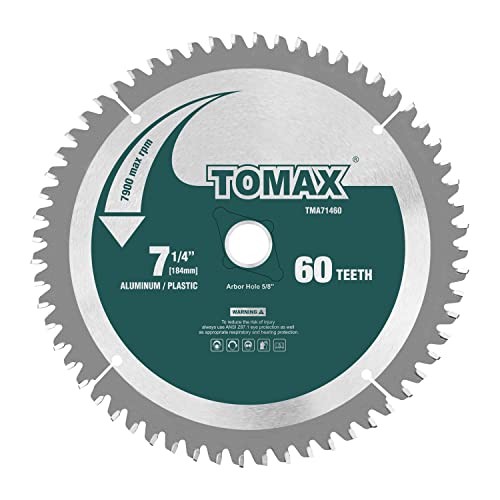
Features include construction-grade carbide teeth for maximum wear resistance and an electrophoretic coating to reduce rust and corrosion. This blade is designed to cut plastic, aluminum, and non-ferrous metals with steady tracking. Best for small to mid-size jobs in workshops or job sites where quick non-ferrous cuts are needed without blade changes.
Who it’s best for: hobbyists and small shops needing an affordable, durable blade for light-to-moderate non-ferrous work. Avoid this if you require extremely heavy-duty metal cutting or very thick aluminum stock.
Benchmark Abrasives 7 1/4″ TCT Blade, 80 Teeth

This blade is engineered for clean, smooth cuts across non-metals including non-ferrous materials. It uses precision tooth geometry and a balanced layout to support accurate blade tracking and square cuts. The wide material range covers aluminum, brass, copper, PVC, and fiberglass, making it suitable for shop fabrication and trim work.
Who it’s best for: professionals and serious DIYers who need a single blade for many non-ferrous tasks. Choose this if you’re cutting sheet panels or profiles frequently. A caution: very thick aluminums may still require a dedicated blade for heavy-duty metal shear.
TOMAX 10-Inch 80 Tooth TCG Blade

Designed for cutting plastic, aluminum, and non-ferrous metals, this blade features a robust carbide tooth set and an electrophoretic coating to reduce corrosion. The larger 10-inch diameter allows efficient full-length cuts on bigger workpieces, with the same 5/8″ arbor standard for compatibility.
Who it’s best for: users working on larger aluminum profiles or plastic components who want longer, smoother cuts in a single pass. A limitation: 10″ blades require compatible saws and more workspace for operation.
FOXBC 10-Inch 80-Tooth TCG Blade

This blade features a 0.094″ kerf with a laser-cut stabilizer. Made from high-density tungsten carbide, it aims to reduce vibration and trap noise, delivering accurate, durable performance for aluminum, copper, brass, and other non-ferrous cuts. The 5/8″ arbor ensures broad compatibility with many table and miter saws.
Who it’s best for: users seeking a quiet, stable cut with reduced vibration on metal and plastic. Better for precision cuts than heavy machining, and consider if you operate in tight shop conditions where tool stabilization matters.
OA-BRES 10 Inch 80T Aluminum Blade with 5/8-Inch Arbor

Includes a 10″ upgraded TCG 80T blade designed for aluminum and non-ferrous metals. It uses heavy-duty C-4 tungsten carbide teeth for crisp, long-lasting cuts. An electrophoretic coating helps resist rust, and laser-cut stabilizer vents reduce noise and warp, promoting a cooler, steadier cut.
Who it’s best for: workshop users requiring durable blades with good heat management for repeated non-ferrous cuts. Consider if you need consistent performance over many cycles, and note that very thick metals may still benefit from a dedicated blade.
Buying Guide: Key Considerations For Non-Ferrous Blades
- : Carbide teeth (TCG or similar formats) provide longer life when cutting non-ferrous metals. Look for blades with tungsten carbide teeth for durability in aluminum, copper, and brass.
- : Thinner kerf blades require less power and can yield smoother cuts, but must be stable to prevent deflection in softer non-ferrous materials. Heavier blades offer rigidity for tougher tasks.
- : Most blades list a 5/8″ arbor. Verify that your saw accepts this arbor and that you have the correct arbor adapter if needed.
- : Electrophoretic coatings minimize rust and corrosion, extending blade life in humid environments or frequent non-ferrous work.
- : Some blades are optimized for aluminum, others for a broad range of non-ferrous materials. Choose based on your primary material and whether you need a single blade for multiple tasks.
- : 7-1/4″ and 10″ blades support different saws (miter, table, or circular saws). Ensure the blade size matches your equipment and typical job depth requirements.
- : Look for stabilizers or vents that reduce vibration and heat buildup, helping maintain accuracy during long sessions.
Frequently Asked Questions
- What is a non-ferrous blade best used for? Non-ferrous blades are optimized for cutting aluminum, brass, copper, and plastics with clean edges and reduced galling.
- Are more teeth better for aluminum? Yes, higher-tooth blades (like 80T) generally produce smoother cuts in thin metals and plastics, though they require more power and slower feed rates.
- Can I use a metal-cutting blade on plastic? Some blades are designed to cut both plastic and metal, but check the manufacturer’s guidance to avoid cracking or excessive heat buildup in plastic materials.
- Is coating essential for non-ferrous blades? Coatings reduce corrosion and friction, increasing blade life in humid environments or with frequent non-ferrous cuts.
- What should I consider when choosing between 7-1/4″ and 10″ blades? Choose 7-1/4″ for smaller saws and tighter spaces; choose 10″ for deeper cuts and larger workpieces, as long as your saw supports the diameter.
- Do all non-ferrous blades fit standard 5/8″ arbors? Most do, but verify your saw’s arbor size and compatibility before purchasing.