The best nail-cutting circular saw blades protect your tools and deliver clean cuts when nails are present in wood. This guide highlights five top options, showing who each blade is best for and why. Use these recommendations to choose blades designed to resist nail impact, reduce binding, and extend blade life for framing, demolition, or construction work.
Overview of selected products:
| Product | Brand | Best For | Key Benefit |
|---|---|---|---|
| Diablo D0724DA | Diablo | Framing and demolition | Durability and extended life against nail-embedded wood |
| EZARC 24T Framing | EZARC | Nail-embedded wood and framing | Non-stick coating and high nail resistance |
| HOJR TA Series 24T | HOJR | Demolition and framing | Anti-thermal adhesion coating for cleaner cuts |
| IVY Classic 14T Nail Cutting | IVY Classic | Used lumber with embedded nails | Premium carbide for durability |
| CMT Orange 286.324.07 | CMT ORANGE TOOLS | Demolition and multi-materials | Industrial-grade carbide with non-stick coating |
Diablo D0724DA Dura-Blend Framing Blade
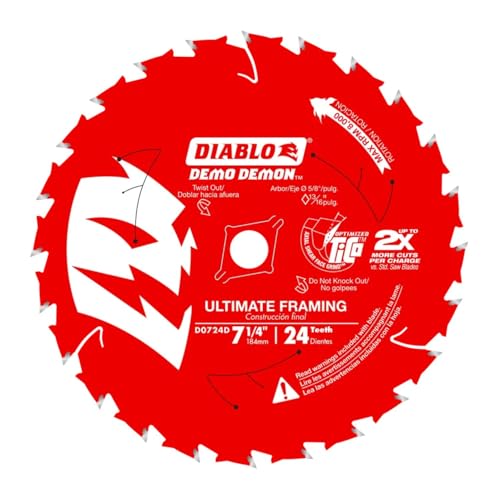
Features include Dura-Blend Carbide for up to 15X longer cutting life, designed to withstand nail-embedded wood, and Nano Grind Technology for precision and tracking control. Best for pros doing heavy framing and demolition where nails and debris are common. Caution: performance may vary with very hard materials beyond typical framing tasks.
EZARC 24T Framing Blade
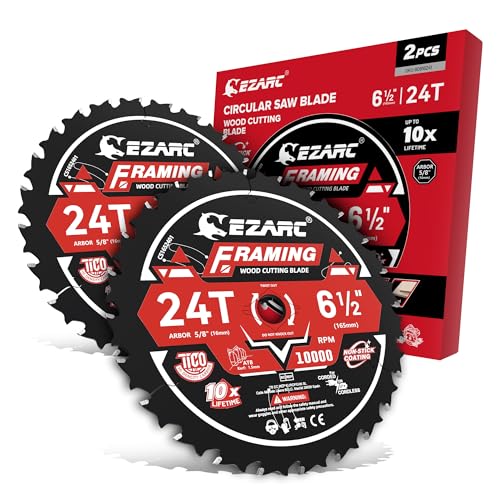
Best for nail-embedded wood and framing work thanks to non-stick coating that reduces friction and pitch build-up. It’s engineered for nail resistance and delivers high efficiency with ultra-thin 1.5 mm kerf. Choose this for cleaner cuts and longer blade life in nail-prone environments. Limitation: may require more precise feed rate to maximize the ultra-thin kerf advantage.
HOJR TA Series 24T-TA Demolition Blade
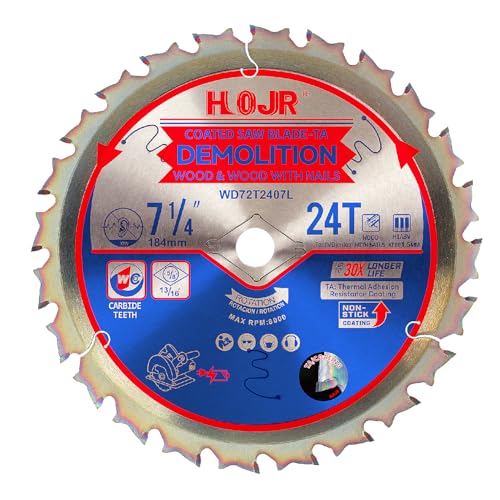
Best for demolition and framing with an anti-thermal adhesion coating on the cutting head, reducing heat buildup. Notable for a 7° hook angle and high RPM compatibility, supporting efficient demolition work. Avoid this if you primarily cut delicate trim where heat and coating benefits are less important.
IVY Classic 14T Nail Cutting Blade

Best for cutting used lumber with embedded nails thanks to triple chip ground C3 tungsten carbide teeth. Suitable for heavy-duty framing where nails are frequently encountered. Caution: 14T tooth count may be slower on deep cuts compared to higher tooth counts for faster ramp cuts.
CMT Orange Tools 286.324.07
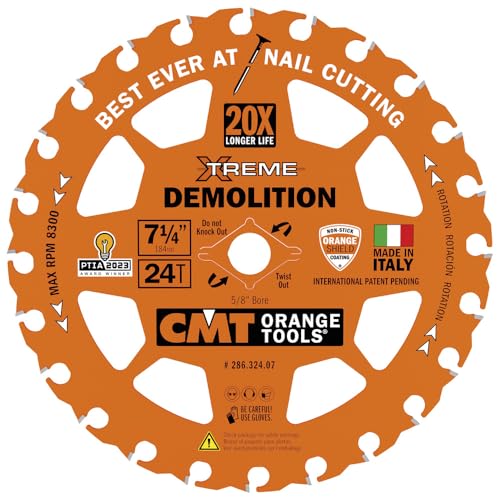
Best for demolition and multi-material projects, with a laser-cut premium steel plate body, industrial chrome carbide, and non-stick Ptfe coating. This blade supports versatile cutting across laminate beams, OSB, plywood, and nails. Limitation: data notes emphasize general multi-material use; ensure your saw is compatible with this blade’s specific arbor and dimensions.
Buying Guide
What should I look for in nail-cutting circular saw blades?
Key factors include nail resistance, carbide quality, coating technology, kerf width, and compatibility with your saw. A non-stick or anti-friction coating helps extend life when cutting through nail-embedded wood. Carbide durability improves life under tough tasks.
Steel vs. carbide and how it affects nail cuts
Carbide blades last longer and stay sharper when hitting nails or metal fragments. For frequent nail encounters, prioritize carbide teeth and coatings designed to minimize gum and heat buildup.
What blade kerf and tooth count work best for nail cutting?
Ultra-thin kerfs (like 1.5 mm) reduce waste and motor load, enabling faster, cleaner cuts. Higher tooth counts provide smoother cuts but may slow progress; lower tooth counts (like 14T) cut quickly through framing but may be rougher in finish areas.
Coatings and coatings advantages
Non-stick and anti-friction coatings reduce pitch buildup and heat. They improve life in nail-heavy cuts but may be less noticeable on brand-new lumber. Anti-thermal coatings help keep temperatures down during long demolition tasks.
Arbor compatibility and RPM considerations
Check your saw’s arbor size (e.g., 5/8 inch) and maximum RPM. Most 7-1/4 inch blades use a 5/8 inch arbor, but verify your tool’s specs to ensure safe operation and optimal performance.
Which blade is best for my job?
For heavy framing and demolition with frequent nails, consider blades with Dura-Blend carbide, anti-nail design, or non-stick coatings. If you primarily cut nailed lumber but value precision, a blade with Nano Grind or triple-chip carbide can offer better tracking and longer life. For multi-material tasks, a versatile blade with a robust coating and alloy steel body is advantageous.
Installation and safety tips
Always disconnect power when installing blades. Use the correct arbor size, tighten securely, and inspect for damaged teeth before use. Wear eye protection and follow manufacturer guidelines for safe operation around nails and debris.
FAQ
- Q: Are these blades suitable for cordless circular saws? A: Many are designed for both corded and cordless circular saws, but verify tool compatibility with arbor size and shank type.
- Q: Do these blades cut nails cleanly or just resist damage? A: They are engineered to resist nail impact and maintain life, but performance depends on nail size and wood type.
- Q: Can I use a nail-cutting blade for general wood cuts? A: Yes, but consider the tooth count and kerf; a blade optimized for nails may have different cut characteristics than a standard plywood blade.
- Q: What is the benefit of a coating like non-stick or anti-thermal adhesion? A: Coatings reduce friction, heat buildup, and pitch, extending blade life in challenging materials.
- Q: How do I know which blade to pick for demolition work? A: Look for high durability carbide, anti-nail features, and coatings designed for debris and resin buildup.
- Q: Should I choose a blade with more teeth for demolition? A: Higher teeth count yields smoother cuts but may slow progress; for framing and demolition with nails, balance is key.