Answering the question: which miter saw vacuum switch best automates dust collection and protects electrical circuits? This guide highlights five top options ideal for woodworking setups that include miter saws, table saws, routers, and other tools. Each pick suits different shop configurations, budgets, and reliability needs. Read on to compare how they handle auto-start, delay shutoffs, and overload protection to keep your workspace cleaner and safer.
Buyer quick-look summary table
| Product | Best For | Key Benefit |
|---|---|---|
| Ortis Automatic Vacuum Switch (Two Tool Outlets) | Small to medium shops needing two tool connections | Auto/start delay with 1s/7s delay, two outlets |
| SENCTRL AVS3000 Automatic Vacuum Switch | Workflows with manual override | Three modes Auto/Off/On, overload safety |
| O’SKOOL Automatic Vacuum Switch PTA08 | Compatibility with common shop vacs | Auto start with 10s delay, simple integration |
| SENCTRL AVS3900 | Heavily used or professional shops | Three delay options (3/7/10s), robust build |
| TAICHODEER Upgraded Automatic Vacuum Switch | Customizable thresholds for tools | 3/7/10s delays, adjustable 30/60/100W threshold |
Ortis Automatic Vacuum Switch (Two Tool Outlets)

The Ortis switch provides two tool outlets and three vacuum modes: automatic, off, and on, with auto switching. The 1-second startup delay and 7-second auto-off delay help prevent circuit overload and reduce airborne dust for a cleaner workspace. The device supports two fixing methods—screw fastening or traceless wall mounting—facilitating straightforward installation.
Best for: small to mid-size shops that run two powered tools with a single vacuum. The auto-delay helps maintain airflow while preventing overload. Caution: installation options may require wall mounting space and cable routing considerations.
SENCTRL AVS3000 Automatic Vacuum Switch

This model adds a manual switch alongside two tool outlets and three modes—Auto, Off, and On—giving more control in variable workshop conditions. It uses a 19.7-inch UL-certified 14AWG cord capable of handling over 30A, and its load-sensing startup can delay the vacuum by 1 second if a high-draw tool is engaged. Best for: users who want a flexible, robust control system with a direct manual override. Limitation: manual features add complexity for beginners.
O’SKOOL Automatic Vacuum Switch PTA08
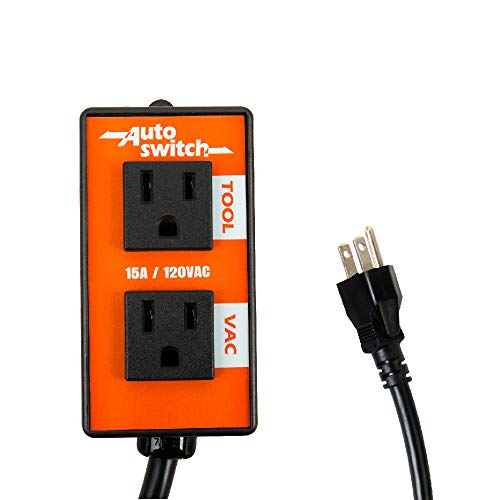
Designed for real woodworking setups, this switch synchronizes vacuum operation with table saws, miters, routers, and dust collectors. It automatically starts when your tool runs and delays shutdown by 10 seconds to clear residual dust. Best for: compact to mid-sized shops seeking reliable auto-start with a longer post-use delay. Caution: check compatibility with your specific vacuum model to ensure seamless startup timing.
SENCTRL AVS3900 Automatic Vacuum Switch

Featuring three start/cutoff delay options (3s, 7s, 10s) and two tool outlets, this unit emphasizes safety with overload protection and a sturdy PC+ABS flame-retardant housing. Best for: professional shops with frequent dust-collection needs and the demand for adjustable post-run cleanup. Limitation: higher price point and more features to configure.
TAICHODEER Upgraded Automatic Vacuum Switch

This upgraded model offers two tool outlets and configurable actuation thresholds (30/60/100W) with three delay options (3/7/10 seconds). It helps prevent tool-start conflicts and unnecessary vacuum operation, aligning airflow with actual dust load. Best for: users who operate a range of tools with varying power demands. Caution: ensure your tools’ nominal wattage aligns with the chosen threshold to avoid nuisance starts.
Buying Guide: What to Consider When Choosing a Miter Saw Vacuum Switch
- Number of tool outlets: If you only use one tool at a time, a single-outlet switch may suffice; two outlets work well for setups with a sander or router alongside the miter saw.
- Startup and shutdown delays: Short delays (1–3 seconds) help prevent overload during tool start; longer delays (7–10 seconds) ensure thorough debris removal after stop.
- Mode options: Auto mode is essential for hands-free operation, but a manual On/Off option offers control when tools are used intermittently or in unusual sequences.
- Load sensing and safety: Overload protection and flame-retardant housings add safety, especially in small or busy shops.
- Threshold and compatibility: Adjustable thresholds (in watts) help tailor activation to your tools’ power draw; verify compatibility with your vacuum system and cords.
- Installation flexibility: Screw mounting or traceless mounting options simplify placement around benches, walls, and dust-collection rigs.
Practical How-To: Choosing For A Miter Saw Setup
- For a single-tool workflow with occasional dust collection, pick a model with Auto and a brief 1–3 second delay.
- If you regularly switch between tools, prioritize models with two outlets and a reliable manual override.
- In busy workshops, a longer 7–10 second delay helps ensure complete debris removal and minimizes air reintake.
FAQ
- What is a vacuum switch for tools? It automatically starts and stops a vacuum system when tools power on or off, reducing dust and keeping the workspace cleaner.
- Why do some switches have a delay? Delays prevent circuit overload and ensure thorough dust collection after tools stop.
- Do I need two tool outlets? Two outlets are helpful if you run more than one tool with shared dust collection, reducing the need for extra power strips.
- Can I manually override Auto mode? Yes, many models include On/Off options to suit manual control needs.
- What wattage thresholds matter? Thresholds like 30W/60W/100W determine when the vacuum activates; set according to your tools’ typical draw to avoid nuisance starts.
- Is installation difficult? Most models offer screw-fastening and wall-mount options; follow included mounting guidelines for a secure setup.