Answering buyers who want clean, durable cuts in composite decking materials, these blades are built for long life and precise finishes. This guide highlights five top picks, showing who each blade is best for and why you should choose one over another. Ideal for DIYers, professionals, and homeowners remodeling outdoor spaces, these options balance speed, heat management, and blade life.
| Product | Blade Type | Best For | Notes |
|---|---|---|---|
| Bosch DCB1072CD 10″ Edge | Brute Carbide, Triple Chip Grind | Heavy-duty composite decking and cellular PVC | High impact resistance and true cuts |
| Norske NCSBP228 10″ 64T | MTCG tooth profile | Economical, long-life cuts on composites | Cool cutting; designed for melt-free results |
| Diablo D1072CD 10″ 72T | Composite-friendly carbide blade | Versatile composite decking and PVC | Balanced performance for finishing cuts |
| Norske NCSBP230 12″ 72T | MTCG tooth profile | Longer panels and heavier decking jobs | Designed for extended life with composites |
| Bosch DCB1284CD 12″ 84T | Brute Carbide, Triple Chip Grind | Wide, accurate cuts on decking materials | High-precision for finished decks |
Note: The table above summarizes blade types, intended use, and strengths to aid quick comparisons.
Bosch DCB1072CD 10-Inch Edge Blade
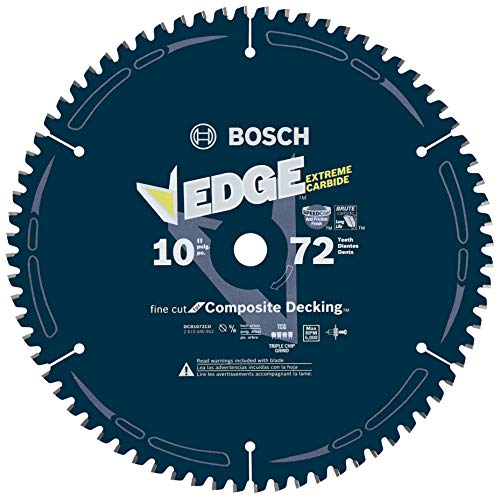
The Bosch DCB1072CD uses Brute Carbide with an upgraded micrograin formulation for improved impact resistance and longer life. Its triple chip grind tooth geometry is designed for high performance in abrasive materials, delivering clean finishes on composite decking and PVC. The extra-hard blade body helps maintain accuracy by resisting bending and deflection. Best for: serious deck projects where durability and precise finishes matter. Caution: heat buildup can occur with aggressive cuts—air cooling recommended for longer sessions.
Selected for: heavy-duty composite and PVC decking jobs where long life and true cuts are priorities. This blade favors users who value repeatable performance and reduced blade drift over time.
Norske Tools NCSBP228 10″ 64T
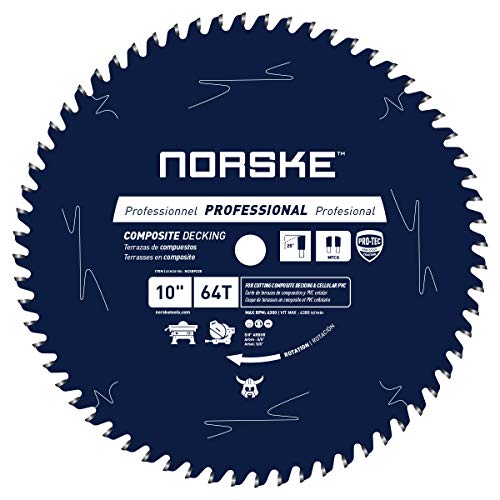
The Norske NCSBP228 is engineered with a 10-inch blade and 64 teeth, optimized for composite decking and cellular PVC. Its Modified Triple Chip Grind (MTCG) tooth profile supports clean, cool, melt-free cutting, which helps minimize scorching on sensitive deck materials. Best for: budget-conscious projects where steady, predictable cuts are required. Caution: fewer teeth may translate to slightly rougher cross-cuts on very hard materials.
Selected for: users seeking effective cutting life and reliable performance at a lower cost per cut. Chosen to balance cost and cutting quality for mid-range deck projects.
Diablo TrexBlade 10″ 72T

The Diablo TrexBlade D1072CD is designed specifically for composite decking and cellular PVC. While marketed broadly, its 72 teeth strike a balance between fast cutting and smooth finishes. Best for: homeowners needing a dependable blade for regular decking tasks. Caution: data available is limited on long-term wear metrics; consider additional blades for extended projects.
Selected for: a versatile option that performs well for many composite decking applications, especially when a mid-range tooth count is preferred for both ripping and finishing cuts.
Bosch DCB1284CD 12″ 84T Edge

The Bosch DCB1284CD offers Brute Carbide with 84 teeth and a triple chip grind design for high-quality finishes on highly abrasive decking materials. The extra-hard blade body resists deflection, preserving accuracy during long deck-cut sessions. Best for: large decking projects that demand refined finishes and consistent cuts. Caution: finer teeth may require slower feed rates to prevent heat buildup on very dense composites.
Selected for: precision-focused deck work where a larger blade with more teeth yields smoother edge finishes over longer runs.
Crescent 7-1/4″ Composite Decking Blade
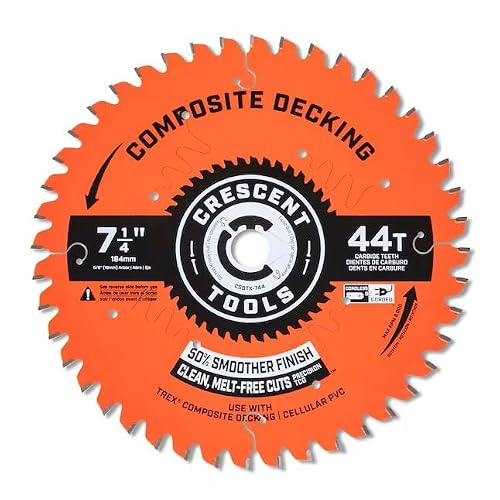
Note: This Crescent blade emphasizes smoother results with 50% smoother finish and melt-free cuts, suitable for cordless and corded setups. Best for: lighter-duty or weekend projects where a smoother finish is valued and power supply is flexible. Caution: tooth count and blade body construction may differ from high-end professional decking blades, potentially affecting cut longevity under heavy use.
Buying Guide
What matters most for decking blades?
Material compatibility, tooth geometry, and blade body construction determine life, heat handling, and cut quality. For composite decking, look for teeth designed to minimize heat buildup and prevent scorching.
Which blade suits my project size?
Small to medium decks benefit from 10″ or 12″ blades with 60-84 teeth for smooth finishes. Larger projects may justify 12″ blades with higher tooth counts for efficiency and edge quality.
How important is heat management?
Composite decking can heat up during aggressive cuts. Blades with optimized tooth profiles and carbide grades reduce heat buildup, preserving both blade life and cut quality.
Single blade vs. multi-use blades
Choose blades marketed specifically for composite decking if most cuts will be on decking material. For mixed jobs, a versatile blade with balanced tooth count can handle both wood and decking materials.
Maintenance and safety considerations
Keep blades sharp and clean, store away from moisture, and follow manufacturer guidelines for feed rate and cooling. Wear eye and hand protection when cutting, and ensure the saw is properly aligned for accurate results.
FAQ
- What blade is best for composite decking? A blade with a tooth profile optimized for composite materials, such as Modified Triple Chip Grind or Triple Chip Grind, to reduce heat and deliver clean cuts.
- Can I use a thinner blade for faster cuts? Thinner blades may cut faster but can be more prone to deflection under load; choose based on your saw’s capacity and deck material density.
- Is more teeth always better for decking? Not always. More teeth typically yield a smoother finish but can slow cutting; find a balance between speed and finish quality for your project.
- Should I use a 10″ or 12″ blade for decking? 10″ blades are common for standard miter saws; 12″ blades are beneficial for larger decking runs or when using a specific saw that supports them.
- What about melt-free cutting? Melt-free cutting reduces scorching on composite decks, especially with MTCG or similar tooth profiles designed for cool cutting.
- Are carbon-steel blades suitable for composites? No; composite decking blades typically use carbide-tipped teeth for durability in abrasive materials.