The best metal blade for your table saw combines toughness, precision, and long life. This guide highlights top options for cutting aluminum, non-ferrous metals, and mixed materials. It helps hobbyists and professionals choose blades that maximize speed, reduce burrs, and minimize wear. The five selections below are chosen for versatility, build quality, and reliable performance across common metal-cutting tasks. Each product is best for specific applications, so use these details to match your project needs.
| Recommended Blade | Best For | Why It Shines |
|---|---|---|
| TOMAX 10-Inch 80 Tooth | General non-ferrous and aluminum | Strong carbide teeth, rust-reducing coating for longer life |
| FOXBC 8-1/4 Inch 80-Tooth | Small to mid-size table saws | Low kerf, stabilizers for vibration control |
| OA-BRES 10-Inch 80T | Higher durability with standard arbor | Electrophoretic coating and stabilizer vents for cool cuts |
| FOXBC 10-Inch 80-Tooth | Aluminum and non-ferrous metal | Laser-cut stabilizers and heavy-duty carbide |
| FOXBC 10-Inch 100-Tooth | Fine finishes on aluminum | Thin kerf, high tooth count for smooth cuts |
TOMAX 10-Inch 80 Tooth TCG Blade

The TOMAX blade is designed for cutting plastic, aluminum, and non-ferrous metals. It features construction-grade carbide teeth for long life and an electrophoretic coating that helps resist rust and corrosion. Best for hobbyist and light-to-medium fabrication tasks where a reliable finish on aluminum is needed. Suitable for users prioritizing longevity and reduced corrosion in a single blade. A potential limitation is that extremely hard ferrous metals may require specialized blades.
Who this is best for: Budget-minded metalworkers who need a durable general-purpose blade for aluminum and non-ferrous metals. Why selected: balanced performance, rust resistance, and a price point that suits ongoing projects.
Caution: Not ideal for heavy-duty steel or ferrous metal cutting; use dedicated ferrous blades for those jobs.
FOXBC 8-1/4 Inch 80-Tooth TCG Blade

This smaller FOXBC blade focuses on precise cuts with a TCG grind and 0.087″ kerf, designed for aluminum, copper, plastic, brass, and fiberglass. It includes laser-cut stabilizer vents to trap noise and reduce vibration, aiding accuracy and durability. Constructed from high-density tungsten carbide for toughness and long life. Best for compact saws or projects where reduced vibration and smoother cuts matter. Limitation: smaller blade size may not be suitable for larger rip cuts or thicker stock.
Who this is best for: Woodworkers and metalworkers using compact table saws and needing stable, clean cuts on non-ferrous metals. Why selected: excellent stability features and vibration control in a compact form.
Caution: Not ideal for very thick metals or high-volume production where larger blades perform better.
OA-BRES 10-Inch 80T Aluminum Non-Ferrous Blade

The OA-BRES blade emphasizes heavy-duty construction with C-4 tungsten carbide teeth and an electrophoretic coating to resist rust. It features laser-cut stabilizer vents to trap noise and reduce blade warp, promoting cooler operation and better cutting performance. Best for general aluminum and non-ferrous metal work requiring durability and predictable results over time. Consideration: some users may prefer blades with higher tooth counts for finer finishes in delicate projects.
Who this is best for: Professionals and serious hobbyists seeking long blade life and consistent performance on non-ferrous metals. Why selected: robust carbide teeth and warping control improve reliability.
FOXBC 10-Inch 80-Tooth TCG Blade

Designed for aluminum and non-ferrous metal cutting, this 10-inch blade uses an 80-tooth TCG configuration with a 0.094″ kerf and a 5/8″ arbor. Laser-cut stabilizer vents help trap noise and reduce vibration for improved accuracy and durability. Tungsten carbide teeth deliver wear resistance and long life. Best for finish cuts on aluminum and non-ferrous metals with minimal burrs. Limitation: higher tooth count can require slower feeds for optimal results on very hard stock.
Who this is best for: Finishing cuts where smoothness and precision are critical on non-ferrous metals. Why selected: combination of stabilizers, carbide longevity, and a balance of kerf and finish quality.
FOXBC 10-Inch 100-Tooth TCG Blade
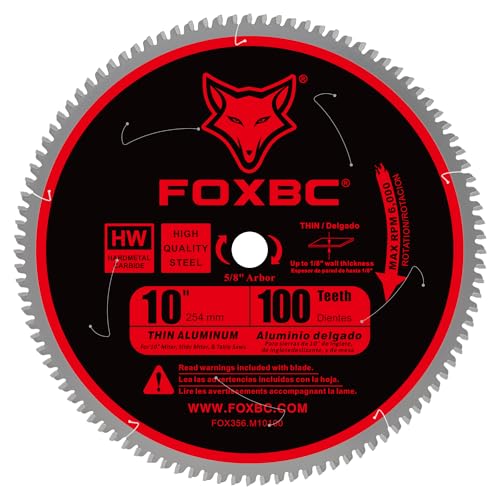
This blade features a 100-tooth configuration with a thin kerf designed for finer finishes on aluminum and non-ferrous metals. It uses a high-density tungsten carbide composition and a 5/8″ arbor for compatibility with standard saws. Best for delicate or precision work that requires very smooth edges and minimal burrs. Choose this if you regularly finish aluminum parts or non-ferrous components. Caution: the finer tooth count can reduce material removal speed on thicker stock.
Buying Guide
- Material compatibility: Most blades in this guide are optimized for aluminum and non-ferrous metals. For steel or ferrous metals, select a blade explicitly rated for ferrous cutting.
- Tooth count: Higher tooth counts (80–100) yield smoother finishes but slower material removal. Lower tooth counts cut faster but may leave more burrs.
- Kerf and arbor: A thinner kerf reduces waste and requires less power, while a 5/8″ arbor matches most standard table saws. Verify your saw’s arbor size before buying.
- Coatings and stabilization: Electrophoretic coatings reduce rust; laser-cut stabilizers minimize vibration for improved accuracy and longer blade life.
- Durability: Tungsten carbide teeth provide wear resistance for longer life in tough non-ferrous materials. Consider a blade with reinforced tooth geometry for tougher jobs.
- Finish goals: For fine finishes, prioritize blades with 100 teeth and thin kerf. For faster roughing passes, 80 teeth blades are typically preferable.
FAQ
- What blade should I choose for aluminum fabrication? A blade with 80–100 teeth and carbide teeth is a good balance between speed and finish, such as the FOXBC or TOMAX options listed.
- Is a thinner kerf better for my table saw? Yes, thinner kerf reduces load and waste, but ensure the blade is robust enough for the material and saw horsepower.
- Can I cut plastic with these blades? Some blades are designed to cut plastic in addition to metals; verify the manufacturer’s stated compatibility before use on plastic.
- Will these blades warp during cutting? Stabilizer vents and proper mounting reduce warp, but allow ample cooling and avoid pushing too hard.
- Should I use a high-tooth-count blade for finish cuts only? Yes, 100-tooth blades excel at finishing and produce burr-free edges, especially useful for thin or delicate parts.
- Are these blades cross-compatible with all table saws? Most listed blades use a standard 5/8″ arbor, but always verify arbor and RPM compatibility with your saw model.