Find the best low-noise air compressor for indoor use, hobby projects, or noise-sensitive environments. This guide highlights five compact, oil-free models with extended runtimes and low decibel levels. Ideal buyers include DIY homeowners, hobbyists, small workshops, and professionals who need cleaner air without disruption. The table below compares the five selections at a glance.
| Product | Brand | Noise Level | Tank Size | Key Strength |
|---|---|---|---|---|
| California Air Tools CAT-1P1060S | California Air Tools | 56 dBA | 1 gallon | Ultra quiet, oil-free, long life |
| California Air Tools 8010 | California Air Tools | 60 dBA | 8 gallons | Powerful, oil-free dual-piston |
| California Air Tools 2010A | California Air Tools | 60 dBA | 2 gallons | Ultra quiet, oil-free, compact |
| VEVOR 13-Gallon | VEVOR | 66 dB | 13 gallons | Large tank, fast build-up, quiet operation |
| Limodot Quiet 5-Gallon | Limodot | 68 dB | 5 gallons | Low-noise with included accessory kit |
California Air Tools CAT-1P1060S Light & Quiet

Best for: Small indoor projects and noise-sensitive environments. The CAT-1P1060S runs at 56 dBA, one of the quietest options, making it ideal for indoor use or shared spaces. It uses an oil-free single-piston pump and a 1-gallon steel tank for light-duty jobs. The motor operates at 1680 RPM, reducing wear and noise. The compact size favors portability and simple maintenance.
Caution: Limited tank capacity means it may need frequent recharging for longer sessions. Best suited for light-duty tasks like inflating tires, small brads, and air brushing.
VEVOR 13-Gallon Quiet Air Compressor

Best for: Home workshops and light auto work with a larger air reserve. The 13-gallon tank and 2HP motor deliver fast air buildup in under 3 minutes. It operates at about 66 dB, which stays relatively quiet for a larger unit. The reinforced valve system helps maintain stable output during longer tasks, and two wheels aid portability between spaces.
Limitation: Heavier and bulkier than ultra-compact units; not ideal for tight spaces or one-handed transport.
California Air Tools CAT-4710W 4.7-Gallon Quiet
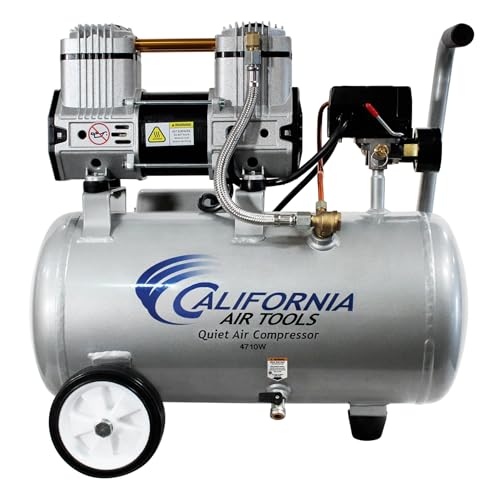
Best for: Small shops and DIY projects needing a balance of quiet operation and a bit more capacity. The CAT-4710W operates at 75 dBA and uses a 1.0 HP oil-free dual-piston pump. With a 4.7-gallon tank, it offers more runtime than ultra-compact models while remaining comparatively quiet. It’s a practical all-around option for users who want steadier airflow without high noise.
Limitation: Noise is higher than the 60–68 dB class, which may be noticeable in ultra-quiet settings.
Limodot 5-Gallon Quiet Air Compressor

Best for: Hobbyists and small projects where modest air demand and portability matter. This 5-gallon unit runs at about 68 dB and includes a 1.2HP induction-motor setup with 4CFM at 40 PSI and 2.8CFM at 90 PSI. It comes with an accessories kit and a 25-foot hose, which helps reduce the need for extra purchases. Choose this if you want a ready-to-use kit and quiet operation in a compact footprint.
Caution: The included accessories are useful, but the overall power and tank size may lag behind larger, higher-output models for frequent, continuous use.
Buying Guide
What to consider when choosing a low-noise air compressor
- Noise level vs. room use: If you work indoors or in a shared space, a model around 60–66 dB is usually best for minimal disruption.
- Tank size and duty cycle: Light tasks benefit from small tanks (1–4 gallons). Longer sessions or painting and spray work benefit from larger tanks (6–13 gallons).
- Oil-free vs oil-lubed: Oil-free pumps require less maintenance and produce cleaner air, but may have a shorter life in heavy use. For quiet operation, oil-free is common in consumer-grade models.
- Portability: Handle design, wheels, and overall weight affect how easily you can move the compressor between rooms or job sites.
- Task suitability: Consider the CFM at your target PSI. Higher CFM supports faster tool operation but can increase noise or size.
- Accessories and setup: Some models bundle hoses, connectors, or spray kits, which can reduce upfront costs and simplify setup.
FAQ
- What makes a compressor “low noise”?
- Is a larger tank quieter than a small one?
- What tasks are best for a 1–2 gallon model?
- How important is oil-free for indoor use?
- Should I prioritize dB rating or tank size?
- Are these models suitable for spray painting?
Low-noise compressors minimize dB levels through slower engine RPM, optimized pump design, and oil-free operation, reducing both sound and maintenance needs.
Not necessarily. Larger tanks provide longer runtime between fills, but noise depends on motor size and pump design. Some larger models stay quiet, while smaller ones may peak at similar noise levels.
Inflating tires, brad nailing, light spraying, and air brushing are well-suited for small tanks with modest CFM needs.
Oil-free pumps reduce maintenance and emissions, making them favorable for indoor work and cleaner air in enclosed spaces.
Both matter. If you need long-running power, prioritize tank size; if you work in a quiet room, prioritize dB rating first, then consider tank size.
Yes, several listed models support spray applications, especially those with adequate CFM at higher PSI and oil-free design to reduce particulates in sprayed air.