Answering the need for quiet, reliable portable air power, this guide highlights five low-decibel air compressors suited for indoor use, garages, and small shops. Each option is described by ideal buyers, key strengths, and any notable limitations. The top picks range from ultra-quiet 60 dB models to compact 65–75 dB units, all designed to minimize disruption while delivering steady airflow. Use this overview to determine which compressor aligns with your tools, workspace, and noise tolerance.
Buying quick-reference table
| Product | Best For | Noise Level | Tank Size |
|---|---|---|---|
| California Air Tools 8010 | Indoor use and noise-sensitive spaces | 60 dB | 8 gallon |
| Metabo HPT EC28M | Lightweight, portable jobs | 59 dB | 1 gallon |
| Makita MAC100Q | Quiet indoor projects | 58 dB | 1 gallon |
| California Air Tools CAT-1P1060S | Ultra-quiet versatility | 56 dB | 1 gallon |
| FORNAX Ultra Quiet | Garages and workshops needing power | 65 dB | 1.3 gallon |
California Air Tools 8010 Ultra Quiet 8-Gallon Compressor

The California Air Tools 8010 uses an oil-free Dual Piston Pump and a powerful 1.0 HP motor that runs at low RPM. It operates at a quiet 60 dB, making it suitable for indoor use and noise-sensitive environments. Airflow is 3.10 CFM at 40 PSI and 2.20 CFM at 90 PSI, offering reliable performance for light to moderate tasks.
Best for: Workshops, garages, or basements where noise containment matters. Also suitable for hobbyist projects and small finish work.
Why selected: Its combination of ultra-quiet operation, oil-free maintenance, and a sizable 8-gallon tank delivers steady pressure with fewer interruptions for longer jobs. The dual-piston pump and low RPM reduce wear and extend service life.
Caution or limitation: While 60 dB is quiet, heavier, continuous use may still be noticeable in ultra-tquiet environments. Ensure adequate ventilation for prolonged sessions.
Metabo HPT Quiet Air Compressor EC28M

The EC28M is a portable, 1-gallon, oil-free unit designed for ultra-quiet operation at 59 dB. It includes a universal quick coupler for fast tool changes and an integrated control panel for precise PSI adjustments. Weighing about 25.2 lbs, it is easy to move on and off job sites, with a sturdy build for transport.
Best for: Short, low-volume projects like finish carpentry or nail installation in indoor spaces where a quiet environment is essential.
Why selected: Its balance of low noise, portability, and easy tool changes makes it a strong choice for inner-city jobs or tight workshops.
Caution or limitation: The 1-gallon tank means more frequent cycling for larger tasks; plan for intervals if running multiple tools simultaneously.
Makita MAC100Q Quiet Series, 1 Gallon

The Makita MAC100Q offers a quiet operation level of 58 dB, ideal for indoor use. It runs at a lower RPM (1,750), which contributes to longer motor and pump life. The unit features complete roll-cage protection to withstand transportation, storage, and job-site use.
Best for: Indoor projects where a compact, durable, and quiet compressor is needed, such as cabinetry and trim work.
Why selected: Its ultra-quiet design combined with durable protection makes it reliable for small-scale tasks in enclosed spaces.
Caution or limitation: Being a 1-gallon tank, it may require more frequent recharging for continuous tool operation; plan for tool usage patterns accordingly.
California Air Tools CAT-1P1060S 1-Gallon Light & Quiet

This CAT-1P1060S delivers ultra-quiet performance at 56 dB with a 1.0 HP motor. It uses an oil-free single-piston pump and a 1-gallon tank, designed for low-maintenance operation and reliable performance across varied temperatures and terrains. It is praised for quick refill and steady pressure for finishing tasks.
Best for: Small shops and home use where space and noise are constraints, yet occasional higher-demand air requires a bigger motor than typical mini units.
Why selected: It strikes a solid balance between low noise, portability, and basic tank capacity, making it a versatile option for hobbyists and DIYers.
Caution or limitation: The smaller tank size may result in shorter continuous run times for high-demand tools; plan tool usage accordingly.
FORNAX Ultra Quiet 1.3-Gallon Compressor
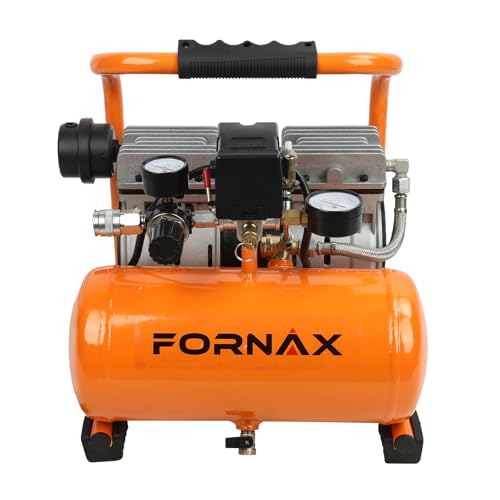
The FORNAX unit offers a 1 HP motor with a 1.3-gallon tank and a max of 125 PSI. It operates at about 65 dB, a quiet level suitable for garages and quiet environments. It provides a steady 1.7 CFM at 90 PSI, making it capable for common nail guns, inflators, and light pneumatic tools.
Best for: Garages or home workshops where a balance of power and modest noise is required for repetitive tasks.
Why selected: Its higher max PSI and fuel-efficient performance help maintain tool speed for a longer period than typical compact models.
Caution or limitation: At 65 dB, it’s not as quiet as the two ultra-quiet models in this list; plan for environments requiring extreme quietness.
California Air Tools CAT-4710W 4.7-Gallon Quiet Oil-Free
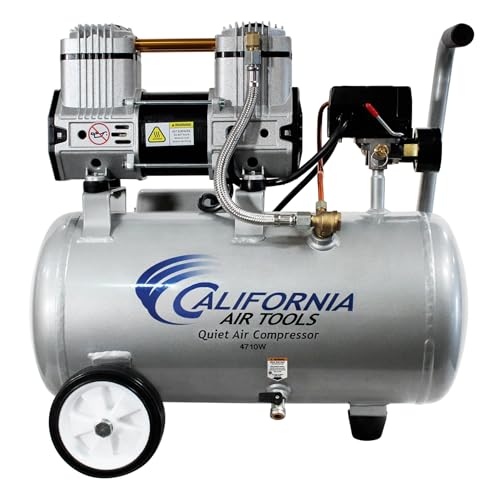
The CAT-4710W delivers a quieter operation at 75 dB with a 3.00 CFM @ 40 PSI and 2.20 CFM @ 90 PSI. It uses an oil-free dual-piston pump and a 4.7-gallon tank with a 1.0 HP motor, providing more air on tap while maintaining a relatively quiet profile for a larger unit.
Best for: Small business use and DIY, where a bigger tank and improved airflow reduce cycles during longer projects.
Why selected: It offers a practical compromise between tank capacity, noise, and portability for mid-sized tasks.
Caution or limitation: At 75 dB, it’s louder than the ultra-quiet options; consider space acoustics if noise tolerance is strict.
Buying Guide: Key Purchase Considerations
- Noise level: Prioritize units in the 56–60 dB range for indoor use and around 65 dB for general garages.
- Tank size: Larger tanks (4.7–8 gallons) reduce cycling but add weight and size. Smaller tanks are lighter but require more frequent restarts.
- Portability: Look for wheels, compact dimensions, and carry handles if you need to move the unit frequently.
- Maintenance: Oil-free pumps reduce upkeep but check pump life and expected hours for scheduling replacements.
- CFM and PSI: Ensure the compressor can sustain the airflow (CFM) at your tool’s PSI needs; higher PSI helps with tools that demand more power.
- Power and RPM: Low RPM often means longer pump life and reduced noise; verify compatibility with available power outlets.
- Build and durability: Roll cages and protective housings improve portability and tool protection on rough sites.
FAQ
- What makes a compressor “low-noise”? — A combination of low decibel level (dB), efficient mufflers, and low RPM operation. Oil-free pumps can also reduce maintenance-induced noise.
- Is a bigger tank always better for quiet operation? — Not necessarily. Bigger tanks reduce cycling but add bulk. Choose based on your tool usage pattern and space.
- Can I use a quiet compressor indoors? — Yes, especially models around 56–60 dB; ensure ventilation for prolonged use and follow safety guidelines for your workspace.
- Do oil-free compressors last as long as oil-lubed ones? — Modern oil-free designs are built for durability, but some models emphasize maintenance cycles and extended life with low RPM motors.
- What should I consider for finish carpentry or nail guns? — Look for a unit with 2–3 CFM at your nail gun PSI, a reliable quick-connect system, and a tank that minimizes cycling during bursts of use.
- Are there any trade-offs with ultra-quiet models? — Ultra-quiet units may have smaller tanks or slower recovery times; assess your typical task duration and restart frequency.