If you’re searching for a left-hand circular saw to improve visibility on the blade and maintain accurate cuts, you’ll want models that balance power, lightness, and stability. This guide highlights five corded options that are well-suited for right-handed users who prefer a left-side blade for better line of sight. Each entry notes who it’s best for, why it’s chosen, and a practical caution. Ideal buyers include DIY homeowners tackling framing and deck work, professionals seeking durable magnesium components, and anyone needing a reliable saw with solid bevel capacity and easy blade changes.
Summary table of chosen products:
| Product | Brand | Best For | Notes |
|---|---|---|---|
| SKIL 15 Amp 7-1/4″ Left Blade | Skil | Precision left-side visibility | Left blade SIDEWINDER improves cut line visibility |
| BOSCH CS5 7-1/4″ | Bosch | Budget-friendly reliability | Solid all-around performer |
| DEWALT 7-1/4″ Lightweight | DEWALT | Lightweight daily use | 8.8 lb with strong 15 A motor |
| Skil 5080-01 13-Amp | Skil | Higher power with good bevel | 51° bevel with stops |
| SKIL 15 Amp 7-1/4 with Laser | Skil | Laser-guided precision | Single beam laser for quick alignment |
SKIL 15 Amp 7-1/4 Inch Left Blade Sidewinder

The SKIL SPT67M8-01 features a left blade SIDEWINDER design to improve blade visibility and cut-line accuracy. Its all-magnesium construction reduces user fatigue and adds durability, while a powerful Dual-Field Motor enhances cooling and tool life. This setup is best for professionals and serious DIYers who frequently work on framing or deck projects and need consistent accuracy with a lightweight build. A potential limitation is that magnesium construction may feel different to users accustomed to heavier cast-iron bases, which can affect balance for some tasks.
BOSCH CS5 120-Volt 7-1/4-Inch

Bosch CS5 is a dependable, budget-friendly option with a 120-volt motor designed to handle demanding cuts while offering steady performance. It’s best for budget-conscious buyers who need a solid corded circular saw for general carpentry tasks. The model’s simpler feature set means fewer frills, but it remains capable for most standard framing and decking jobs. Consider it if you prioritize value and reliability over premium features.
DEWALT 7-1/4-Inch Lightweight Corded

Keen on portability without sacrificing power, this DEWALT DWE575 option blends an 8.8-pound frame with a robust 15-amp motor. It’s ideal for daily use on job sites or shop projects where ease of handling matters as much as performance. Be aware that some users may find the bevel stops less expansive than high-end models, though 53-degree bevel with stops at 45 and 22.5 degrees covers most typical cuts.
Skil 5080-01 13-Amp 7-1/4″ Circular Saw

With a 13-amp motor and reduced weight by about 15% versus older SKIL models, this saw balances power and user comfort. It offers a 51-degree bevel with positive stops, enabling deeper cuts with solid cut capacity. Choose this if you need more power for tougher framing tasks while keeping fatigue in check. A limitation is that it’s not a dedicated left-blade design; consider a dedicated left-blade model if blade visibility is a priority for your workflow.
SKIL 15 Amp with Laser Guide
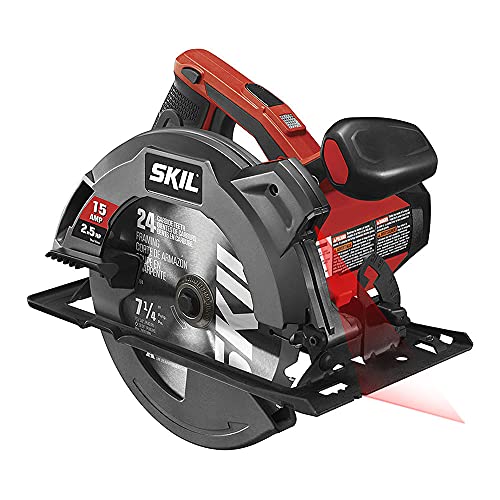
This SKIL model adds a single-beam laser guide for quick alignment, helping with precise cuts when working on long runs or framing layouts. The 5,300 RPM motor supports faster cutting, and the included 7-1/4-inch carbide-tipped blade facilitates clean performance. It’s best for users who value rapid setup and reliable alignment. The laser guide is helpful, but it may require occasional calibration for optimal accuracy in dusty environments.
Buying Guide: Left-Hand Corded Circular Saw Considerations
- Left-blade designs improve sightlines on the cutting line, reducing miscuts when guiding the saw with your dominant hand.
- A higher amperage motor yields faster cuts; magnesium components reduce fatigue. Balance between weight and power matters for day-long tasks.
- Look for at least 45-degree stops and a full range to 53 degrees for versatile crosscuts and miters.
- Depth of cut directly affects whether you can complete through-cuts in a single pass; carbide-tipped blades offer durability and clean cuts.
- Lasers or laser guides assist with baseline alignment on large projects, but require calibration in dusty environments.
- A lightweight yet durable base and comfortable grip reduce fatigue on long framing runs. Magnesium or aluminum bases contribute to long-term durability.
- Budget models provide essential performance; premium options add lasers, dual-beam guides, and advanced cooling that may extend tool life in heavy use.
FAQ
- Why choose a left-hand circular saw? It improves blade visibility and cut-line accuracy for users who prefer left-blade configurations.
- Is a corded saw better for precision than a cordless? Corded models generally offer consistent power for extended cuts, which helps maintain accuracy, especially for framing and decking tasks.
- What should I look for in bevel capacity? A wider bevel range (50–53 degrees) with positive stops improves flexibility for complex cuts.
- What is the benefit of a magnesium base? It reduces weight and can improve durability and fatigue resistance during repeated cuts.
- Do laser guides improve accuracy enough to justify options? Laser guides assist alignment, but accuracy ultimately depends on proper setup, square fences, and blade maintenance.
- How important is blade quality? A carbide-tipped blade with appropriate teeth per inch (TPI) for the material improves cut quality and longevity.