Laminate flooring and panels demand blades that deliver clean edges, minimize chipping, and stay sharp through extended use. This guide highlights top laminate-friendly circular saw blades designed for plywood, OSB, and laminates, with a focus on finish quality, durability, and vibration control. Each product section below explains why the blade excels for laminate projects, along with practical cutting considerations for home workshops and pro jobs.
Overview of selected products
| Product | Brand | Arbor | Tooth Count | Key Benefit |
|---|---|---|---|---|
| CRAFTSMAN 7-1/4 Inch 140 Tooth Fine Finish | CRAFTSMAN | 5/8″ | 140 | Very fine finish for plywood and laminates |
| COMOWARE 7 1/4” 60T ATB | COMOWARE | 5/8″ | 60 | ATB geometry for clean cuts with laminates |
| WEN BL0704 7-1/4-Inch 4-Tooth Diamond-Tipped | WEN | 5/8″ | 4 | Diamond-tipped for laminate and fiber cement |
| DEWALT 6 1/2 Inch 90 Tooth | DEWALT | 6″ | 90 | Anti-stick coating; sharp, smooth cuts |
| FOXBC 6-1/2 inch 60-Tooth | FOXBC | 5/8″ | 60 | Ultra-thin kerf for quick, precise cuts |
Craftsman 7-1/4 Inch 140 Tooth Fine Finish Carbon Circular Saw Blade

The Craftsman 140-tooth blade is engineered for fine finish work on plywood, OSB, and laminate surfaces. Its fully hardened plate helps maintain true cuts over time, while precision-ground teeth deliver smooth, accurate results. The heavy-gauge high-carbon steel construction supports extended blade life, making it a solid option for projects that require clean, professional edges on laminates and similar materials.
Revvstark 5-1/2″ 24T & 48T Carbide Circular Saw Blades

Revvstark offers a compact, carbide-tipped set with 24T and 48T variations. The 10 mm arbor fits compatible saws, and the blades use durable alloy steel with hardened carbide teeth for heat resistance and longevity. The 24T variant provides aggressive cutting for framing, while the 48T finish blade contributes a smoother finish suitable for laminates and plywood, aided by a thin kerf design that promotes fast, straight cuts with reduced material waste.
COMOWARE 7 1/4″ 60T ATB Circular Saw Blade
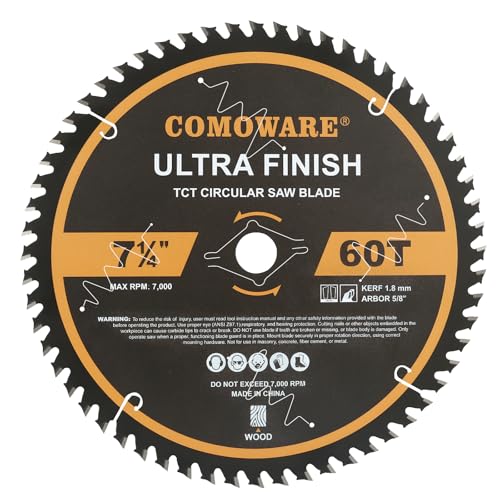
COMOWARE’s 60T ATB blade uses an alternating top bevel tooth design to deliver clean cuts with less splintering on laminates, plywood, and finished boards. The 5/8″ arbor secures compatibility with most 7 1/4″ circular saws. The carbide-tipped teeth resist wear and maintain sharpness, making it a dependable choice for tasks requiring a balance of speed and edge quality over hardwoods and engineered laminates.
WEN BL0704 7-1/4 Inch Diamond-Tipped Blade
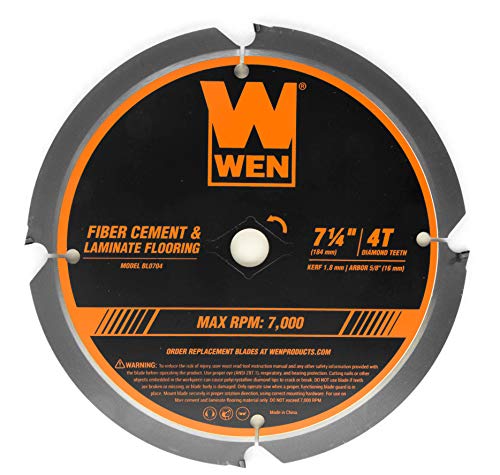
The WEN blade uses a diamond-tipped edge for superior performance on laminate and fiber cement boards. It operates at up to 7,000 RPM with a thin kerf designed to minimize waste and reduce heat buildup. The 5/8″ arbor ensures broad compatibility, and the ultra-thin kerf enables fast, precise cuts that are ideal for laminate flooring installations and paneling where a high-quality edge is essential.
DEWALT Circular Saw Blade, 6 1/2 Inch, 90 Tooth

DEWALT’s 90-tooth blade is engineered for sharper, smoother laminates and vinyl-cutting tasks. The tougher tungsten carbide teeth resist dulling, and the anti-stick coating minimizes friction and gum-up, enabling cleaner cuts with less effort. A thin kerf supports quicker cuts with reduced load on the saw, making it a reliable choice for finishing work on laminate floors and cabinetry panels.
GRAFF 4-1/2 Inch Circular Saw Blade

GRAFF’s 4 1/2 inch blade is designed for wood cutting across plywood, laminate, and plastic. While smaller than typical 7 1/4″ blades, it remains a useful option for compact saws and tasks requiring precise finish cuts on laminated panels, with a focus on clean edges and long blade life through robust carbon steel construction.
FOXBC 6-1/2 Inch Ultra Thin Finish Blade
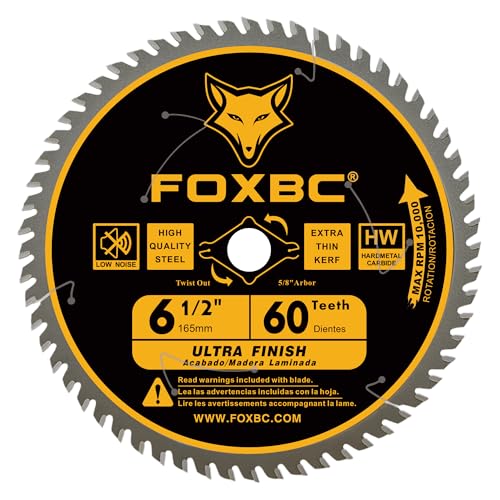
The FOXBC blade emphasizes ultra-thin kerf (0.059 inches) and a 60-tooth count for precise finish cuts on wood, plywood, OSB, and laminates. Its 5/8″ arbor fits standard saws, and the thin kerf reduces material waste while maintaining edge quality, particularly useful for finishing laminate edges and delicate panels.
Buying Guide: What To Consider When Choosing Laminate Saw Blades
Choosing the right blade for laminate work depends on several factors. Blade geometry, tooth count, kerf width, and material composition all influence cut quality, heat generation, and wear resistance. In laminate applications, goals are clean edges, minimal chipping, and stable performance across long runs.
- Tooth count and tooth shape: Higher tooth counts (60–140T) provide smoother finishes on laminates and veneer plywood, but may cut slower. ATB (Alternating Top Bevel) teeth help reduce splintering. Diamond-tipped or carbide teeth offer longevity and better wear resistance for harder laminates.
- Kerf width: Thin-kerf blades minimize material removal and friction, improving control and reducing heat buildup—especially important on laminate surfaces.
- Arbor compatibility: Most 7 1/4″ blades use a 5/8″ arbor, but some smaller blades use 1/2″ or other sizes. Verify compatibility with your saw.
- Anti-stick and coating: Anti-stick coatings reduce gum buildup on laminated surfaces, improving edge quality and extending blade life in finish work.
- Material harmony: For fiber cement, laminates, and engineered woods, diamond-tipped or carbide-tipped blades generally outperform plain steel in longevity and cut quality.
- Cutting speed vs. finish: Higher-speed blades with finer teeth typically yield superior finishes on laminate edges. If speed is paramount, balance tooth count with kerf and dwell time.
- Maintenance: Keep blades clean and free of resin buildup. Lightly resurfacing or sharpening as recommended by the manufacturer preserves edge integrity for laminate cuts.
Additional Considerations
When planning work involving laminates, it’s wise to pair a quality blade with a stable work surface and proper clamps to reduce vibration. For large laminate sheets, test cuts on scrap material to dial in feed rate and prevent chip-out. Consider using tape over the cut line to further minimize edge chipping, particularly when cutting veneered plywood or high-gloss laminates.