Discover top knife sharpening jigs designed to deliver consistent bevels and sharp edges on belt sanders. This comparison focuses on reliable aluminum frames, adjustable angles, and user-friendly clamping systems that help hobbyists and professionals alike achieve repeatable results. The following products were chosen for their build quality, range of adjustment, and compatibility with common belt sander setups. Use this guide to find the right jig for your blades, whether you’re sharpening chisels, planer blades, or kitchen knives.
| Product | Brand | Key Feature |
|---|---|---|
| BLSGBUIDING Jointer Planer Blade Sharpener | BLSGBUIDING | Two-slot jig, 45-degree alignment, saves time by sharpening two blades at once |
| Feekoon Assorted 12 Pack Sanding Belts with Knife Sharpening Angle Guide | Feekoon | Universal angle guide, various grit belts for precise honing |
| Singring Belt Sander Knife Jig Long Sharpening Jig | Singring | 6061 aluminum, dual angle options, fits large blade sets |
| JCFANTS Belt Grinder Knife Jig | JCFANTS | Versatile clamps, quick-release setup, stable stainless base |
| ONECHOI Belt Grinder Knife Jig | ONECHOI | Long locator, -5° to 25° range, multiple mounting holes |
BLSGBUIDING Jointer Planer Blade Sharpener

The BLSGBUIDING Jointer Planer Blade Sharpener is designed for sharpening woodworking jointer and planer blades. It accommodates blades longer than the jig length by using two opposing 45-degree slots. Users tighten screws to grasp blades securely, ensuring both blades stay flat and at the same level while honing from coarse to fine grit. This setup emphasizes efficiency and blade longevity, helping users maintain consistent cutting performance while reducing honing time.
Feekoon Assorted 12 Pack Sanding Belts With Knife Sharpening Guide

The Feekoon kit provides a complete sharpening package with one 12-pack of belts (grits 120, 220, 400, 600, 800, 1200) and a sharpening angle guide compatible with most 1″ x 30″ belt sanders. The universal angle guide facilitates repeatable angles from 10 to 45 degrees, turning a standard belt sander into a precise knife sharpener. This set supports diverse tools and blades while minimizing angle guesswork.
Singring Belt Sander Knife Jig Long Sharpening Jig

Made from high-quality 6061 aluminum, the Singring long sharpening jig provides a robust machining aid with a compact form factor. It measures 240x65x60 mm and supports blades up to about 250 mm in length. The product offers two fixing options (groove or screw hole) and an adjustable angle knob for precise sharpening. The included hex key and screws contribute to straightforward setup and repeatable results for belt grinders.
Belt Grinder Knife Jig Long Sharpening Locator Tool
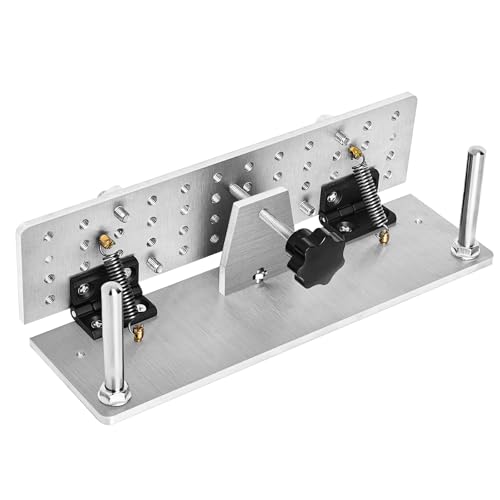
The Beststamp knife jig focuses on a durable aluminum frame with adjustable angles and a locking knob to secure the blade during sharpening. The kit includes two size variants to handle blades from small to mid-sized ranges. Its long locator design aims to provide stable guidance along the sharpening path, enabling consistent bevels across different blade types. The included adjustment hardware enhances control over bevel accuracy.
JCFANTS Belt Grinder Knife Jig
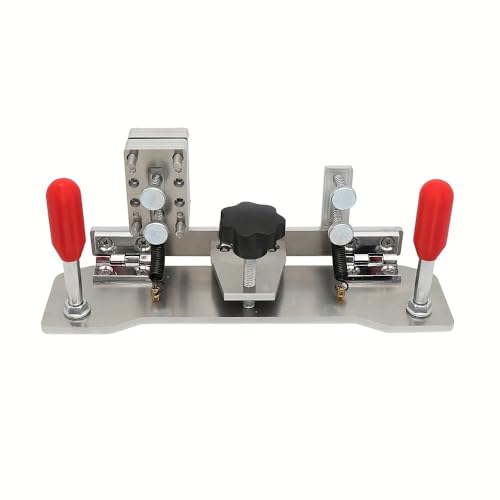
The JCFANTS knife jig is built for belt sanders, featuring adjustable clamps and a center adjustment knob for angle control. The heavy-duty stainless base and robust components improve stability during sharpening tasks, making it suitable for frequent use. Quick-release clamps secure knives efficiently, while precise angle settings help maintain consistent bevels on various blade shapes.
ONECHOI Belt Grinder Knife Jig

The ONECHOI knife jig offers a long locator with an adjustable angle range of -5° to 25°. It includes multiple mounting options via 44 tapped holes (1/4-20 UNC) to fit various knife models. The two gripping plates and bolts provide a secure hold, while the precision dial and turnbuckle system allow fine angle adjustments. This design aims for versatility across a wide blade lineup while maintaining stable sharpening alignment.
Buying Guide
- Compatibility: Check blade length capacity and sander type (belt sander or grinder) to ensure the jig fits your equipment and blade range.
- Angle adjustability: Consider whether the jig offers a broad range of angles and a reliable locking mechanism to prevent drift during sharpening.
- Clamping stability: Look for robust clamps, anti-slip pads, and secure fasteners to keep blades fixed without introducing wobble.
- Material and durability: Aluminum alloys (like 6061) are common; stainless components improve longevity in heavy-use settings.
- Ease of use: Quick-release clamps, intuitive adjustments, and clear angle indicators help reduce setup time and improve repeatability.
- Included accessories: Belts, alignment guides, and wrenches add value by reducing the need for additional purchases.
- Maintenance: Inspect moving joints and locking hardware for looseness; choose designs with accessible fasteners for easy servicing.
- Safety: Ensure guards and stable bases minimize slippage and accidental blade contact during sharpening tasks.
- Cost vs. value: Higher-quality jigs often offer better repeatability and longer lifespan, which can reduce long-term costs.