Answering the common search for reliable inch-pound torque wrenches, this guide showcases top options that balance precision, durability, and ease of use. Ideal for bicycle enthusiasts, automotive hobbyists, and DIYers who work with small fasteners, these tools cover both click-style and micrometer-readout designs. The following selections are best for professionals seeking consistency, and for DIYers who want user-friendly, accurate torque control. A quick buyer’s table appears below to help you compare essentials at a glance.
| Product | Drive Size | Torque Range | Best For |
|---|---|---|---|
| LEXIVON LX-181 | 1/4-Inch | 20–200 in-lb / 2.26–22.6 Nm | Precision-focused projects, small fasteners |
| INGJER Mini 1/4 | 1/4-Inch | 20–240 in-lb | Pro DIY, bikes, motorcycles |
| VANPO 1/4-Inch | 1/4-Inch | 20–240 in-lb | Electronics, bicycles, light machinery |
| LEXIVON LX-180 | 1/4-Inch | 10–150 in-lb | Micro-adjustment precision tasks |
| TEKTON TRQ50402 | 1/4-Inch | Full-range (ISO/ASME compliant) | Calibration-certified, professional use |
LEXIVON Inch Pound Torque Wrench LX-181
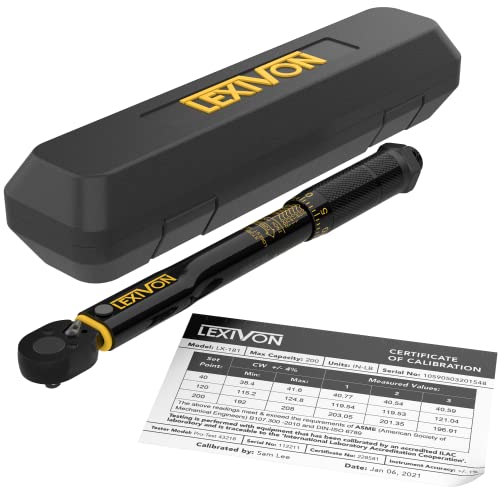
The LEXIVON LX-181 is a 1/4-inch drive, dual-direction torque wrench with a 20–200 in-lb range. It is pre-calibrated to a stated accuracy of +/- 4%, and includes a calibration certificate with a traceable serial number. This makes it suitable for users who need dependable, documented precision for small fasteners. The tool’s reinforced ratchet gear head is built from heat-treated Chrome Vanadium alloy steel for durability in demanding environments. An Electro-Black finish provides rust resistance for longevity.
Who this is best for: hobbyists or professionals who require reliable performance with verifiable calibration. Best for those working on bikes, electronics fixtures, or small mechanical assemblies where precise torque is critical.
Why chosen: combines solid build quality, traceable accuracy, and corrosion resistance—essential for small fastener work where consistency matters.
Caution or limitation: the stated accuracy is +/- 4%, which is acceptable for many tasks but not the absolute tightest tolerance applications where ±1–2% is expected.
INGJER Torque Wrench, 1/4-Inch, 20–240 in-lb
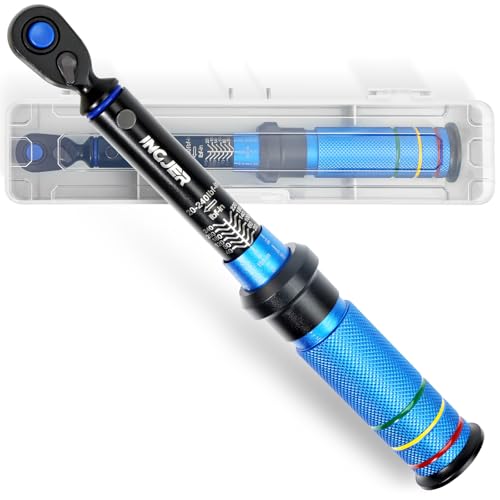
The INGJER torque wrench advertises precision with a ±3% clockwise accuracy and a robust Cr-V construction. It features a dual-direction, 72-tooth drive with audible “CLICK” and haptic feedback to confirm proper tightening without constant visual monitoring. This makes it well-suited to professional garages and serious DIY setups where consistent torque control reduces the risk of under- or over-torquing.
Who this is best for: professionals and serious enthusiasts who value tactile and audible feedback during fastener tightening. Great for bikes, motorcycles, and other assemblies requiring repeatable torque settings.
Why chosen: the dual-signal system (click and vibration) minimizes user error and fatigue, particularly when wearing gloves or working in tight spaces.
Caution or limitation: the specification emphasizes clockwise accuracy; users needing equally tight counterclockwise tolerance should verify if required for their tasks.
VANPO Torque Wrench 1/4-Inch Drive

The VANPO tool offers a 20–240 in-lb range with a dual-range scale, making it versatile for electronics, bicycles, and light machinery where lower torque levels are typical. The design emphasizes a quick, crisp “click” confirmation to indicate proper tightening, and the aluminum shaft provides fatigue resistance while maintaining rigidity. A chromium-moronium steel handle aims to resist rust and provide durability in common workshop conditions.
Who this is best for: bike mechanics, electronics hobbyists, and technicians needing a readable scale and responsive click mechanism for frequent small-torque tasks.
Why chosen: its broad 20–240 in-lb range and durable construction suit users who regularly tighten small fasteners with precise limits.
Caution or limitation: aluminum shafts can be more susceptible to impact damage if dropped; handle with care in busy shop environments.
LEXIVON Inch Pound Torque Wrench LX-180

The LX-180 from LEXIVON features a 72-tooth gear, dual-direction click type with micro-adjustment, and a 10–150 in-lb range. Packaged with a zippered protective case, this model emphasizes portability and precise control for small fasteners. The micro-adjustment capability allows fine-tuning between steps, appealing to users who need exact torque values across multiple projects.
Who this is best for: technicians and avid DIYers who work on bikes, electronics, and small mechanical assemblies that demand precise, repeatable torque settings.
Why chosen: the combination of a compact range, micro-adjustment, and protective case makes it a strong all-around pick for on-site use and easy storage.
Caution or limitation: the 10–150 in-lb range, while broad for small fasteners, may not cover higher-torque needs without switching tools.
TEKTON 1/4 Inch Drive Micrometer Torque Wrench

The TEKTON TRQ50402 provides full-range calibration aligned with ISO standards and ASME expectations, with an accuracy stated at up to ±3% in both directions. The torque wrench includes a serialized certificate of calibration detailing testing conditions and results. This makes it a strong pick for users who require formally documented accuracy for professional-grade work.
Who this is best for: pro shops and meticulous DIYers who need a calibrated tool with verifiable documentation for compliance or traceability.
Why chosen: ISO-compliant calibration and a certificate-backed accuracy support rigorous quality processes and repeatable results in precision tasks.
Caution or limitation: the documentation focus means this option may come with more paperwork; ensure you actually need formal calibration records for your projects.
Buying Guide: How To Choose The Right Inch Pound Torque Wrench
What torque range do you actually need? For most bike and electronics work, a range like 20–240 in-lb or 10–150 in-lb covers the majority of fasteners. If you frequently work on micro-sized hardware, a tool with a micro-adjustment feature and fine increments helps prevent over-tightening.
Should you prefer a mechanical click or a digital display? Click-type wrenches provide immediate tactile or audible confirmation, which reduces visual check requirements and works well in glove-friendly environments. Digital models offer clear readings and preset modes, useful for recurring tasks across workflows but may require battery maintenance.
How important is calibration documentation? Tools like the TEKTON model provide serialized calibration certificates, which helps with traceability in professional settings or for regulatory compliance. If you simply need reliable everyday torque control, a well-made mechanical wrench with a reputable brand may suffice.
What about build materials and durability? Cr-V steel gear heads and corrosion-resistant finishes extend tool life in real-world shop conditions. Aluminum shafts reduce weight but may require careful handling to avoid impact damage. Consider your typical environment and handling habits when selecting material emphasis.
Ease of use and readability matter. A large, legible scale or a high-contrast digital display makes it easier to read torque values quickly, especially in dim workshops. For bikes and electronics, compact, light tools with clear indicators are usually the best fit.
Frequently Asked Questions
What is the typical tolerance for inch-pound torque wrenches?
Most mechanical wrenches list a tolerance around ±3% to ±4%, depending on the model and direction. Higher-end tools may offer tighter tolerances, but typical DIY and professional use often falls within the ±3% range for reliable results.
Do I need a micrometer torque wrench or a standard click wrench?
A micrometer or digital model offers precise, repeatable settings and easier fine-tuning, which is helpful for frequent, exact torque requirements. A standard click wrench is durable, fast, and reliable for repeated use with straightforward targets.
How often should I calibrate a torque wrench?
Calibration intervals depend on usage, storage, and manufacturer guidelines. Industry practice typically recommends recalibration every 1–2 years for professional use or after a drop or impact, but always refer to the manufacturer’s certificate and recommendations.
Is a case or protective cover important?
Yes. A protective case helps prevent damage to the wrench and keeps the calibration and contrast markings intact. It also makes transport and storage safer and more convenient in busy workspaces.