Choosing the right horizontal band saw can dramatically improve metal fabrication workflows, boosting accuracy, speed, and blade life. This guide highlights trusted options designed for steel, aluminum, and pipe work, with an emphasis on durability, adjustable cutting angles, and user-friendly features. The selections below are organized to help hobbyists and professionals compare performance, versatility, and value.
| Product | Brand | Key Feature | Voltage / Power |
|---|---|---|---|
| HVBS-712D | Jet | Large infeed table; quick-lock vise; heavy-duty blade wheels | 115/230V 1Ph |
| BS-712N | KAKA INDUSTRIAL | Dual-speed, hydraulic feed; 0°–45° mitering | 115V/230V |
| BA4664 | WEN | Automatic shut-off; vertical/horizontal capability | 230V |
| BS-712R | KAKA INDUSTRIAL | 7″ round and 7×8.25″ rectangular capacity; auto shutoff | 115V/230V |
| BS-912B | KAKA INDUSTRIAL | 9″ capacity; hydraulic feed; 4-speed control | 115V/230V |
Jet 7″ x 12″ Deluxe Horizontal/Vertical Bandsaw

The Jet HVBS-712D combines horizontal and vertical operation in a compact footprint. It features a large 9″ x 12″ infeed table to support workpieces during long cuts, a toolless quick-lock vise with preset miter positions of 15°, 30°, and 45°, and durable blade wheels cast from flanged iron for long-lasting wear. This model suits metalworkers who need flexibility in handling different orientations and angles without frequent repositioning.
KAKA INDUSTRIAL Horizontal Metal Cutting Bandsaw, BS-712N

The BS-712N offers a robust 1.5HP dual-voltage motor with hydraulic feed and four-speed blade options. It can cut through steel pipe, structural aluminum, and other metals with consistent performance. The hydraulic feed ensures steady blade pressure, while the 0°–45° swivel base enables precise miters for piping and frame fabrication, supporting multiple project setups in a single station.
WEN Metal Band Saw with Stand BA4664
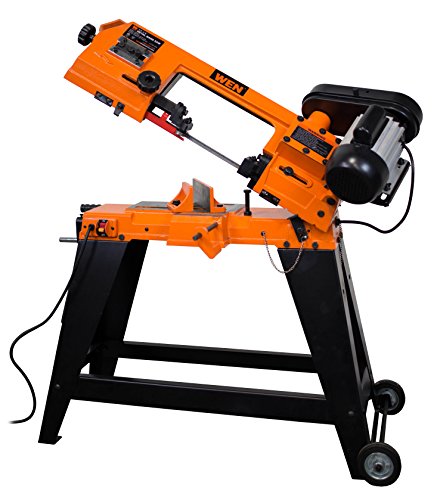
The WEN BA4664 provides automatic shut-off after each cut and supports operation in vertical and horizontal modes. Users can adjust blade speed to 80, 120, or 200 feet per minute to accommodate a variety of metals, from soft aluminum to tougher carbon steel. This model is designed for shop floors requiring a reliable, easy-to-use saw with straightforward speed settings and a stable stand.
KAKA INDUSTRIAL BS-712R Horizontal Band Saw
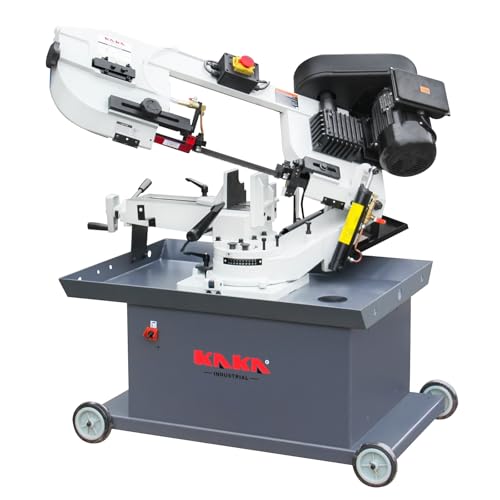
The BS-712R features dual-voltage operation (115V/230V) with a 7″ round and 7×8.25″ rectangular cutting capacity. It includes a 45°–90° swivel bow to handle complex bevels for pipe fittings and structural frames. A 27/41/59/78 MPM speed range optimizes cutting for stainless steel, aluminum, and carbon steel. An auto-shutoff and integrated coolant system support continuous operation with reduced blade wear.
KAKA INDUSTRIAL BS-912B Horizontal Band Saw

The BS-912B expands capacity with a 9″ cutting capacity and a hydraulic feed system for consistent, controlled blade descent. It supports multiple speeds, enabling efficient processing of carbon steel, alloys, and other metals. The design emphasizes rigidity and reduced vibration for cleaner cuts, making it suitable for repetitive fabrication tasks and shop-scale operations.
KAKA INDUSTRIAL 7″ Metal Cutting Band Saw BS-712N (Alternative)
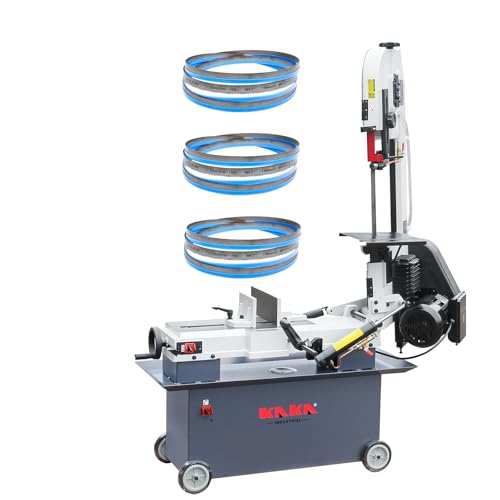
This variant emphasizes heavy-duty cutting with a 1.5HP dual-voltage motor and a 4-speed control system. It integrates a robust base and precision alignment for accurate cuts on round and rectangular stock, offering reliability for daily fabrication tasks and longer production runs.
Buying Guide: Key Purchase Considerations And Comparisons
Performance and versatility are central when selecting a horizontal band saw. Consider the following factors to balance capability with budget:
- Cutting capacity: 7″ rounds and 7″ x 12″ rectangles cover common pipe and beam sizes; larger capacities expand options for structural work.
- Voltage and motor power: Dual-voltage (115V/230V) motors enable flexibility in residential shops and industrial settings; higher horsepower supports tougher materials.
- Speed control: Multiple blade speeds or adjustable belt drives improve cut quality across metals like aluminum and stainless steel; look for at least four speed options for versatility.
- Hydraulic vs. manual feed: Hydraulic feeds offer steady pressure and uniform cuts, especially for long parts; manual feeds can be adequate for lighter workloads but require more operator control.
- Bevel and mitering range: 0°–45° or 0°–60° miter capabilities reduce secondary machining; ensure locking and scale accuracy for bevels.
- Vibration and stability: A sturdy cast-iron frame or heavy base reduces chatter, increasing blade life and cut precision.
- Coolant system: Built-in coolant or flood systems extend blade life by reducing heat and burrs, particularly for stainless steel and harder alloys.
- Automation and safety: Auto shut-off and safety switches protect operators during long runs; check for blade guards, emergency stops, and clear restart procedures.
- Maintenance and blade compatibility: Common blade widths and tooth configurations ease blade selection and downtime; consider blade replacement ease and availability of bi-metal blades.
- Space and workflow: Consider footprint alongside infeed/outfeed clearance and ability to operate in both horizontal and vertical orientations to maximize workshop use.
Across the selected models, the emphasis remains on stable feed systems, resilient construction, and adaptable cutting angles. Users should align features with their typical material mix, required batch sizes, and available electrical supply. For shops that cut a variety of metals or handle frequent miters, options with hydraulic feeds, dual voltage, and 0°–45° or greater miter ranges tend to deliver the most workflow efficiency. Safety features and ease of blade changes also affect overall uptime and productivity in daily operations.