Choosing the right plasma cutter for home use means balancing portability, cutting capacity, and ease of operation. The following five models are tailored for DIY enthusiasts, hobbyists, and small workshops, offering dual voltage options, intuitive controls, and reliable performance. This guide highlights what each unit does best, practical considerations for home setups, and how to pick the right tool for automotive repairs, metal fabrication, or art projects.
| Product | Brand | Core Strength |
|---|---|---|
| Reboot RBC6000D | Reboot | 1/2″ cutting at 120V and 5/8″ at 240V; ultralight 8.69 lbs |
| YESWELDER CUT-50DS | YESWELDER | Wide 20-50A range; strong 1/4″ at 110V, 1/2″ at 220V |
| bestarc 60A Plasma Cutter | bestarc | 60A with pilot arc and air sensor; dual voltage 110/220V |
| SSIMDER 6-in-1 | S SIMDER | MIG/Spool/TIG/Stick/Plasma; versatile dual-voltage |
| bestarc 50A Plasma Cutter | bestarc | 50A with pilot arc; dual voltage 110/220V |
Reboot 60A Dual-Voltage Plasma Cutter RBC6000D
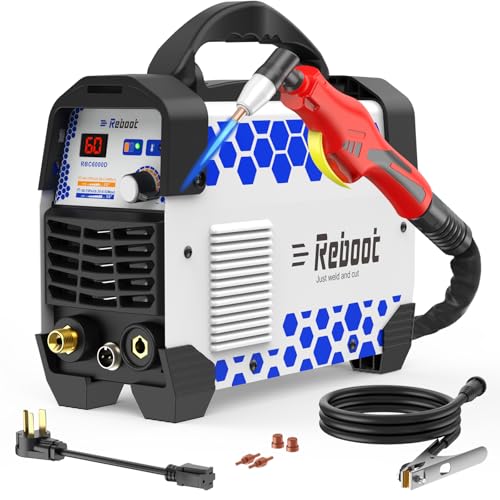
The Reboot RBC6000D delivers 60A cutting at 240V and 35A at 120V, capable of 5/8″ (16mm) cuts on 240V and 1/2″ (12mm) on 120V. Dual voltage auto-detection simplifies setup for a home shop, with PSI guidance showing 70-75 PSI (0.48-0.52 MPa). The unit weighs just 8.69 pounds, making it highly portable for garage-to-garage projects or outdoor work. It’s optimized for automotive repairs, metal fabrication, and metal art, providing quick, efficient cuts in tight spaces. Controls are designed with beginners in mind, featuring intuitive amperage adjustments and clear PSI guidance, removing much of the guesswork from initial cuts.
Key benefits for home use include portability, ease of use, and a compact footprint that fits in a typical garage. A built-in guidance system helps new users achieve clean cuts while reducing consumable waste. With air-regulation pre-installed, this model minimizes setup time and makes it ready for hobbyists who want a straightforward tool for DIY metal projects.
YESWELDER CUT-50DS Plasma Cutter, 50Amp
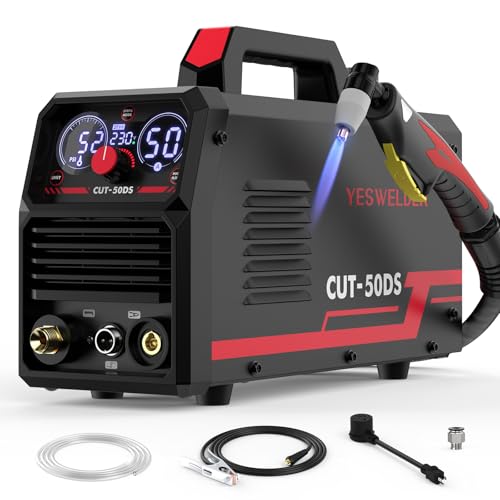
The YESWELDER CUT-50DS offers a broad 20-50A output with dual voltage compatibility (110/220V). It prints clean cuts at 1/4″ (6mm) on 110V and up to 1/2″ (12mm) on 220V, with a maximum cut capacity around 3/8″ (10mm) at 110V and 5/8″ (16mm) at 220V. An internal air filter supports efficient operation, and a PT/2T/4T function helps extend consumable life by controlling cooling cycles. The unit is designed to work with external air compressors (sold separately), and a built-in display aids in monitoring settings during operation. Proper air pressure (45-75 PSI) is essential for consistent performance.
This cutter suits home shops requiring versatility for both light-duty and moderately heavy cuts. The integrated control options facilitate beginner-friendly operation while enabling sharper, more consistent cuts for DIY projects, automotive work, or artistic metalwork.
bestarc Plasma Cutter 60A With Pilot Arc

This bestarc 60A plasma cutter is designed for dual-voltage operation (110/220V), enabling 1/2″ clean cuts and a maximum cut thickness up to 12mm at 110V or 20mm at 220V with appropriate air pressure. It features a Pilot Arc function, enabling non-contact arc starting which is effective for rusted or painted surfaces. An adjustable PA function extends the pilot arc duration, reducing energy consumption and consumable wear. An integrated air sensor displays current pressure on the front panel, while an air filter and quick-connect air connector ensure straightforward setup. A caveat is that a compatible air compressor is required for full operation.
Home users benefit from the machine’s robust cutting capability and user-friendly pilot-arc starting, which helps when working on rough or painted metal. The built-in air sensor and regulator simplify maintenance and monitoring, making it suitable for DIY metal arts, repairs, and small fabrication tasks where reliability matters.
bestarc Plasma Cutter 50A With Pilot Arc

The 50A variant from bestarc mirrors the 60A model in dual-voltage capability, offering reliable performance on 110/220V with a similar pilot-arc feature. The recommended cutting thickness is up to 12mm at 110V and 20mm at 220V, with a maximum cut of around 4/5 inch on suitable settings. The unit uses an air sensor and regulator to help operators maintain optimal pressure levels, crucial for consistent results. As with other bestarc units, it emphasizes quick-start capability and ease of use for DIY projects and home workshops. Users should ensure a compatible compressor and proper safety gear for safe operation.
For hobbyists who want a balanced combination of power, portability, and intuitive controls, this model offers a straightforward entry into plasma cutting with emphasis on pilot arc reliability and practical cutting performance for typical home-shop tasks.
Buying Guide: Key Purchase Considerations For Home Plasma Cutting
- Dual voltage capability: Look for units that can operate on both 110V and 220V. This flexibility helps in homes with different outlets and allows for better performance on tougher materials when connected to higher voltage.
- Pilot Arc technology: Pilot Arc enables non-contact arc starting, which is advantageous on rusted, painted, or dirty metals. It reduces tip wear and improves startup reliability, especially for hobbyists working with varied surfaces.
- Air supply and pressure: Most plasma cutters require clean, dry air at specific PSI ranges (commonly 45-75 PSI). Confirm whether the unit requires an external compressor and ensure you have adequate airflow to maintain consistent cuts.
- Cutting capacity: Consider the maximum clean cut thickness at your primary voltage. If you primarily work on thin sheets, a 1/4″ to 1/2″ capability at 110-120V may suffice; for occasional larger cuts, a 220V option significantly expands range.
- Portability and weight: Home garages benefit from light, compact units that are easy to move. Weighs around 8-15 pounds in many home-use models, making transport feasible between projects or locations.
- Ease of use: Beginner-friendly controls, clear readouts, and simple amperage adjustments help new users achieve clean cuts faster and reduce consumable waste.
- Maintenance and consumables: Check consumable life, availability, and price for tips, nozzles, and electrodes. Built-in features like post-flow control and air filtration extend tool life and performance.
- Safety and accessories: Ensure you have appropriate eye protection, gloves, and a well-ventilated workspace. Many units include basic grounding cables and torches, but verify what’s included before purchase.
- Warranty and support: A solid warranty and accessible customer support contribute to peace of mind, particularly for new operators exploring plasma cutting for home projects.
Overall, selecting a plasma cutter for home use involves thoughtful consideration of voltage flexibility, ease of use, air requirements, and the typical thickness of the materials you intend to cut. The five models reviewed here provide a range of capabilities—from ultra-portable, beginner-friendly options to more feature-rich machines suitable for thicker metals and frequent use. By matching one to your workspace, you can achieve reliable cuts for automotive repairs, metal art, and DIY fabrication without unnecessary complexity.