Choosing the right hammer drill for rock or masonry tasks requires evaluating power, impact force, bit compatibility, and durability. This article highlights five reliable options that balance performance with practical features for American homeowners and professionals. Each entry includes a quick overview, key specs, and how its design supports tough drilling in brick, concrete, and stone.
| Product | Brand | Motor Power | Impact Rate | Drill/Chisel Capabilities |
|---|---|---|---|---|
| DCK 20V Brushless Hammer Drill | DCK | 600W (brushless) | 36,000 IPM | 1/2″ chuck; brick, metal, wood |
| XtremepowerUS 2200W Demolition Drill | XtremepowerUS | 2200W | Not specified | Heavy demolition and breaking concrete |
| Hammerhead 7.5-Amp 1/2″ Hammer Drill | Hammerhead | 7.5A | Not specified | 1/2″ chuck; general hammer drilling |
| Berserker SDS-Plus Rotary Hammer | Berserker | 1050W | 4,200 BPM | SDS-Plus bits; 3 functions |
| ENEACRO SDS-Plus 13A Rotary Hammer | ENEACRO | 13A | ≥4,000 BPM | Four functions; includes chisels |
The following sections expand on each option, focusing on how it handles rock drilling, masonry, and concrete. Consider your typical projects, weight tolerance, and whether corded or cordless systems fit your workflow best.
DCK 20V Brushless Hammer Drill for Rock

The DCK model features a real brushless motor delivering efficient 600W power and a long lifespan with no-spark operation. Its 531 in.lbs of torque provides robust performance for drilling into brick walls and metal, while a high impact rate of 36,000 IPM enables fast masonry work. The 1/2″ keyless all-metal chuck supports quick bit changes, and the 4.0Ah battery contributes to extended runtime for larger projects. Users benefit from a clutch system offering 22+1+1 settings for controlled drilling in mixed materials.
XtremepowerUS 2200W Demolition Drill
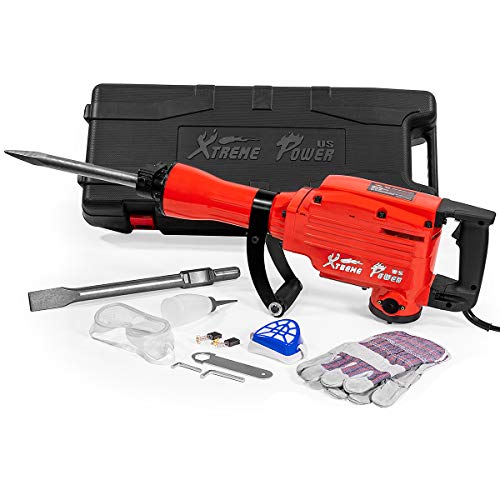
This powerful demolition hammer is designed for aggressive concrete work, trenching, and breaking through tough material. It includes an adjustable 360-degree foregrip for enhanced control in awkward positions and is suitable for both home and commercial use with a 110V/60Hz supply. While the product emphasizes demolition, its versatility makes it a capable option for tough rock and masonry tasks when paired with the right bits and chisels.
Hammerhead 7.5-Amp 1/2″ Hammer Drill

The Hammerhead tool provides a 7.5-amp motor and a keyless, 1/2″ metal chuck for quick bit changes. It is designed for high-torque hammer drilling, though it is not recommended for reinforced concrete walls. The device excels in standard masonry and wood drilling tasks, offering reliable performance for home improvement projects where heavy-duty concrete work is not required every day.
Berserker SDS-Plus Rotary Hammer with Safety Clutch

The Berserker SDS-Plus model is designed for overhead or downward drilling with a compact 9.5-pound frame. It delivers 1,050 watts and 4,200 BPM with 3.3 ft-lbs of impact energy, making quick work of concrete, brick, and masonry. It supports three operation modes—rotation, hammer with rotation, and hammer only—via a dual-switch design to extend tool life and adapt to varied tasks. SDS-Plus compatibility enables fast bit changes and reliable performance in hard materials.
ENEACRO 13A SDS-Plus Rotary Hammer

The ENEACRO ENRH3201 delivers a robust 13-amp motor with 5.5 feet/pounds (7.4 joules) of impact energy for heavy-duty concrete work. It provides four versatile functions, including drill, hammer drill, hammer-only, and a chiseling mode with a 360° adjustable handle. The double-layer anti-vibration system reduces fatigue, while the safety clutch protects wrists during high-torque operations. This model is suitable for demanding rock and masonry drilling in professional settings.
Buying Guide: Key Purchase Considerations
- Drill type and function: For rock and masonry, SDS-Plus rotary hammers excel at heavy-duty concrete work, whereas standard hammer drills are adequate for mixed materials and lighter jobs. Consider models with multiple modes to maximize versatility.
- Power and impact energy: Higher wattage and impact energy translate to more efficient drilling in hard materials. Corded options typically offer constant power, while cordless models trade runtime for portability.
- Chuck and bit compatibility: A reliable chuck size (1/2″ is common) and compatibility with SDS or regular bits impact ease of use and available accessories.
- Weight and ergonomics: Heavier tools reduce fatigue on long jobs. Look for anti-vibration features and balanced design to improve control and reduce fatigue.
- Durability features: Brushless motors, metal chucks, protective clutch systems, and anti-dust design extend tool life in harsh drilling environments.
- Accessories: Many models include chisels, bits, or carrying cases. Ensure the kit includes items you will actually use.
- Warranty and service: A solid warranty and accessible service centers are important for high-use or professional scenarios.
- Worksite considerations: Cordless options provide mobility for indoor or overhead work, while corded variants offer uninterrupted power for continuous drilling.