Choosing the right hammer drill for masonry is essential for efficient, clean concrete, brick, or cement work. This guide highlights five strong options suited to different buyers—from DIYers tackling occasional projects to professionals needing dependable performance. Each pick is evaluated for power, versatility, and ease of use, with clear notes on who it’s best for and potential limitations.
| Product | Brand | Best For |
|---|---|---|
| Deshuo 1″ SDS-Plus Rotary Hammer Drill | DESHUO | Overhead drilling and frequent bit changes |
| BOSCH 11255VSR Bulldog Xtreme | Bosch | All-around masonry with multiple modes |
| DCK 20V Brushless Hammer Drill | DCK | Cordless mobility for brick, wood, and metal |
| DEWALT SDS Rotary Hammer Drill | DEWALT | Heavy-duty concrete with vibration control |
| BLACK+DECKER Hammer Drill BEHD201 | BLACK+DECKER | Entry-level masonry projects |
Deshuo 1″ SDS-Plus Rotary Hammer Drill
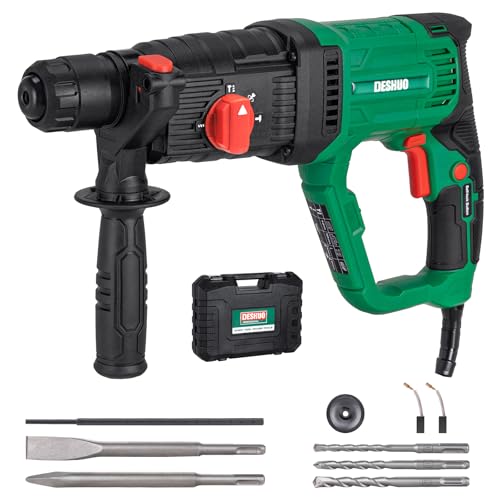
The Deshuo rotary hammer is designed for SDS-Plus bits, delivering solid impact energy with a 9 Amp motor and 0-5,300 BPM. It is best for overhead or downward drilling in concrete, masonry, and brick. The tool is relatively lightweight at 7.19 lbs, aiding control during extended sessions. A key limitation is its compatibility: it requires SDS-Plus bits and does not accept other types of bits.
Who it’s best for: DIYers or contractors who frequently switch SDS-Plus bits and need a capable corded hammer for overhead framing or wall work.
Skil 7.5 Amp 1/2-in Corded Hammer Drill with 100pcs Bit Set
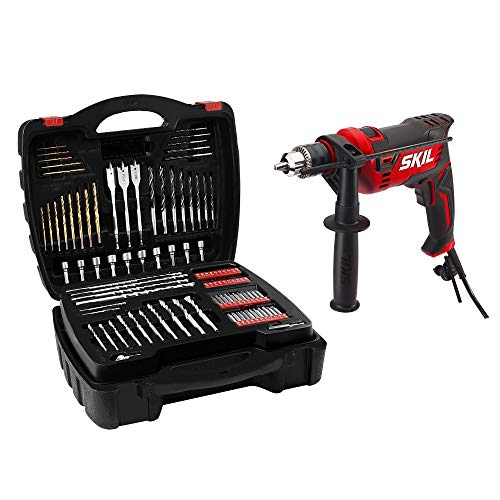
This Skil model offers a versatile 7.5 Amp motor and a 1/2-inch heavy-duty keyed chuck. It handles drilling into wood, metal, and concrete, making it a practical all-purpose DIY tool. Its strength lies in compatibility with a broad bit selection, but its corded design may limit mobility on larger exterior projects.
Who it’s best for: Homeowners who want a single tool capable of wood, metal, and masonry tasks for a variety of home projects.
BOSCH 11255VSR Bulldog Xtreme

The Bosch Bulldog Xtreme provides three operation modes—rotation-only, rotary hammer, and hammer-only—plus a variable speed trigger with reverse for fasteners. Vibrational control and a D-handle design improve comfort during extensive use and overhead work. A limitation is that, like many corded hammers, it requires a power source for operation.
Who it’s best for: Professionals or serious DIYers wanting a flexible, feature-rich option for masonry drilling and chiseling.
DCK 20V Brushless Hammer Drill

This cordless model features a brushless motor, 600W output, 531 in-lbs of torque, and 36,000 IPM impact rate. The 1/2-inch keyless metal chuck and included 4.0Ah battery enhance convenience for brick, metal, wood, and lighter masonry tasks. A potential limitation is that cordless performance can depend on battery charge and task duration.
Who it’s best for: Professionals or DIYers who need mobility and a brushless, efficient option for on-site drilling in masonry and other materials.
DEWALT SDS Rotary Hammer Drill

The DEWALT SDS drill features 3.0 joules of impact energy, an 8.5 Amp motor, and Active Vibration Control for reduced user fatigue. This model is well-suited for heavy-duty concrete work and sustained drilling, though its heavier weight may challenge overhead operations for some users.
Who it’s best for: Professionals requiring robust impact energy and vibration management for long, demanding masonry projects.
Buying Guide: What To Consider When Choosing A Masonry Hammer Drill
Power and impact: Look for higher impact energy (joules) and IPM ratings to handle tough masonry surfaces. Corded models typically offer consistent power for long sessions, while cordless options provide mobility for outdoor or hard-to-reach work.
Bit compatibility: SDS-Plus versus standard chuck systems affect compatibility with bits and speed of bit changes. Verify the type you need before purchase.
Modes and control: A tool with multiple modes—rotation, hammer, and hammer-only—gives flexibility for drilling into concrete, brick, or stone as well as light chiseling tasks. Variable speed and a reverse function aid starting and removal of fasteners.
Weight and ergonomics: Lighter tools reduce fatigue in overhead or extended-use scenarios. Check handle design (D-handle or side handle) for comfort during long sessions.
Battery versus corded: Corded drills offer constant power, while cordless drills provide mobility. When selecting a cordless model, consider battery capacity (Ah) and charging speed to minimize downtime.
Frequently Asked Questions
- What is the difference between a hammer drill and a rotary hammer?
Answer: A hammer drill delivers percussive action suitable for light masonry; a rotary hammer provides stronger impact energy for concrete and brick and typically accepts SDS bits. - Do I need SDS-Plus bits for all masonry drilling?
Answer: Not necessarily. If you buy an SDS-Plus compatible tool, you should use SDS-Plus bits; some tools use standard chucks that fit regular masonry bits. - Is vibration control important for masonry work?
Answer: Yes, vibration control reduces user fatigue and improves handling during longer sessions. - Should I choose a cordless hammer drill for masonry?
Answer: Cordless offers mobility, but ensure battery life matches project duration; for continuous heavy work, a corded model is typically more reliable. - Can I drill into reinforced concrete with these tools?
Answer: Some models can handle reinforced concrete with proper bits and technique, but always follow manufacturer guidelines and use appropriate PPE.