Finding the right grinding wheel for carbide tools can improve precision, reduce tool wear, and boost overall workflow in metalworking. The following selections focus on carbide-compatible wheels, including diamond and high-quality silicon carbide options. Each option highlights fundamental specs, compatibility, and performance notes to help buyers compare effectively in the American market.
| Product | Brand | Diameter | Arbor | Special Note | |
|---|---|---|---|---|---|
| XINGXIN 6″ Diamond Wheel | XINGXIN | 6 inches (150 mm) | 32 mm | Diamond Grit 150 | Designed specifically for carbide and hard alloys |
| AmaCupid 6″ Green Silicon Carbide Wheel | AmaCupid | 6 inches | 1/2 inch | 80-150 Grit (silicon carbide) | High hardness; good for carbide tools |
| UF-SHARP 3″ Diamond Wheel | UF-SHARP | 3 inches | 1/2 inch | 150 Grit Diamond | Small-grind wheel for precise carbide work |
| AmaCupid 8″ Green Silicon Carbide Wheel | AmaCupid | 8 inches | 5/8 inch | 80 Grit (silicon carbide) | Suitable for larger carbide tools |
| WORKEASE 6″ Green Silicon Carbide Wheel | WORKEASE | 6 inches | 1/2 inch | 80 Grit Silicon Carbide | Durable, standard bench grinder compatibility |
XINGXIN 6 Inch Diamond Grinding Wheel for Carbide

The XINGXIN wheel features a 6″ diameter with a 32 mm bore and 10 mm diamond thickness. Its diamond coating provides robust cutting performance on carbide, metal, hard alloys, tungsten steel, and similar substrates. Practical for high-precision shaping and edging of carbide tooling, this wheel emphasizes long-lasting wear resistance and stable performance under heavy loads. A compatible adapter may be needed to fit some grinder models. Safety gear is recommended during operation.
WORKEASE 6″ Green Silicon Carbide Wheel (1/2″ Arbor)
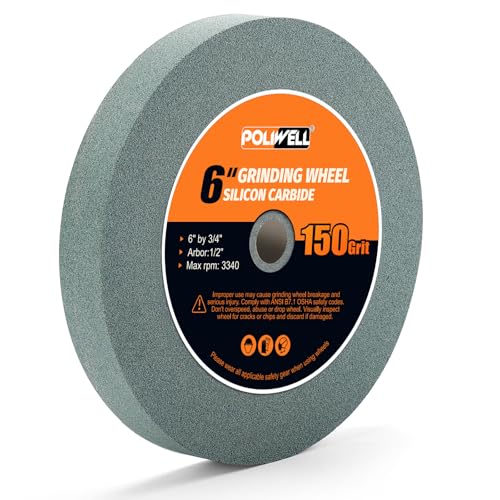
Designed for bench grinders, this 6″ wheel uses green silicon carbide to deliver high hardness and wear resistance. It is manufactured with a process that enhances brittleness control and durability for efficient grinding tasks. The standard 1/2″ arbor hole fits most 6″ bench grinders, making it a common choice for sharpening carbide tools, blades, and drill bits. Use appropriate PPE and verify compatibility with your grinder model before use.
AmaCupid 6″ Green Silicon Carbide Wheel for Carbide Tools

This 6″ wheel is tailored for grinding carbide tools and non-metals like optical glass and ceramics. It features first-grade silicon carbide with a high-temperature adhesive, delivering wear-resistance and stability during use. The wheel balances dynamically to reduce vibration and provides predictable surface finishes. It uses a 1/2″ arbor and is suited for most 6″ bench grinders. It is important to follow safety guidelines and verify machine compatibility.
AmaCupid 6″ White Aluminum Oxide Wheel

White aluminum oxide wheels are known for grinding hard materials and heat-sensitive steels. This 6″ wheel with a 1/2″ arbor and 3/4″ thickness targets precise shaping and finishing tasks. Produced from ceramic-grade materials, it emphasizes low heat generation and good self-sharpening characteristics. It is well-suited for carbide-compatible applications requiring smooth finishes and controlled material removal.
POLIWELL 6 Inch Bench Grinder Wheel With Wire Brush
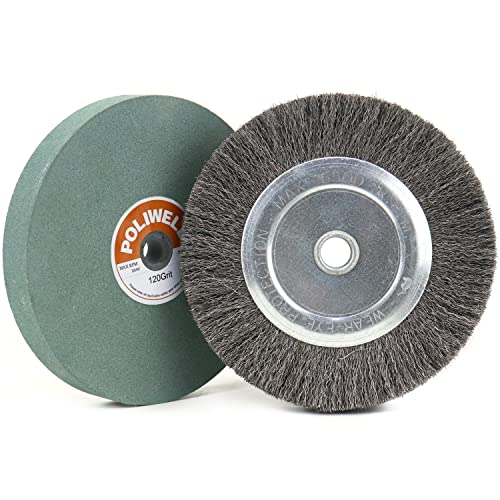
This combination set includes a 6″ green silicon carbide wheel and a wire brush. The wheel provides high hardness and wear resistance for precise grinding, while the wire brush assists in light burr removal and paint stripping. The standard 1/2″ arbor fits many 6″ grinders. The multi-function design supports edge finishing, rust removal, and polishing tasks on carbide or similar substrates when used with proper safety equipment.
Buying Guide: Key Purchase Considerations
Carbide grinding requires balancing hardness, grit size, and bond type. Diamond wheels excel with carbide by offering superior hardness and wear resistance, but they can be more expensive than silicon carbide options. For smaller workpieces, a 3″ diamond wheel can deliver tight tolerances and faster material removal. Benchtop wheels in the 6″ range are versatile for drill bits and carbide tooling, while 8″ wheels can handle larger tools with even grain distribution.
- Wheel material: Diamond vs. silicon carbide. Carbide favors diamond for longer life; silicon carbide is cost-effective for general carbide and non-ferrous work.
- Grit size: Finer grits (e.g., 150) provide smoother finishes but remove material more slowly; coarser grits (e.g., 80) remove material quickly but roughen surfaces.
- Arbor compatibility: Verify the grinder’s arbor size (common are 1/2″ and 1/4″ or 32 mm). Some wheels require adapters for a proper fit.
- Bond and thickness: Diamond and ceramic bonds influence heat resistance and durability. Thicker wheels generally support longer tool life in tough carbide grinding tasks.
- Safety: Use guards, PPE, and follow manufacturer guidelines. Proper workholding and clamping reduce vibration and improve results.
The selections above cover a range of carbide-focused grinding needs—from high-precision edging with small-diameter diamond wheels to robust bench grinder wheels for larger carbide tooling. When choosing, align wheel type and grit with your specific carbide material, tool geometry, and grinder model to optimize performance and safety.