Choosing the right glue line rip blade can dramatically improve the quality of edge glue-ups and finish work. The 10″ to 12″ blades in this guide are designed to deliver true, smooth surfaces with minimal post-cut sanding. Materials range from thick-kerf heavy-duty blades to thin-kerf options that save horsepower on underpowered saws. Each blade profile emphasizes a TiCo Hi-Density carbide blend and a glue-line friendly grind (TCG) to maximize edge stability and long-term performance. Use this guide to compare features, bite through tough woods, and select the blade that best fits your shop workflow.
| Product | Brand | Diameter | Teeth | Kerf | Features |
|---|---|---|---|---|---|
| Freud Industrial Glue Line Ripping Blade LM74R010 | Freud | 10″ | 30 | Thick | Heavy-Duty Construction; Premium TiCo Hi-Density Carbide; Triple Chip Tooth Design for smooth glue-ready edges |
| Freud Industrial Thin Kerf Glue Line Ripping Blade LM75R010 | Freud | 10″ | 30 | Thin | Ultra-smooth surfaces; Triple Chip Tooth; Precision finish cuts |
| CMT 203.630.10 Glue LINE Ripping Blade | CMT ORANGE TOOLS | 10″ | 30 | Standard | High-quality steel, laser-cut and tensioned; precise rip cuts |
| Freud LM74M010: 10″ x 30T Glue Line Ripping Blade | Freud | 10″ | 30 | Thick | Premium TiCo blend; heavy-duty, stable, flat cutting life |
| Freud LM74R012: 12″ x 40T Glue Line Ripping Blade | Freud | 12″ | 40 | Thick | TiCo carbide; robust kerf; ideal for longer rips and finish prep |
Note: The selections above emphasize glue-line rip performance, edge quality, and durability. They offer a mix of kerf options and sizes to suit a range of saws and wood types common in American workshops.
Freud Industrial Glue Line Ripping Blade LM74R010
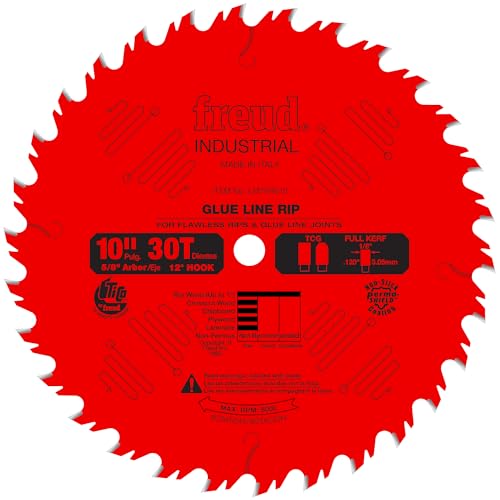
The LM74R010 features a heavy-duty thick kerf and reinforced plate to maximize stability and flatness during demanding ripping tasks. It uses a Premium TiCo carbide blend designed for high edge retention and sustained performance in tough woods. The triple chip tooth design helps produce smooth, true-cut edges ideal for glue-ready joints without additional sanding or jointing.
Freud Industrial Thin Kerf Glue Line Ripping Blade LM75R010
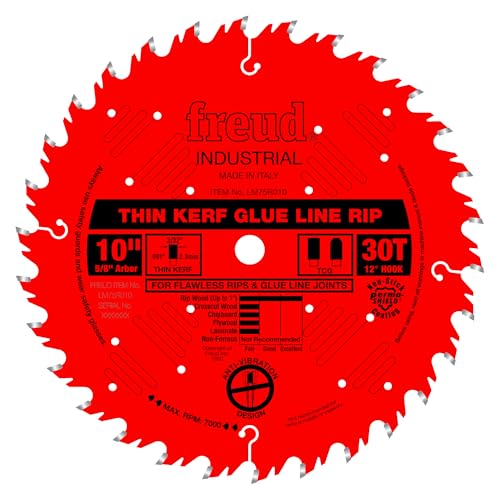
Engineered with a triple chip grind, the LM75R010 delivers ultra-smooth, glue-ready surfaces suitable for fine finish work. The high-density TiCo carbide blend supports reliable performance and edge retention through repeated passes in tough woods. It also provides precision finish cuts for edges within 1/8″ to 1″ thick materials, making it a solid choice for cabinetmakers and trim specialists.
CMT 203.630.10 Glue LINE Ripping Blade

The CMT Glue Line blade series emphasizes precision engineering. The blade uses a laser-cut steel plate, precision tensioning, and a standard 10″ diameter with 30 teeth. Its TCG grind and balanced hook angle support clean, glue-ready rip cuts and reliable performance in a range of cutting tasks. The labeling highlights how the blade is optimized for accurate and precise cuts in cabinetmaking and trim work.
Freud LM74M010: 10″ x 30T Glue Line Ripping Blade

With a 5/8″ arbor and a 10″ diameter, this blade carries the same TiCo Hi-Density carbide benefits as the larger models. The 30 teeth and TCG grind are paired with a robust heavy-duty kerf and plate to maintain flatness and stability over long ripping cycles. The blade is designed to drive clean, glue-ready edges that minimize sanding or jointing.”
Freud LM74D012: 12″ x 40T Glue Line Ripping Blade

The 12″ variant expands the glue line ripping capability with 40 teeth for finer cut control. It retains a TiCo hi-density carbide blend for extended edge life and a heavy kerf/plate configuration to achieve stable, flat cuts across longer rips. This blade is well-suited to cabinetry and solid-wood applications where long, glue-ready edges are required.
Whiteside Dimar Glue Line Rip Saw Blade

Whiteside Dimar offers a glue line rip solution with a 10″ diameter, 30 teeth, and a 5/8″ bore. The 0.142″ kerf and 22-degree hook angle with a TCG grind are optimized for aggressive cutting in solid woods. These blades are designed for both power tools and hand-fed operations, delivering glue-ready edges with minimal finishing work.
Woodriver Glue Line Rip Saw Blade

The Woodriver blade offers a 10″ diameter and 5/8″ bore with a 30-tooth Triple Chip Grind. A .141″ kerf and a 22-degree hook angle, plus German steel construction, position it as a durable option for glue-line ripping tasks in home shops and professional settings alike.
Buying Guide: Key Purchase Considerations And Comparisons
- Kerf width: Thin-kerf blades (around 0.071″ to 0.098″) reduce horsepower demand and waste, making them ideal for underpowered saws. Thick-kerf blades offer more stability and may yield longer blade life in heavy ripping tasks.
- Tooth design: Triple Chip Grind (TCG) blades behave well for glued edges, providing smoother surfaces with less sanding. Consider the number of teeth: 30T to 40T models suit general rip cuts with finish-ready sides; fewer teeth cut faster but may roughen surfaces.
- Carbide quality: TiCo hi-density carbide blends are designed for edge retention and long life in tough woods. Higher density carbides are typically more durable in demanding applications.
- Arbor size and plate construction: Ensure compatibility with your saw (most common is 5/8″ or 1″ arbors). A reinforced or thick plate contributes to flatness and stability, important for glue-line rip work.
- Application fit: For cabinetmaking and trim where glue-ready edges are critical, a blade with precise finish cuts and minimal tearout offers the best workflow.
- Blade width and overall diameter: Larger diameters increase contact area and may improve stability on long rips but require machines with appropriate power and RPM ranges.
- Maintenance and compatibility: Use blades designed for glue-line edges to minimize sanding. Some brands emphasize extra-flat plates and tensioning to maintain straight, true cuts over time.
When selecting a glue line rip blade, weigh your typical workloads: frequent long rips through hardwood boards? A thicker kerf blade with robust plate may offer durability. Prioritize a blade that maintains flat surfaces and produces clean, glue-ready edges with consistent results across repeated cuts. For precision cabinetry, consider a thin kerf option with a high-density carbide blend to maximize efficiency and edge integrity.