Choosing the right gloves for forging and blacksmithing is essential for hand safety, comfort, and performance. The following selections focus on extreme heat resistance, durable materials, and long forearms to shield against sparks, hot metals, and radiant heat. Each option listed below is designed for stick, MIG, and TIG welding, as well as forge work and fireplace handling. Read on to compare features and pick the pair that best fits your forging environment.
| Product | Brand | 26–word Snapshot |
|---|---|---|
| RAPICCA Welding Gloves Fire Heat Resistant: 16IN | RAPICCA | Premium fireproof leather, aluminum insulation, 16″ sleeves for forearm protection, rated up to 932℉ (500℃), comfortable lining, reinforced padding. |
| WZQH 16 Inches, 932℉ Leather Welding Gloves | WZQH | Cowhide leather with aluminum foil layer, 16″ length, reinforced stitching, up to 932℉, great for welding, grilling, grilling, forge work. |
| TICONN 16 Inch Welding Gloves | TICONN | 3-layer construction, 2.4mm cowhide, aluminum foil, cotton lining, 1000°F/538°C, Kevlar stitching, 16″ forearms for full coverage. |
| QeeLink Welding Gloves | QeeLink | Premium split leather, CE EN388/EN407, flexible wing thumb, heat resistant lining, versatile for forge, BBQ, and garden tasks. |
| TOPDC Fireplace Gloves 14 Inches | TOPDC | 14″ forearm protection, 932℉ resistance, Kevlar stitching, 1.2mm cowhide, lined interior for comfort, suitable for fireplaces and welding prep. |
RAPICCA Welding Gloves Fire Heat Resistant
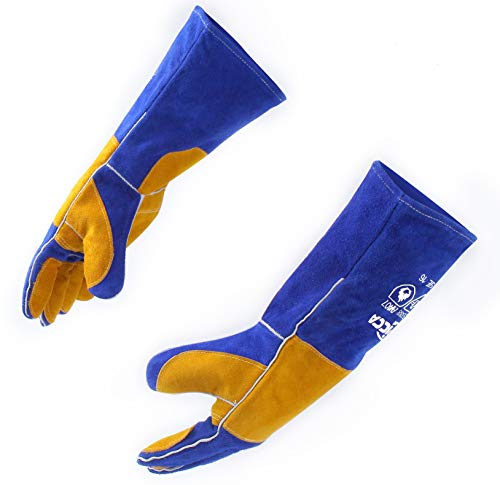
The RAPICCA 16-inch welding gloves are engineered for high-heat handling with a premium fireproof leather exterior and an insulating aluminum foil middle layer. A flame-retardant cotton liner adds comfort, while double leather-reinforced padding protects fingers, palms, elbows, and backs. These gloves resist heat up to 932℉ (500℃) and provide extended forearm protection with a 7.5-inch sleeve. The soft lining balances heat resistance with dexterity, helping users grip tools and manipulate hot materials without excessive stiffness.
WZQH 16 Inches, 932℉ Leather Welding Gloves
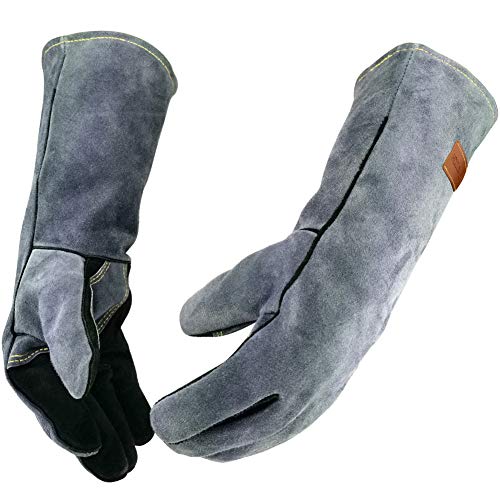
WZQH offers a durable 16-inch glove with a genuine cowhide leather outer layer and a laminated aluminum foil/cotton middle layer for heat insulation. The interior soft cotton lining enhances comfort and breathability. With reinforced double stitching and palm protection, these gloves aim to withstand extreme heat, sparks, and hot debris in forge and welding contexts, while extending forearm coverage to keep arms protected during long sessions.
TICONN 16 Inch Welding Gloves

TICONN’s 16-inch gloves feature a three-layer construction: a thick 2.4mm cowhide outer layer, a heat-reflective aluminum foil middle layer, and a soft cotton lining. They are built to endure temperatures up to 1000°F (538°C). Key stress areas are reinforced with Kevlar stitches for durability, while the 16-inch forearm length and adjustable cuff ensure a secure fit and extended protection during forging or welding tasks.
QeeLink Welding Gloves

QeeLink emphasizes premium leather and flexible design. Made from full cow split leather, they incorporate a durable Fireproof Stitching system and a heat-resistant cotton liner with a canvas cuff. CE EN388 and EN407 certifications indicate reliable protection for welding, forge, and typical home-use scenarios. The Wing thumb design enhances dexterity for holding tools, adjusting materials, and managing hot embers with more precision.
Cuwiny Welding Gloves
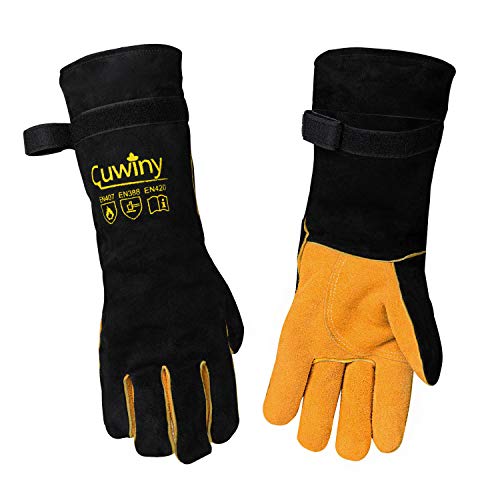
Cuwiny presents a 1112°F heat/fire resistant leather forge glove with 16 inches of forearm protection and Kevlar stitching. Outer cowhide leather combines with an aluminum foil layer and a cotton lining for optimal heat resistance. The 1.5mm leather thickness supports durability, while the hook-and-loop tape keeps cuffs secure. This glove is recommended for stick welding, MIG/TIG, and high-temperature forge work, offering robust protection across finger, palm, elbow, and back surfaces.
TOPDC Fireplace Gloves 14 Inches
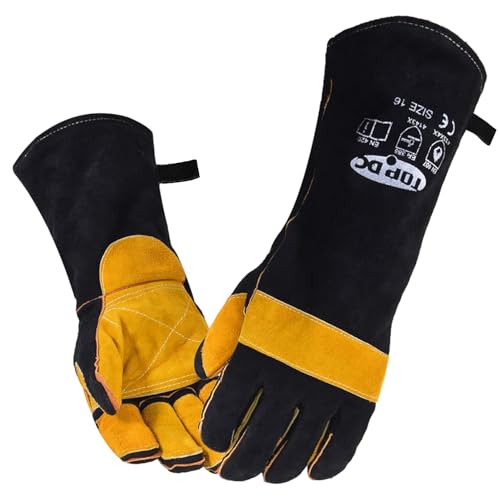
TOPDC 14-inch fireplace gloves are designed for deep-fire tasks and forge handling. They feature reinforced Kevlar stitching, a 1.2mm cowhide outer layer, and a fully lined interior to withstand daily heat exposure, flames, and sparks. The 7.5-inch sleeve provides extended forearm protection, enabling safer handling of logs, embers, and hot tools during wood-burning and welding-related activities.
Buying Guide: Key Considerations For Forging Gloves
When selecting gloves for forging, consider heat resistance, material quality, and fit. For high-heat environments, gloves with multiple layers (cowhide, aluminum foil, and cotton lining) offer superior insulation. Forearm length is crucial to prevent heat transfer from sparks or hot materials to the forearms, especially during forge work or welding prep. Durability matters: look for reinforced seams, Kevlar stitching, and sturdy padding at stress points to extend glove life. Dexterity should not be sacrificed—soft linings and flexible designs help maintain grip and precision when handling tools. Comfort features like breathable liners reduce sweating and fatigue in long sessions.
Durability vs. protection trade-offs vary by use case. For forge work and wood stove handling, extra-long sleeves and robust insulation are beneficial. For occasional welding, a balanced design with good dexterity and respectable heat resistance may be preferred. Certifications such as CE EN388 or EN407 can signal reliable standards. Always match glove size to your hand measurements to prevent slipping and reduce fatigue. If you operate in wet or oily environments, prioritize oil resistance and easily cleanable surfaces.
Safety practices complement glove selection. Inspect gloves before each use for fabric wear, tears, or compromised stitching. Avoid exposing gloves to open flames for extended periods to prevent scorching. When in doubt, choose gloves with higher heat ratings and longer sleeves to maximize protection during demanding forging tasks.
In summary, the listed options cover a range of heat resistance (up to 1000°F), forearm protection, and comfort features suitable for forging, welding, grills, and fireplace handling. Your best choice depends on the typical temperature, duration of exposure, and need for dexterity during manipulation of hot materials and tools.