The best general purpose table saw blade choices balance clean crosscuts, solid rip cuts, and long blade life across softwoods, hardwoods, plywood, and composites. This guide highlights five top blades that perform well for hobbyists and professionals alike, with buyer-friendly notes on where each blade shines. Read on to find the option that fits your saw, your projects, and your preferred cut style.
Summary of selected products:
| Blade | Brand | Best For |
|---|---|---|
| WEN BL1040 | WEN | General-purpose hardwoods and softwoods, fine finishes |
| CMT Orange Tools 251.042.10 | CMT ORANGE TOOLS | Hardwoods, plywood, laminates; versatile crosscuts and rips |
| DEWALT DWA11040 | DEWALT | Clean, precise cuts with long life for everyday use |
| Freud P410 Premier Fusion | Freud | Lower vibration, smooth finishes in crosscuts and rips |
| Diablo 40T ATB | Diablo | Fast, efficient general-purpose cutting with good finish |
WEN Blades: General Purpose Efficiency
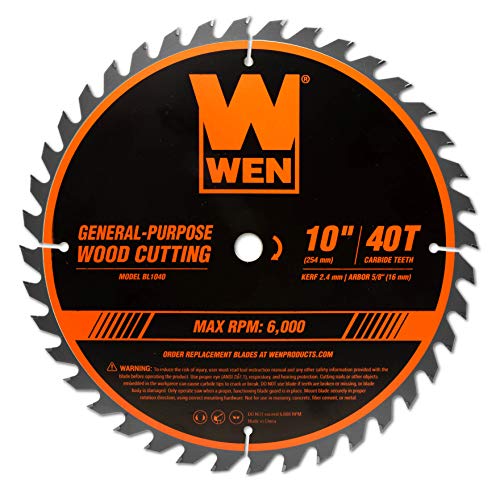
The WEN BL1040 is a 10-inch, 40-tooth carbide-tipped blade designed for miter and table saws. It features a 5/8-inch arbor and a high RPM compatibility up to 6000, making it suitable for both hard and soft woods. The ultra-thin kerf of 1/10 inch (2.4 mm) delivers clean, efficient cuts with less material waste. This blade is best for woodworkers who want quick, precise finishes on a range of boards while maintaining compatibility with common table saw setups.
Who it’s best for: hobbyists and professionals needing clean crosscuts and general-purpose rip cuts on mixed wood stock. Why selected: reliable carbide edge and thin kerf support faster cuts with less waste. Caution: compatibility with some saws may require checking arbor and clearance for unique fence setups.
CMT Orange Tools General Purpose Blade

The CMT Orange Tools blade is a 10-inch general purpose blade with a 5/8-inch arbor and ATB tooth design. It’s positioned for a broad mix of cuts across hardwoods, laminates, OSB, plywood, and softwoods. It is compatible with miter saws, portable and stationary table saws, and is designed to handle crosscuts and ripping tasks. Best for: woodworkers who need a single blade capable of handling varied job-site stock with dependable edge retention.
Why selected: versatile material compatibility and broad applicability. Limitation: some users may prefer a blade with additional anti-vibration features for very fine finishes on delicate veneers.
DEWALT General Purpose 40T Blade

The DEWALT DWA11040 is a 10-inch, 40-tooth blade marketed for fine finishes and extended life. Its tooth geometry is optimized for accuracy on woodworking projects, with ultra-sharp carbide edges and a design intended to stay sharp longer under typical woodworking workloads. Best for: users who prioritize clean edges and long blade life for everyday cutting tasks. Caution: actual performance can vary with material hardness and feed rate, so slower passes may yield better results on dense stock.
Freud Premier Fusion P410T
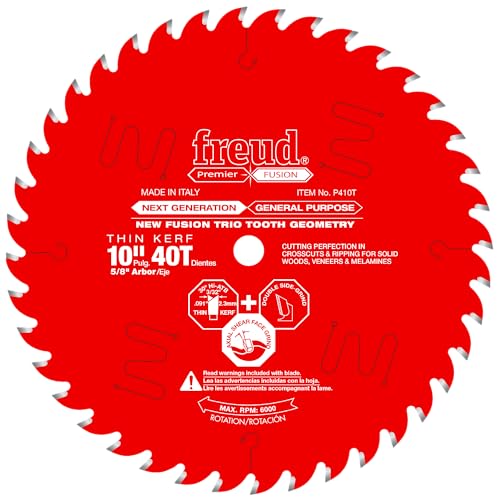
The Freud P410 Premier Fusion blade combines a unique Fusion Trio Tooth Design with TiCo hi-density carbide for sharper edges and longer life. The blade is engineered to minimize vibration through laser-cut anti-vibration slots, delivering smoother finishes in both ripping and crosscutting tasks. Best for: professionals or serious hobbyists seeking polished finishes with reduced chatter. Caution: the advanced design may come at a premium price; it is best paired with compatible anti-vibration practices and stable saw setups.
Diablo 40T ATB General Purpose

The Diablo 40-tooth ATB blade features TiCo carbide for a sharp, durable edge and a Perma-Shield non-stick coating that resists heat, gumming, and corrosion. The thin kerf and laser-cut kerf technology promote fast, clean cuts suitable for remodeling and demolition work. Best for: those who want consistent performance across varied materials and frequent re-cuts thanks to reduced sticking. Limitation: ATB geometry may not be ideal for extremely heavy ripping of very dense hardwoods compared with specialized ripping blades.
FOXBC 50-Tooth General-Purpose Blade

The FOXBC 50-tooth combination blade is designed for general-purpose wood cutting with a 5/8-inch arbor and .071″ plate thickness, ATB tooth configuration, and a .098″ kerf. It’s tailored for smooth finish on both ripping and crosscutting tasks, with teeth separated by a large gullet for efficient waste removal. Best for: users who switch frequently between ripping and crosscutting in mixed stock. Caution: 50T may be slower on heavy ripping compared with dedicated ripping blades.
Freud Fusion 40T P410T Next Gen
The Freud 40T Fusion blade features TiCo Hi-Density carbide across a Next Generation Fusion design offering polished finishes in both crosscuts and rips. It includes anti-vibration features and a precise grind to keep cuts clean across various woods. Best for: users who need reliable general-purpose performance with long blade life. Caution: may require slower feed rates on particularly dense stock for optimal finishes.
Buying Guide
- Material compatibility: Choose blades with carbide-tipped teeth for durability across hardwoods, softwoods, plywood, and laminates.
- Tooth configuration: General-purpose blades typically use ATB or similar tooth patterns for balanced rip and crosscut performance.
- Kerf thickness: Thin kerf blades (around 1/10 inch) require less power and reduce material waste, ideal for smaller saws and portable setups.
- Arbor size: Most blades in this guide use a 5/8-inch arbor. Verify your saw’s arbor compatibility before purchasing.
- Vibration and finish: Blades with anti-vibration features and advanced tooth geometry reduce chatter and yield smoother finishes on varying stock.
- Budget vs. performance: Higher-end blades may offer longer life and smoother finishes, but for casual use a robust mid-range blade often suffices.
Frequently Asked Questions
- What is a general purpose table saw blade best for? It covers a wide range of wood cutting tasks, including crosscuts and ripping, across common stock types.
- Is a thinner kerf blade always better? Thinner kerf blades waste less material and require less power, but can be more prone to deflection on very thick stock.
- Do I need special blades for veneers or plywood? Some general purpose blades perform well, but veneers and plywood sometimes benefit from blades with finish-oriented tooth geometry.
- How important is tooth count? Higher tooth counts yield smoother finishes; lower tooth counts cut faster but with rougher edges, so balance for your projects.
- Can I use these blades on a variety of saws? Most are compatible with miter saws and stationary table saws that share a 5/8″ arbor, but always confirm compatibility with your specific model.
- What maintenance helps blades last longer? Regular cleaning, proper feed rates, and avoiding overheating can extend blade life and cut quality.