If you need portable, engine-powered air for outdoor projects or remote worksites, a gas powered air compressor kit is the right choice. This guide highlights five reliable options, explaining who each product suits best, plus practical buying tips. The top picks are ideal for contractors, DIYers, and professionals who require mobility, continuous airflow, and high-pressure capability without relying on electric power at the job site.
| Product | Tank / Air Output | Best For |
|---|---|---|
| Metabo HPT Gas Powered Wheeled Air Compressor, 8 Gallon | 8 gallon, 145 PSI | General pneumatic work with reliable Honda engine |
| VEVOR 9 Gallon Twin-Tank Gas Powered Air Compressor | 9 gallons, twin tanks, 115 PSI | Two tools simultaneously on outdoor projects |
| Albott 13HP Gas Air Compressor, 30 Gallon | 30 gallons, 180 PSI | Heavy-duty, long-run air supply for continuous use |
| VEVOR 13.2 Gallon Gas Powered Air Compressor | 13.2 gallons, 115 PSI | Workshop or site tasks needing mobility and steadier air |
| Ingersoll-Rand SS3J5.5GH-WB, 8 Gallon | 8 gallon, 135 PSI | Portable oil-litted gas compressor with continuous duty |
The following five products are evaluated for portability, continuous airflow, ease of use, and potential limitations. Each section provides a compact buyer-focused snapshot to help you compare quickly.
Metabo HPT Gas Powered 8-Gallon Compressor

Best for: General contractors and DIYers who need strong, reliable power for a range of pneumatic tools. Why selected: Honda GX engine delivers dependable performance, with an 8-gallon tank that cycles 116–145 PSI to meet tool requirements. It emphasizes durability with a cast iron cylinder for long life.
Caution: Heavier than compact models; mobility depends on layout and transport options. The data emphasizes long-term efficiency, not ultra-lightweight transport.
VEVOR 9-Gallon Twin-Tank Gas Powered

Best for: Outdoor tasks requiring uninterrupted air and two-tool capability. Why selected: Twin tanks provide more stable airflow, with 9 CFM at 115 PSI and dual outlets for simultaneous operations, plus easy wheel mobility.
Caution: Heavier setup may require more space for storage and transport. Fuel efficiency varies with load.
Albott 13HP Gas Air Compressor, 30-Gallon
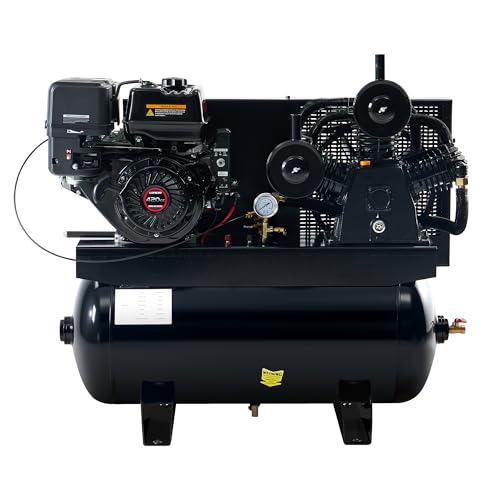
Best for: Heavy-duty jobs at larger sites where long air runs are needed. Why selected: A 30-gallon ASME-certified tank with a 13 HP engine delivers 180 PSI and 18 CFM at 90 PSI, supporting high-demand tools with steadier supply.
Caution: Higher initial footprint; consider available space and maintenance of a larger tank system.
VEVOR 13.2-Gallon Gas Powered Unit

Best for: Sites needing a balance of mobility and steady air delivery. Why selected: 7 HP engine with 9 CFM at 115 PSI, two outlets for simultaneous use, and wheels for easier transport.
Caution: Output and tank size are mid-range; may not be ideal if you need the highest CFM for each tool at full PSI constantly.
Ingersoll-Rand SS3J5.5GH-WB 8-Gallon
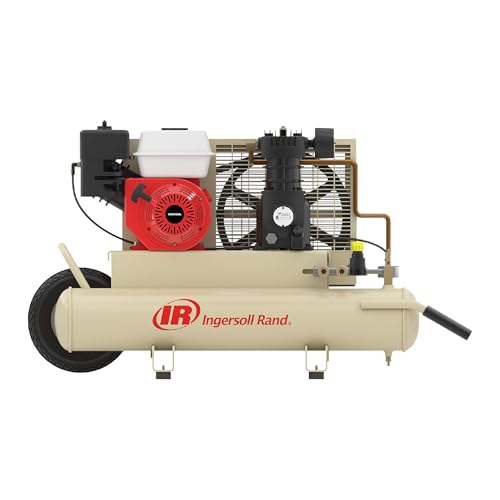
Best for: Portable, oil-lubed operation with continuous duty in compact form. Why selected: Honda engine power and 135 PSI max pressure support portable pumping with a balance of capacity and duty cycle for on-the-go tasks.
Caution: Oil-lubed operation requires regular maintenance; ensure availability of servicing and oil checks on-site.
Buying Guide: Gas Powered Air Compressors
Key considerations help match a unit to your work. Look at engine type, tank size, maximum pressure (PSI), CFM at working PSI, mobility features, and available outlets. For outdoor or remote sites, prioritize fuel efficiency, portability, and reliability of the engine (Honda or comparable). For continuous use or two-tool jobs, twin-tank designs or large-capacity tanks reduce cycling and downtime. Consider maintenance needs, particularly for oil-lubed compressors, and ensure you have a safe storage area for fuel and a clear plan for startup in varying temperatures.
Frequently Asked Questions
- What is a good PSI for most pneumatic tools? – Typical tools operate effectively around 90–145 PSI; choose a unit that maintains stable pressure for your most-used tools.
- Is a larger tank always better? – Larger tanks reduce cycling and provide longer runtime, but require more space and can be heavier to move.
- Do I need two outlets? – If you plan to run two air tools simultaneously, a twin-tank or dual-outlet unit helps prevent pressure drops.
- What maintenance is required for gas compressors? – Regular oil checks, air filter cleaning, and routine inspection of hoses and fittings help maintain performance.
- Are gas-powered compressors suitable for indoor use? – Gas-powered units are best used outdoors due to exhaust emissions and noise; ensure proper ventilation and safety.
- What safety features should I look for? – Look for automatic shut-off, oil sight glass, and protective covers for moving parts.