Answering the needs of contractors, mobile service fleets, and remote work sites, these gas-powered air compressor generators combine air supply, electrical power, and sometimes welding function in a single unit. The top picks below are selected for versatility, reliability, and suitability for different job scales. Best for construction crews needing mobility; better for remote sites; choose this if you require a combination power source and air supply in one machine; avoid this if you only need a small, quiet tool-only compressor.
| Product | Best For | Key Benefit |
|---|---|---|
| MutsMover 3-in-1 Gas Powered Air Compressor Generator Welder | Mobile job trucks and remote sites | 3-in-1 system: air, power, and welding capability |
| Albott 13HP Gas Air Compressor 30 Gallon | Long runs with steady air | ASME 30-gallon tank; efficient cast iron pump |
| Metabo HPT Gas Powered Wheeled Air Compressor, 8 Gallon | Smaller jobs with mobility | Honda GX engine; portable wheel design |
| NorthStar Gas Air Compressor, 30-Gallon | Heavy-duty inflations and workshops | Full cast iron pump; electric start option |
| VEVOR 15HP Gas Powered Air Compressor, 30 Gallon | High-demand projects | 33 CFM @ 115 PSI; dual outlets |
MutsMover 3-in-1 Gas Powered Air Compressor Generator Welder

Best for mobile construction teams needing equipment that covers air supply, electrical power, and welding capability in one unit. The 15HP CH440 engine delivers 19 CFM at up to 180 PSI, sufficient for impact wrenches, spray guns, and small weld tasks. The two-stage cast iron pump offers durability for continuous operation, and the full 6000W generator capability adds on-site electrical versatility. This model is ideal for job trucks and remote sites where multiple tasks must be powered from a single machine.
Who it’s for: contractors and field service crews that require a rugged, all-in-one machine for air tools, portable power, and welding during on-site work. Caution: larger, heavier unit may require more fuel and space on-site. Not ideal for indoor quiet operations or light-duty tasks.
Albott 13HP Gas Air Compressor 30 Gallon Portable Horizontal Tank
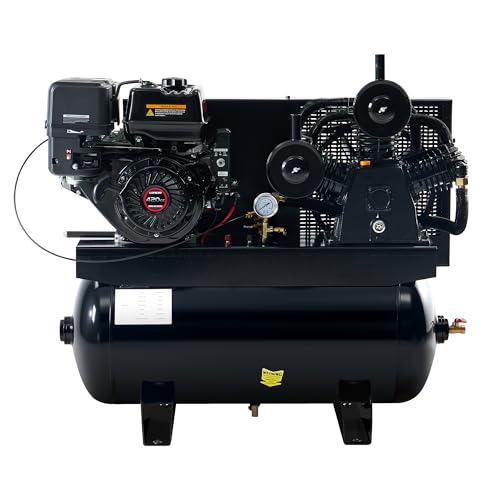
Best for steady, long-run air supply with a large storage tank. This 30-gallon ASME-certified tank helps reduce motor run time and provides a stable air output at up to 180 PSI with 18 CFM at 90 PSI. Cast iron pump components and a durable frame improve wear resistance in tough job conditions. It’s a strong choice for shop floors or mobile setups needing consistent air delivery between tool uses.
Who it’s for: professionals who prioritize a large tank for fewer stops and maintenance-friendly design. Caution: heavier than small-portable models; not the lightest option for frequent relocation.
Metabo HPT Gas Powered Wheeled Air Compressor, 8 Gallon

Best for lighter, mobile tasks that still require reliable tool operation. This 8-gallon unit uses a Honda GX engine for dependable starts and performance. The cast iron cylinder enhances durability, while the wheeled design supports easy relocation around a job site. Suitable for framing, roofing, and finish work where portability matters more than sheer tank size.
Who it’s for: contractors and DIYers needing a compact, durable gas-powered option. Caution: smaller tank means more frequent refills during heavy use.
NorthStar Gas Air Compressor, 30-Gallon

This 30-gallon model emphasizes durability with a Honda GX390 OHV engine and a full cast iron pump. Electric start is paired with recoil backup and a low-oil shutdown for safety. The large capacity and robust pump are well-suited for workshop environments and projects that demand extended air runs with fewer interruptions.
Who it’s for: workshops and service crews that need a reliable, steady air supply with strong starter options. Caution: not the lightest option for frequent transport between job sites.
VEVOR 15HP Gas Powered Air Compressor

Best for high-demand projects requiring substantial air output. The VEVOR unit delivers 33 CFM at 115 PSI with a 30-gallon horizontal tank and dual outlets for simultaneous tool use. The 4-wheel mobility design makes it practical for workshop-to-job-site transitions. It suits contractors running multiple air tools in parallel or needing quick inflation for large jobs.
Who it’s for: crews that need robust air supply and versatile tool operation. Caution: higher output comes with more weight and fuel consumption; ensure you have adequate space and fuel supply for extended use.
Buying Guide
Key purchase considerations help align equipment to the job. Use these questions to compare models effectively.
What tank size do I need?
Smaller tasks benefit from 8-gallon units; larger projects or frequent tool use benefit from 30-gallon tanks to reduce run time and refills. A larger tank provides steadier air pressure between cycles, especially for air-hungry tools.
Gas-powered vs electric or hybrid
Gas-powered units offer portability and operation away from electrical outlets, ideal for remote sites or mobile fleets. Electric options are quieter and indoors-friendly but require power access or generators.
What PSI and CFM levels matter?
CFM determines how many tools can run simultaneously, while PSI governs the maximum pressure tool can draw. Match CFM to your most demanding tool, and ensure PSI capacity meets or exceeds that tool’s requirement.
Portability and setup considerations
Wheeled designs and compact footprints ease movement around jobsites. Consider overall weight, fuel capacity, and whether the unit fits into your truck bed or trailer space.
Durability and maintenance
Look for cast iron pumps, robust frames, and serviceable parts. Oil lubrication, easy oil checks, and accessible filters extend life in harsh work environments.
Frequently Asked Questions
- Which unit is best for a remote worksite? A multi-function gas-powered unit with a large tank and strong air delivery, like a 30-gallon model, is ideal for remote sites to power air tools and provide generator capacity.
- Is a larger tank always better? A larger tank helps maintain steady air pressure and reduces cycling, but adds weight and bulk. Choose based on how often you need to refill and space constraints.
- Do I need an electric start? Electric start simplifies startup, especially in cold conditions or for frequent use; recoil backups are common as a fail-safe.
- Can I run multiple tools at once? Yes, if the unit has multiple outlets and sufficient CFM. Check the combined load against the pump’s output.
- What maintenance is required? Regular oil checks, filter replacements, and valve inspections keep performance stable in gas-powered units.
- Are these units suitable for indoor use? Gas-powered machines emit exhaust; they should be used in well-ventilated outdoor areas or dedicated outdoor spaces.