When you need a circular saw that can handle big cuts, these models stand out for power, capacity, and durability. This guide highlights five options that are well-suited to professional and serious DIY projects. Best for contractors and woodworkers who regularly cut large lumber, beams, or sheet goods.
Overview of top picks is below. The table summarizes each model’s key strengths to help you compare quickly.
| Product | Best For | Why It Stands Out |
|---|---|---|
| SKIL SPT70V-11 (16-5/16 in.) | Beams and thick stock | Largest capacity worm drive with magnesium construction for durability and lightness |
| Makita HS0600 (10-1/4 in.) | Long rip cuts | Trusted performance, high RPM, well-balanced for extended use |
| Big Foot Tools BF-UG SC-1025SU (10-1/4 in.) | Precision beam cutting | Worm-drive with magnesium frame for precision and lightness |
| DEWALT DCS590B (20V Max XR, 7-1/4 in.) | Cordless versatility | Powerful brushless motor, high RPM, cordless convenience |
| DEKOPRO 1200W (165mm blade) | Budget-friendly power cuts | High RPM with adjustable depth and steel base for clean cuts |
SKIL 16-5/16 In. Magnesium Worm Drive Skilsaw SPT70V-11

Best for: heavy-duty framing and big-beam work. This worm-drive saw uses magnesium construction for a lighter feel and robust durability, with the largest capacity in its class. It delivers significant cutting power for thick lumber and 6x timber in a single pass. The magnesium die-cast footplate helps ensure accurate cuts. It is best for professional users who prioritize maximum depth and relentless performance.
Why selected: Its 6-1/4 inch cut capacity and all-magnesium construction support long, straight cuts through thick stock while keeping weight manageable. The worm-drive design delivers strong torque for demanding cuts.
Caution: This model is heavier than smaller saws; consider your shoulder and back posture for extended use. Ensure you have a compatible blade and safety setup for large-diameter cuts.
Makita HS0600 10-1/4″ Circular Saw

Best for: long rip cuts and heavy-duty lumber projects. Its 10-1/4″ blade capacity allows you to cut through 4x lumber in a single pass, with a powerful 15-amp motor delivering up to 4,300 RPM. The well-balanced design enhances operator comfort over longer sessions.
Why selected: The combination of high RPM and robust power makes it a strong option for framing and large stock work. The saw’s balance and weight support stable, accurate cuts.
Limitation: While powerful, it may not match the absolute maximum depth of larger worm-drive models. Consider this if you frequently cut oversized beams beyond typical 4x stock dimensions.
Big Foot Tools BF-UG SC-1025SU 10-1/4-Inch Worm Drive
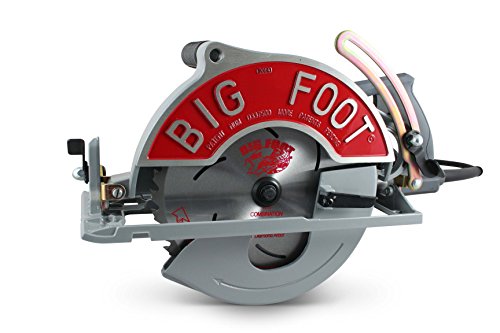
Best for: professional beam cutting with precision. This model uses a Skil-based motor and a magnesium frame to deliver a durable yet lightweight design. Its beam-cutting orientation supports accurate, repeatable cuts for long, straight lines.
Why selected: The magnesium construction reduces fatigue while maintaining rigidity during heavy-duty work. The worm-drive mechanism enhances torque for demanding cuts.
Caution: Data notes emphasize precision and longevity; real-world results depend on blade choice and workpiece alignment. Budget-conscious buyers should compare with other options for feature balance.
SKIL 15 Amp 7-1/4 Inch Circular Saw with Single Beam Laser Guide
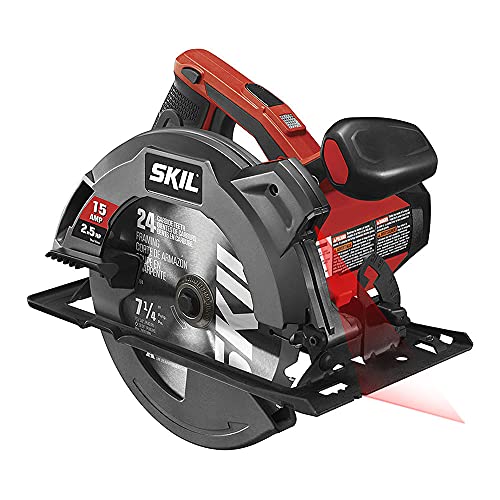
Best for: general-purpose large-cutting tasks with precise alignment. Equipped with a laser guide and 51° bevel capacity plus a 45° positive stop, it supports accurate miter and crosscuts in large panels and framing.
Why selected: The single-beam laser guide helps ensure straight cuts, especially when working with wide stock or sheet goods. The 15-amp motor provides ample power for most hardwoods and populated job sites.
Limitation: The blade size is smaller than the largest-capacity models listed here, so it is less suited for ultra-deep cuts in very thick stock compared with worm-drive options.
DEKOPRO Circular Saw 1200W, 165mm Blade
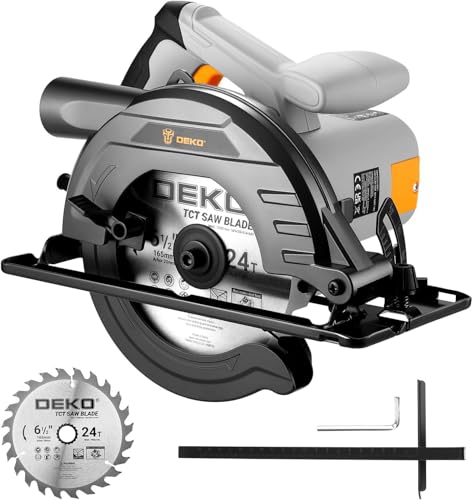
Best for: budget-conscious buyers who still need solid power for wood and PVC cutting. The 1200W motor and 165mm blade deliver strong performance at a lower price point. Depth adjustments allow versatile cuts at 90° and 45° with a steel base for stability.
Why selected: It offers robust performance for its price, with a durable base and straightforward controls that appeal to DIYers and hobbyists performing standard cutting tasks.
Limitation: While capable, it may lack some premium features and long-term reliability of higher-end models. Use for moderate, not heavy-duty, repeated cuts to maintain longevity.
Buying Guide
What size saw do I really need?
For extra-large cuts and thick stock, look for models with large blade diameters or worm-drive configurations, which deliver more torque and deeper cut capacities. If you frequently work with thick beams or large panels, prioritize capacity and contact between the blade and workpiece.
Worm drive vs. side drive: which is better?
Worm-drive saws offer higher torque and longer motor life under heavy load, making them ideal for framing and cutting large stock. Side-drive (hypoid) saws tend to be lighter and easier to maneuver, better for general cuts and overhead work. Choose based on project type and comfort level.
What about weight and fatigue?
Magnesium construction helps reduce weight without sacrificing stiffness. If you anticipate long work sessions, prioritize lighter models with well-designed handles and balanced weight distribution to minimize fatigue.
Blade compatibility and stock need
Check blade diameter and arbor size to ensure you can use common high-quality blades for hardwoods, plywood, or engineered lumber. Larger-capacity saws require compatible blades to maximize cut depth and quality.
Corded vs. cordless considerations
Corded models deliver consistent power and maximum depth without worrying about battery life, making them preferable for long jobs. Cordless options offer mobility, ideal for sites without convenient outlets but may trade depth and runtime for flexibility.
Safety and setup
Always use protective gear, ensure the base and fence are secure, and set the correct depth before cutting. Check the blade alignment and install a clean, sharp blade for clean, accurate cuts.
What’s the best setup for accuracy?
Use a straightedge, solid workbench, and clamps to secure your material. For long cuts, consider a guide rail or laser guide to improve precision and reduce kickback risks.
Summary of buying considerations
- Cut capacity: Ensure it meets your largest stock size needs.
- Drive type: Worm drive for power; side drive for lighter use.
- Weight: Magnesium frames reduce fatigue on big jobs.
- Blade compatibility: Confirm arbor size and blade types.
- Power source: Corded vs. cordless based on site access and duration.
Frequently Asked Questions
- What is the advantage of a large-capacity circular saw?
- Are worm-drive saws heavier than standard side-drive models?
- Is cordless a good option for heavy-duty cuts?
- Can I use standard blades on all these saws?
- What safety gear is essential?
- Which model is best for professional use?
Large-capacity saws can cut through thicker stock in a single pass, increasing efficiency on framing and beam projects.
Yes, generally, but magnesium construction can help offset some weight while providing more torque for heavy cuts.
CORDLESS tools offer mobility, but they may have limited runtime and depth compared to corded models. Use cordless when access to outlets is limited.
Most saws support common blade sizes, but always confirm arbor compatibility and max blade diameter for safety and cutting performance.
Wear eye protection, hearing protection, and sturdy gloves. Use clamps and a stable work surface to prevent kickback and ensure precise cuts.
The SKIL SPT70V-11 and the Big Foot Tools SC-1025SU are strong choices for pro-level heavy cuts due to their large capacity, worm-drive design, and durable magnesium construction.
Choosing the right extra-large circular saw depends on your typical material, cut depth needs, and workflow. The five models listed offer a range of capacities, drive styles, and price points to match different professional and DIY scenarios.