Choosing an electric start pressure washer combines convenience with solid cleaning power for homes, driveways, patios, and more. This guide highlights five strong options that balance portability, performance, and ease of use for American buyers. Each model features an electric-start system or similarly simple ignition, reliable pumps, and a range of nozzles to tackle common outdoor messes. Use the buying guide below to compare motor type, PSI and GPM, onboard tanks, and accessory compatibility to find the best fit for your cleaning needs.
| Product | Max PSI | GPM | ||
|---|---|---|---|---|
| Westinghouse WPX3000e | 3000 | 1.76 | Induction/electric | Yes |
| Westinghouse ePX3500 | 2500 | 1.76 | Electric | Yes |
| Westinghouse WPX3400e | 3400 | 2.0 | Brushless/electric | Yes |
| Westinghouse WPX3200e | 3200 | 1.76 | Induction/electric | Yes |
| Greenworks Pro Brushless 3000 | 3000 | 2.0 | Brushless/electric | No |
Westinghouse WPX3000e Electric Start Pressure Washer
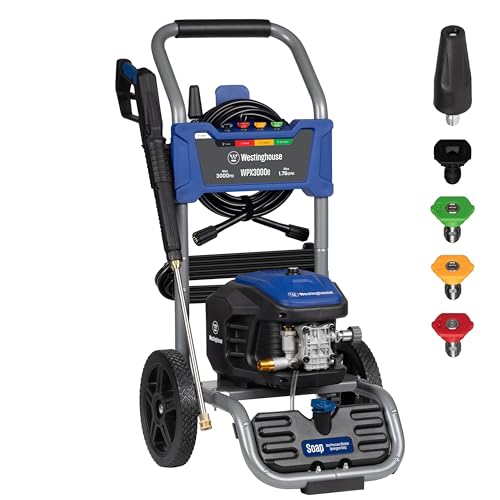
The Westinghouse WPX3000e delivers up to 3000 PSI with a 1.76 GPM flow, designed to handle decks, driveways, fences, and patio furniture. It features an induction motor for durability and an onboard soap tank for convenient detergent use. The 25-foot hose and five quick-connect nozzles (0°, 15°, 25°, soap, turbo) provide versatile cleaning for cars and outdoor surfaces. A lightweight spray gun and a maintenance-free pump support extended outdoor cleaning sessions.
DeWalt DXPW3425E-S 3400 PSI Gas Pressure Washer

DeWalt’s DXPW3425E-S combines power and reliability with a 208cc recoil-start engine and a 3400 PSI, 2.5 GPM axial cam pump. It includes a spray gun, wand, and five QC nozzles, plus a 25-foot hose. A welded steel frame with powder coating provides rugged durability, and a compact design with 10-inch pneumatic tires aids mobility across varied terrain. This unit is suitable for heavy-duty patio, deck, and exterior cleaning projects, offering strong performance for seasonal maintenance tasks.
Westinghouse ePX3500 Electric Pressure Washer

Westinghouse ePX3500 offers 2500 MAX PSI with up to 1.76 GPM and a 1.2 GPM rated flow. It features a Pro-style 17.5-inch extendable wand with quick-connect nozzles (0°, 15°, 25°, turbo, soap) and a 20-ounce onboard soap tank. Its anti-tipping design includes four quick-lock wheels and a compact 16.5-inch height for easy storage and maneuverability. This model excels for vehicles, siding, and concrete surfaces, with portability and straightforward operation in one package.
Westinghouse WPX3400e Electric Pressure Washer
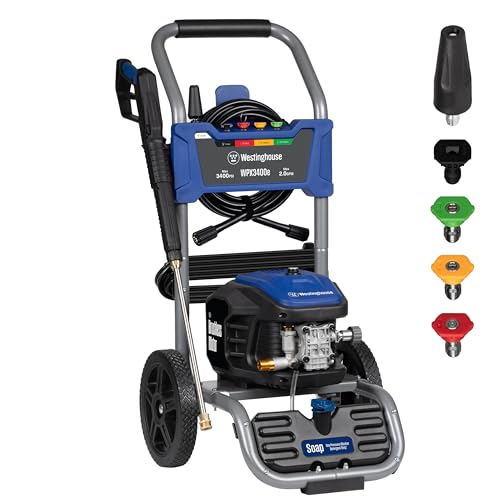
With 3400 MAX PSI and 2.0 GPM, WPX3400e pairs a brushless motor with robust cleaning capability. An onboard half-gallon soap tank and a 25-foot hose support extended cleaning, while the included five nozzles (0°, 15°, 25°, turbo, soap) enable versatile use. The brushless motor reduces maintenance and enhances longevity, making it suitable for large-surface tasks like siding, driveways, and patios, as well as vehicles and furniture.
Westinghouse WPX3200e Electric Pressure Washer
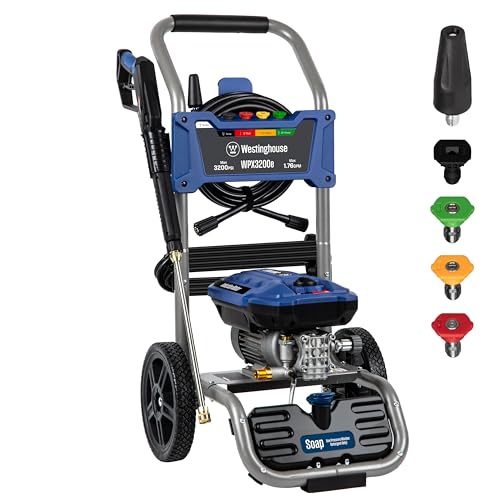
WPX3200e delivers 3200 PSI with up to 1.76 GPM, featuring an induction motor and a built-in 0.61-gallon soap tank. Its 25-foot hose is designed for abrasion resistance, and the 5-nozzle spray set (0°, 15°, 25°, turbo, soap) supports a broad range of cleaning tasks. The long power cord and durable pump are well-suited for home exteriors, decks, and vehicles, offering reliable electric-start performance for frequent use.
Greenworks Pro Brushless 3000 PSI Electric Pressure Washer

Greenworks Pro uses a TruBrushless motor to deliver 3000 PSI and 2.0 GPM, accompanied by a robust 14-amp motor. Independent lab testing confirms performance claims, with JETTFLOW technology providing up to 50% more flow for higher reach and faster cleaning. The model emphasizes foldable handles, a steel frame, and a 25-foot hose, making it a compact, powerful option for patios, siding, driveways, and vehicles, while prioritizing user safety and efficiency.
DeWalt DXPW3400PRNB-S PressuReady 3400 PSI Gas

DeWalt’s DXPW3400PRNB-S combines PressuReady battery-assisted start with a 208cc engine to deliver 3400 PSI at 2.5 GPM. The Quick Start technology activates the electric starter when needed, and a Smart Control Panel provides indicators for ready status, water flow modes, and faults. A large battery compartment helps reduce noise and fuel burn, while the 25-foot hose and included nozzles and wand ensure efficient prep work for home exterior cleaning and painting prep.
Buying Guide: Key Purchase Considerations
- Power and flow: Higher PSI and GPM improve cleaning speed and effectiveness on tough jobs, but balance with nozzle selection and surface type to prevent damage.
- Electric start reliability: Look for induction or brushless motors for longevity, and a proven start mechanism that remains dependable in varying temperatures and climates.
- Portability and storage: Weigh weight, wheels, height, and handle design. Foldable or compact units are easier to store in smaller spaces or garages.
- Onboard detergent: An onboard soap tank simplifies soap use for routine cleaning. Check compatibility with foam cannons and deters to avoid damage to pumps.
- Accessories: A versatile nozzle set (0°, 15°, 25°, turbo, soap) and a compatible hose length matter for edge-to-edge cleaning. Surface cleaners and undercarriage attachments expand capabilities.
- Durability and warranty: Metal frames, stainless or coated components, and a solid warranty protect against early wear, especially for frequent use.
- Fuel versus electric start: Gas-powered units offer raw power but require more maintenance and storage considerations; electric start models provide easier startup and lower noise but rely on power outlets or generators.
- Maintenance needs: Brushless and induction motors require less routine service, whereas gas engines need regular oil, spark plug, and filter checks.
When selecting a model, align the washer’s power and features with your typical tasks—light deck cleaning and vehicle washing demand less PSI and more portability, while driveways and siding may benefit from higher PSI and larger pumping capacity. Consider where you’ll store the unit and how often you need to move it around the yard or driveway.