When power outages strike or you’re camping off-grid, an electric start generator provides quick, reliable power with minimal effort. This guide highlights five top options featuring remote or electric start, dual- or tri-fuel capabilities, and safety features like CO shutdown and overload protection. Each model is evaluated for run time, power output, fuel flexibility, and portability to help you choose the right fit for home backup or remote adventures.
| Product | Brand |
|---|---|
| Westinghouse 12500 Peak Watt Dual Fuel Generator | Westinghouse |
| WEN 4,750-Watt Dual Fuel Generator | WEN |
| WEN DF451i Super Quiet 4500-Watt Dual Fuel | WEN |
| WEN DF480iX Quiet 4800-Watt Dual Fuel | WEN |
| Generac 10,000/8,000-Watt Portable Generator | Generac |
| Westinghouse 4000 Peak Watt Dual Fuel | Westinghouse |
| Westinghouse 12500 Peak Watt Tri-Fuel | Westinghouse |
Westinghouse 12500 Dual Fuel With Remote Start

The Westinghouse 12500 Peak Watt Dual Fuel Portable Generator delivers strong power for home backup or job sites. It runs on gasoline or propane and supports remote electric start via a key fob, with a recoil backup option. Its long-running 6.6-gallon tank enables extended operation, and the unit includes essential outlets for household and RV use. Safety features include a carbon monoxide shutdown and a digital hour meter to monitor maintenance intervals. With transfer switch readiness, this model is designed to integrate with home electrical systems for smoother outages.
WEN 4,750-Watt Dual Fuel Generator

This WEN model offers a versatile 4750 surge watts/3800 running watts on gasoline and 4350 surge/3500 running watts on propane. It supports 120V and 240V output, making it suitable for transfer switches and emergency backups. Electric start simplifies operation to a single key turn, and its dual-fuel capability allows flexible fuel choices during outages or remote sites. Ideal for campers or small homes needing reliable, accessible power with straightforward setup.
WEN DF451i Super Quiet 4500-Watt Inverter
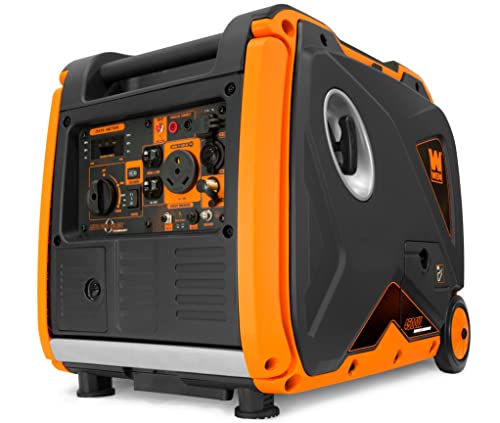
The WEN DF451i combines dual-fuel flexibility with an efficient 212cc engine and a quiet operation profile. It delivers 4500 surge watts and 3500 rated watts on gasoline, with propane performance matching the demand. Auto fuel selection technology seamlessly switches fuels to maximize runtime. This inverter generator is designed for sensitive electronics thanks to stable power output and low total harmonic distortion, reducing the risk to devices during outages.
WEN DF480iX Quiet 4800-Watt Dual Fuel

The DF480iX offers 4800 surge watts and 4000 rated watts on gasoline, with propane support at 4320 surge and 3600 rated watts. This model emphasizes quiet operation and clean power for sensitive electronics. The CO watchdog and shutoff feature provide safety during operation, while the inverter design ensures stable output for devices like phones and laptops. Its compact build supports portability for RV use and travel trailers.
Generac GP8000E 10,000/8,000-Watt

Generac’s GP8000E brings substantial power with 8000 running watts and 10000 surge watts, driven by PowerRush technology for quick starts under heavy loads. The electric start simplifies operation, eliminating manual cranking. A large fuel tank and built-in gauge support extended runtimes, making it suitable for longer outages. This model targets homeowners needing robust emergency power with dependable performance for appliances and essential circuits.
WEN 6800-Watt Dual Fuel Inverter (DF680iX)

The DF680iX delivers 6800 surge watts and 5100 rated watts on gasoline, with propane providing 6000 surge watts and 4500 rated watts. It includes a bonded-neutral 240V configuration for Level 2 EV charging compatibility and a CO watchdog sensor for safety. This model is positioned for users who require higher output for home or campsite while maintaining the quiet, efficient inverter design.
Westinghouse 4000 Peak Watt Dual Fuel

This compact Westinghouse model provides a balanced option with 4000 peak watts and 3300 rated watts. It runs on gas or propane and includes a remote start with a key fob, as well as a recoil and manual start. Outlets include a 120V duplex and an RV-ready TT-30R, plus USB ports for small devices. The unit emphasizes safety with automatic low oil and CO shutdown and a digital display showing fuel, output, and run hours.
Westinghouse 12500 Peak Watt Tri-Fuel

The tri-fuel version extends flexibility with gasoline, propane, and natural gas options. It maintains a high peak wattage of 12500 on gas and 11200 on propane, with substantial running watts across fuels. Remote electric start, CO shutdown, and a robust 457cc Westinghouse engine underpin reliable performance. The design includes transfer-switch readiness and multiple outlets for home or RV setups, supported by a long-running fuel tank and digital hour meter.
Buying Guide
Power needs: Determine your essential circuits to estimate required running watts. For homes, plan for 8000–10000 watts when you anticipate running multiple appliances simultaneously. For RVs or remote cabins, consider a model with 3000–5000 watts minimum, expanding as needed for AC, heating, or refrigeration.
Fuel type and availability: Dual- or tri-fuel units offer flexibility during shortages or remote sites. Gasoline is widely available, propane offers cleaner burns and longer shelf life, and natural gas connects to home utilities where available.
Starting method: Electric start is convenient, especially during cold starts or after outages. Remote start augments this, allowing you to power up without approaching the unit.
Runtime and tank size: Longer runtimes reduce refueling needs during outages. Look for fuel gauges and larger tanks if extended operation is expected.
Safety features: CO shutdown, low-oil protection, and weather-appropriate safeties (slip-resistant feet, enclosed outlets) protect users and equipment. Inverters produce clean power suitable for electronics, while open-frame units handle heavier loads.
Portability vs. power: Portable models favor transportability, but stationary or semi-permanent setups with transfer switches deliver seamless home backup. Consider enclosure, noise levels, and wheel kits when evaluating comfort for daily use.
Maintenance and warranty: Check engine type, oil recommendations, and service intervals. A robust warranty and accessible customer support improve long-term ownership experiences.
In choosing among these options, compare peak wattage, continuous running watts, fuel flexibility, and safety features to align with your specific needs—home backup, RV use, or off-grid living. Each model listed balances performance with practical features like electric start, CO sensors, and transfer switch readiness, making them strong contenders for reliable power when it matters most.