Choosing the right Dremel 3D printing setup means balancing printer capability, filament quality, and classroom-friendly features. The following selections spotlight Dremel’s best options for hobbyists, schools, and professionals who value reliability, ease of use, and robust support. This guide highlights top printers and filaments, plus practical accessories to streamline workflows in home workshops and classrooms.
| Product | Type | Key Benefit | Use Case |
|---|---|---|---|
| Dremel 3D45-01 | Printer | All-metal hotend, wide temperature range | Pro/education for high-temp materials |
| Dremel DigiLab PLA-WHI-01 | Filament | WhitePLA with RFID tracking | Educational projects, reliable prints |
| Dremel DigiLab PLA-BLA-01 | Filament | BlackPLA with RFID tracking | Consistent color parts and inventory control |
| Dremel 3D40-FLX-01 | Printer | Flexible build plate, automated leveling | Daily classroom prints and quick deployments |
| Dremel 3D45-EDU | Printer Bundle | Education-ready with lesson plans | K-12 and training environments |
Below are five selected Dremel options that align with current education and maker methodologies. Each entry includes a brief overview, practical considerations, and how it supports different printing goals—whether you’re prototyping, teaching, or building with confidence.
Dremel 3D45-01 DigiLab 3D45 Printer
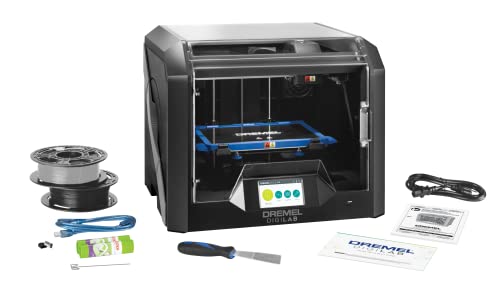
The Dremel 3D45-01 is designed for reliable professional and educational use. It features an all-metal 0.4 mm nozzle capable of reaching high print temperatures, a removable glass build plate that heats up to 100°C, and a user-friendly 5-inch full-color touch screen. The printer supports PLA and ABS-like materials with straightforward setup, allowing unboxing to first print in under 15 minutes. It carries a track record of industry recognition and educational partnerships that underscore its suitability for classrooms and small businesses.
DigiLab PLA-WHI-01 Filament, White

The white DigiLab PLA filament is formulated to improve print quality and reliability while extending filament shelf life. RFID-enabled detection and quantity tracking integrate with Dremel DigiLab 3D45 printers for streamlined inventory management. This plant-based material supports standard 1.75 mm diameter filaments and is suitable for a wide range of educational and prototyping projects where durable PLA parts are needed.
DigiLab PLA-BLA-01 Filament, Black

Black DigiLab PLA filament combines the same plant-based composition and RFID-enabled tracking as white filaments, with a rich color option that helps distinguish parts in assemblies and projects. The material is designed to support reliable, consistent prints on compatible 1.75 mm filament systems and pairs well with the DigiLab 3D45 printer for classroom or workshop environments where inventory control matters.
Dremel 3D40-FLX-01 DigiLab Printer
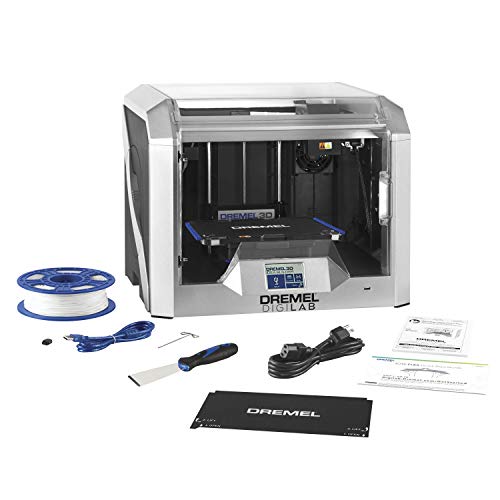
The 3D40-FLX-01 offers a flexible build plate that simplifies model removal, a robust all-metal extruder that minimizes clogs, and automated 9-point bed leveling. It prints up to 230°C for reliable PLA, PETG, and other compatible filaments. A color touchscreen and a fully enclosed, UL-listed frame make it a practical choice for teaching labs and makerspaces needing dependable, low-maintenance operation and quick turnaround on daily projects.
Dremel 3D45-EDU DigiLab Education Printer Bundle
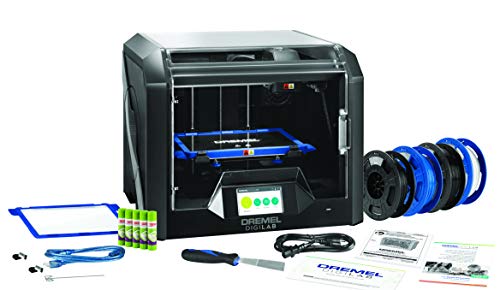
This education-focused package includes the 3D45 with additional lesson plans and materials designed for K-12 curricula. It supports eco-ABS, Nylon, PETG, and PLA, and benefits from an all-metal 0.4 mm nozzle that heats up to 280°C. The removable glass build plate reaches 100°C, enabling a wide range of filament choices. The bundle is backed by recognition from PCMag and Google for Education partnerships, making it a strong choice for schools and training centers seeking a scalable, standards-aligned 3D printing solution.
Buying Guide: Key Factors To Consider When Selecting Dremel 3D Printing Solutions
When evaluating Dremel options for 3D printing, consider the following perspectives to determine the best fit for your goals:
- Print quality and material support: Higher temperature capabilities and a robust extruder enable printing with a broader range of materials. For classrooms, PLA-based materials with reliable feeding are often preferred for ease of use and safety.
- Build plate and bed leveling: A flexible or easily removable build plate reduces post-processing time and simplifies model removal. Automated leveling helps maintain consistency across multiple users and sessions.
- Intended user and environment: Education bundles include lesson plans and PD resources, which can accelerate deployment in schools. For makerspaces, a flexible platform with strong support and upgrade options may be more important.
- Filament management: RFID-enabled filaments simplify inventory control and reduce downtime due to ran out materials. Consider the color variety and availability of compatible spools for project variety.
- Software and ecosystem: Look for intuitive interfaces, Windows/macOS compatibility, and compatibility with common slicing software. A Windows/Mac friendly setup minimizes learning curves for new users.
- Support and education resources: Bundles with tutorials, professional development, and customer support help ensure smooth operation, especially in teaching environments where reliability matters.
- Budget and footprint: Classroom and office spaces benefit from compact footprints and energy-efficient operation. Evaluate ongoing material costs and service plans to maintain long-term viability.
In summary, choosing between printers like the 3D45 family, the 3D40-FLX, or education-focused bundles hinges on material needs, classroom workflows, and the level of teacher or staff training available. Filament options with RFID tracking simplify stock management, while flexible build plates and automated leveling address daily production challenges in busy learning environments.