Answering the demand for durable, fast-cutting blades, this guide highlights top diamond grit reciprocating saw blades. These blades excel on hard, abrasive materials like fiber cement, masonry, cast iron, and fiberglass. The best picks are suited for contractors, DIY enthusiasts tackling thick material, and professionals who need longer blade life and cleaner cuts. Below you’ll find five highly relevant options, plus a concise buying guide and FAQs to help you choose the right blade for your project.
| Product | Best For | Key Benefit |
|---|---|---|
| PAYA TOOLS 9″ Diamond-Grit Edge Blade (3-Piece) | Thick fiber cement, masonry, fiberglass | Up to six times longer life; reinforced body for straighter cuts |
| Diablo 9″ Diamond Grit (DS0930DGX) | Cast iron, masonry, fiber cement | Up to 6X life; thin kerf for fast, precise cuts |
| PAYA TOOLS 6″ Diamond-Grit Edge Blade (3-Piece) | Smaller spaces and detailing on tough materials | Extended reach in tight spaces; similar long life |
| HAPU HARPOW TOOLS 9″ Diamond-Grit Edge (2-Pack) | Heavy-duty cutting on dense materials | Six-times life with reinforced body and thin kerf |
| BOSCH RCB9DG 9″ Diamond-Grit Edge | Block, brick, cast iron; heavy use | Vacuum brazed for durability; up to 3x life vs carbide |
Note: The table above summarizes each blade’s primary strengths and typical use case to help you compare at a glance. The listed features reflect the information provided by product descriptions and are intended as practical benchmarks for everyday tasks.
PAYA TOOLS 9-Inch Diamond-Grit Edge Blade, 3-Piece

The 9-inch blade is designed for hard materials like fiber cement, masonry and fiberglass. Features include a diamond-coated edge that delivers extended life and a reinforced body to minimize deflection and vibration. Best for users who need longer blade life in dense materials and improved straight cuts. Caution: cooler operation and steady feeds help maximize longevity in tough materials.
Who it’s best for: Contractors and DIYers working with thick fiber cement or masonry needing longer blade life and straighter cuts. Why selected: Combines long life with a practical 9-inch reach for larger cuts.
Diablo 9″ Diamond Grit Reciprocating Blade

Diablo’s 9-inch blade features a diamond grit edge that provides up to six times longer life than standard carbide blades, ideal for challenging materials like cast iron, masonry, and fiber cement. The thin kerf design enables faster cuts with precision. Perma-Shield coating adds heat and corrosion resistance for longer blade performance. Best for: Tough jobs where fast material removal and clean results matter most. Caution: Thin kerf blades may require more accurate control in very soft materials to avoid chatter.
PAYA TOOLS 6-Inch Diamond-Grit Edge Blade
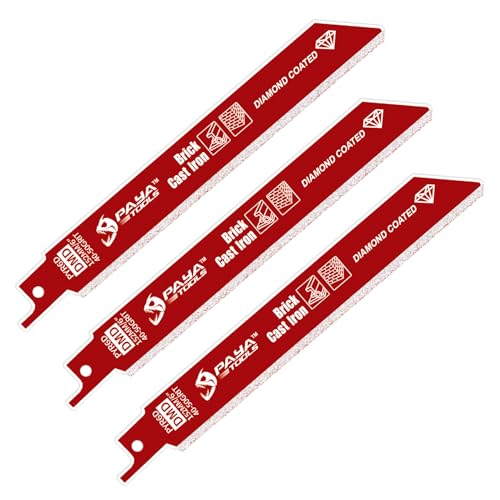
The 6-inch blade delivers reliable performance for tight spaces, cutting through dense materials with a reinforced body to reduce deflection. Its diamond grit edge aims at extending blade life by resisting dulling in abrasive materials. Best for: Detailed work in smaller projects or where space is limited. Limitation: May require more passes on very thick sections compared with 9-inch blades.
HAPU HARPOW TOOLS 9″ Diamond-Grit Edge (2-Pack)

HAPU HARPOW TOOLS offers a 9-inch blade in a two-pack, featuring a diamond grit edge with up to six-times longer life than standard blades. A reinforced body minimizes deflection in heavy-duty cuts, and the thin kerf supports faster material removal. Better for: Frequent, high-volume cutting in dense materials. Limitation: Two-pack may be more cost-efficient only for ongoing projects requiring multiple blades.
BOSCH RCB9DG 9″ Diamond-Grit Edge

BOSCH’s RCB9DG blade uses vacuum brazed diamond grit designed for heavy use, cutting through cinder block, brick, cast iron, and piping with durable edge performance. It can deliver up to three times longer life than carbide blades in abrasive tasks. Best for: Professional jobs requiring robust, long-lasting performance in tough materials. Limitation: Higher wear resistance can require more controlled feed to prevent heat buildup in some materials.
Buying Guide
What material will you cut?
Diamond grit blades excel on hard, abrasive materials like cast iron, masonry, fiber cement, brick, and fiberglass. For very thick or dense blocks, choose blades marketed for “cast iron” or “masonry” use and consider 9-inch blades for longer reach.
Blade life and kerf
Look for claims like “up to 6X life” or “thin kerf” for faster cuts. A thin kerf reduces material removal time but may require steadier guidance in soft or flexible materials to prevent wandering.
Reinforced body and vibration control
A reinforced body helps minimize blade deflection and vibration, improving straightness and reducing user fatigue during long cuts. This is especially valuable in dense materials where control matters most.
Coatings and durability
Coatings such as Perma-Shield or vacuum brazed diamond grit enhance heat resistance and corrosion protection. These features extend blade life in tough environments with high friction and temperature buildup.
Shop practicality
Size matters. A 9-inch blade covers larger cuts; a 6-inch blade fits tight spaces. Consider blade reach, compatibility with your saw, and your typical project scale when selecting blades.
Safety and technique
Use firm, steady pressure and let the blade do the work. Avoid forcing the blade through material, and replace blades showing glazing or missing grit to prevent ragged cuts.
FAQ
- How long does a diamond grit blade last? This depends on material, feed rate, and blade quality. High-quality blades with diamond grit usually last longer than carbide counterparts when cutting abrasive materials.
- Can I use these blades on standard wood-cutting saws? These blades are designed for metal and masonry materials; using them on wood can wear the blade faster and may reduce performance.
- What does “thin kerf” mean? Thin kerf blades remove less material per pass, increasing speed but requiring more precise guidance to avoid wandering.
- Are these blades interchangeable among brands? Blades are generally universal for reciprocating saws, but check arbor size and shank compatibility with your tool.
- Should I buy a two-pack? A two-pack is cost-efficient for frequent or ongoing projects that require multiple blades, reducing downtime for replacements.
- Is coating necessary? Coatings protect against heat and corrosion, extending blade life in harsh conditions but may add cost. If you cut aggressively, coatings are beneficial.