If you need a clean, fine finish on crosscuts, these crosscut table saw blades are the right choice for precision work. They’re ideal for woodworkers focusing on smooth surfaces, minimal tear-out, and fast feed rates. The top picks below suit different buyers: hobbyists seeking affordable tools, pros aiming for high-quality finishes, and DIYers needing reliable, low-vibration performance. A brief comparison table is provided to help you decide quickly.
Comparison at a glance:
- Freud LU88R010 — Best all-around for fine finish and smooth cuts.
- FOXBC 10 Inch — Better for budget-conscious shoppers needing a reliable finish blade.
- Diablo D1060X — Best for demanding woodwork with high durability.
- WEN BL1080 — Best for ultra-thin kerf cuts and versatile use.
- DEWALT DWA11080 — Best for optimized finish quality and stability.
Selected products and their primary focuses are summarized here for quick reference. Each product section below provides why it’s a good fit, who should consider it, and a practical caveat.
Freud LU88R010: 10″ Thin Kerf Fine Finish Crosscut Blade

Best for professional woodworkers needing a premium crosscut blade with a fine finish. This 10″ blade features a 5/8″ arbor, ATB grind, and a 0.090″ kerf with a .071″ plate and 60 teeth. The TiCo HI-Density carbide blend provides long edge life and clean, smooth cuts with a faster feed rate due to positive hook angles. Suitable for high-precision crosscuts in hardwoods and softwoods alike, but note the higher tooth count may slow aggressive ripping tasks.
Who it’s best for: professional shops and serious hobbyists who value finish quality and consistency. Why selected: it blends finish quality with durable carbide and a design optimized for smoother, straighter cuts.
Caution: for very thin materials or aggressive ripping, consider a dedicated ripping blade as this is a crosscut-focused design.
FOXBC 10 Inch Thin Kerf Fine Finish Crosscut Blade

Best for budget-conscious buyers who still want a high-quality finish. This 10″ blade uses a 60-tooth ATB configuration with a 5/8″ arbor and a 0.087″ kerf. It’s designed to deliver fast, durable, and smooth cuts with reduced vibration and noise. The blade is built with high-density tungsten carbide for toughness and wear resistance, making it a reliable all-around crosscut blade for common woodworking tasks.
Who it’s best for: DIYers and hobbyists seeking a cost-effective blade without sacrificing finish quality. Why selected: strong balance of price, durability, and smooth finishing performance.
Caution: slightly thicker kerf than ultra-thin options means marginally more material loss in very precise setups.
Diablo Fine Finish Saw Blade for Wood – D1060X

Best for demanding projects that require ultra-smooth cuts and reliable wear resistance. The Diablo D1060X features 60 Hi-ATB teeth with a 5/8″ arbor and a 0.098″ kerf. Its shock-resistant design reinforces carbide tips to withstand impacts, making it suitable for frequent crosscutting in tough woods. It offers a refined finish and stable performance across varied materials.
Who it’s best for: experienced woodworkers and production environments needing durability and consistent finishes. Why selected: high ATB tooth geometry plus robust carbide for long life.
Caution: may require careful setup on some older saws if arbor tolerances vary; ensure compatibility with your machine.
WEN BL1080 10-Inch 80-Tooth Ultra-Fine Finish Blade
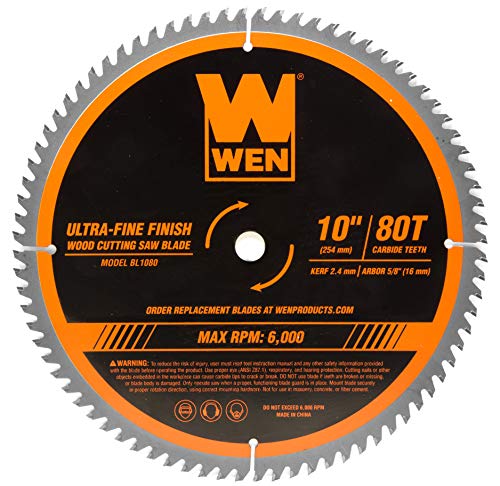
Best for ultra-fine finish needs and versatile table saw use. The WEN BL1080 offers a 10″ diameter, 5/8″ arbor, and an ultra-thin 1/10″ kerf for clean cuts with minimal material loss. Rated up to 6000 RPM, it’s designed to slice hard and softwoods with high precision. The blade supports smooth finishing and reduced resistance during cutting, which is valuable for shop setups requiring high-quality surface finishes.
Who it’s best for: crafters and shop setups prioritizing ultra-thin kerf and precise finishes. Why selected: near-elite finish potential at a more approachable price point.
Caution: ultra-thin kerf can be more sensitive to alignment and machine stiffness; ensure you have proper setup for best results.
CMT Orange Tools 255.080.10 Ultra Fine Finishing Blade

Best for precise fine finishing with controlled kerf. The CMT Orange Tools blade lists a 0.110″ kerf, 0.071″ plate, and Hi-ATB 30° tooth geometry designed for high-quality finishes on crosscuts. The blade is optimized for clean cuts in a variety of woods, including panels and hardwoods, making it a steady performer in finish-focused tasks.
Who it’s best for: professionals and serious hobbyists who want precise crosscuts without sacrificing blade life. Why selected: robust Hi-ATB geometry tailored for fine finish work.
Caution: higher kerf compared with ultra-thin blades; may not be ideal when material is precious or when aligning very tight tolerances.
DEWALT Table Saw Blade, 10 inch, 80 Tooth, Fine Finish

Best for improved finish quality with robust design. The DEWALT 10″ blade features 80 teeth and an optimized body slot design to reduce vibration, aimed at delivering high-accuracy crosscuts. The blade is designed to provide long life and consistent finishes across various woods, leveraging a refined tooth geometry for cleaner cuts than standard blades.
Who it’s best for: workshop users seeking reliable finish quality and stable operation. Why selected: a well-known brand with a design focus on reduced vibration and smoother finishes.
Caution: extremely fine finishes may require careful feed rate control to prevent tear-out on highly figured woods.
Buying Guide
What to consider when choosing a crosscut blade for a table saw
- Kerf width: Ultra-thin kerf blades (about 0.1″ or thinner) reduce material waste and require less motor power but can be more sensitive to alignment and saw stiffness. Thicker kerfs offer durability and stability but remove more material.
- Tooth geometry: ATB (Alternate Top Bevel) blades excel at fine finishes on softwoods and hardwoods. Hi-ATB blades provide improved finish for tough materials and heavy crosscuts.
- Arbor compatibility: Most 10″ or 9″ blades use a 5/8″ arbor. Ensure your saw’s arbor matches the blade specification to avoid runout or mounting issues.
- Plate thickness: A thinner blade plate can reduce resistance and heat buildup, contributing to smoother cuts and longer blade life in precision work.
- Material and coating: Carbide-tipped blades with premium blends (like TiCo) offer longer life and smoother cuts. Reinforced tips help withstand impacts during tough cuts.
- Feed rate and vibration: Blades designed to minimize vibration improve cut quality and operator comfort. Consider blades designed with vibration-reducing geometries on machines you use often.
- Price-to-performance: Balance blade cost with expected cut quality and lifespan. For finish work, investing in a blade with quality carbide and a proven finish history is often worthwhile.
Frequently Asked Questions
- What is the difference between ATB and Hi-ATB blades?
– ATB blades have angled teeth for smooth cuts; Hi-ATB blades have a steeper angle for finer finishes on challenging woods. - Should I use a thin-kerf blade for all cuts?
– Thin-kerf blades reduce material loss and require less power, but may be less forgiving on very old or unstable saws. Use based on machine stiffness and user needs. - Which blade is best for hardwoods?
– Blades with Hi-ATB or premium carbide and a fine finish design tend to perform well on hardwoods, providing clean surfaces with minimal tear-out. - Can I use a miter saw blade on a table saw?
– Some blades are universal, but crosscut blades are specifically designed for crosscuts; ensure the blade geometry and mounting fit your saw for best results. - How important is kerf for precision cuts?
– Kerf width affects material loss and accuracy. Ultra-thin kerf blades are best when material conservation is critical and your saw is properly aligned. - Is vibration an issue with crosscut blades?
– Yes, vibration can affect finish quality. Choose blades designed to minimize vibration and ensure your table saw is properly tuned.