Choosing the right cleaner for concrete pavers, driveways, and patios can protect surfaces and extend their life. This guide highlights five top options, explains how they work, and compares key features. Each product is built to tackle oil, rust, tire marks, and hard water deposits while staying mindful of environmental impact and surface compatibility.
| Product | Brand | Key Benefit |
|---|---|---|
| Simple Green Oxy Solve Concrete and Driveway Cleaner | Simple Green | Powerful peroxide formula lifts grime without harsh chemicals |
| Serveon Sealants Concrete Cleaner | Serveon Sealants | Concentrated formula for oil stains and hard water deposits |
| Kärcher Concrete & Driveway Cleaner | Kärcher | Highly concentrated, makes up to 40 gal |
| Terminator-HSD Concrete Oil Stain Remover | Terminator-HSD | Eco-friendly bio-remediation of oil stains |
| Zep Driveway, Masonry & Concrete Cleaner and Degreaser | Zep | Construction-grade degreaser for tough stains |
Simple Green Oxy Solve Concrete Cleaner

Simple Green Oxy Solve combines a peroxide-based formula with surfactants to lift tough grime from concrete and masonry surfaces. It targets oil stains, rust, grease, and automotive fluids without relying on harsh solvents. The product is unscented, making it family-friendly for regular cleaning of driveways, walkways, patios, and other masonry areas. Its cleaning power comes from oxidation, which helps break bonds between soil and concrete while remaining biodegradable and relatively safe for many surfaces when used as directed.
Serveon Sealants Concrete Cleaner

This concentrated cleaner is designed to penetrate below the surface to lift dirt, grime, oil stains, and mineral deposits from cement and limestone. It supports rust and oil stain removal on driveways, pavers, patios, and garage floors, making it suitable for outdoor and indoor use. When applied at full strength, it can also prep surfaces for sealers or paints, improving adhesion and long-term performance. The product emphasizes a thorough clean that addresses both common staining and surface preparation needs.
Kärcher Concrete & Driveway Cleaner
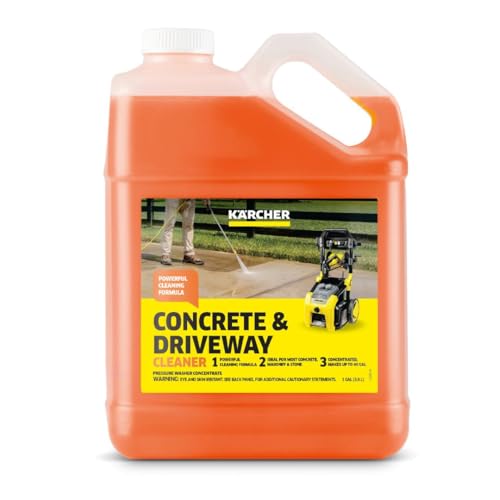
Kärcher’s cleaner is highly concentrated and designed for hard surfaces like concrete, brick, masonry, and stone. It excels at removing oils, dirt, and grime and makes up to 40 gallons of ready-to-use cleaner. The formula is engineered for use with pressure washing equipment and offers a versatile option for large driveways or long-term maintenance programs. Its strength makes it effective for stubborn stains while remaining suitable for sensitive surfaces when used properly and tested first.
Terminator-HSD Concrete Oil Stain Remover

Terminator-HSD presents an eco-friendly bioremediation approach to oil and grease stains on concrete, asphalt, pavers, and other hard surfaces. The product is a powder that can be spread over large stains for broad coverage. It emphasizes a low environmental impact message by transforming stains through natural by-products such as CO2 and water, reducing concerns about rinse water. It is designed for heavy staining and large areas, offering an option when traditional cleaners require extensive application.
Zep Driveway, Masonry & Concrete Cleaner and Degreaser

Zep offers a construction-grade degreaser designed to tackle tough stains on concrete, brick, asphalt, pavers, and walkways. It’s positioned for professionals but accessible for homeowners tackling extensive cleaning projects. Directions emphasize surface compatibility testing, applying with a mop or sprayer, scrubbing, and thorough rinsing. The formulation targets tire marks, oil, dirt, and grease, making it a strong option for restoring large outdoor surfaces.
Buying Guide: Key Purchase Considerations
- Surface compatibility: Check whether the cleaner is non-abrasive and safe for concrete, pavers, brick, or stone. Dilution requirements and recommended contact times influence use on delicate finishes.
- Stain type and coverage: Oil and rust stains require different approaches. Concentrated formulas may cover larger areas but need proper handling and ventilation.
- Environmental impact: Eco-friendly or biodegradable options minimize rinse-water concerns and runoff. Consider whether the product supports downstream water management in your area.
- Application method: Sprayers, brushes, or soak-and-rinse approaches affect labor and time. Some products are ready-to-use, while others require dilution.
- Surface preparation: Some cleaners double as surface-etch preparations for sealers or paints, aiding adhesion for subsequent coatings. Follow with a test area first.
- Odor and safety: Unscented formulas or those with natural scents can improve user comfort. Personal protective equipment may be advised for concentrated products.
- Disposal and runoff: Respect local guidelines for disposing of spent solution and rinse water, especially on public or shared spaces.
- Cost-efficiency: Compare dilution yields (gallons of cleaner per bottle) and the total area covered to determine long-term value.
- Brand considerations: Reputable brands may provide clearer instructions, better customer support, and compatibility with pressure washing equipment.
When choosing, consider the stain sources (oil, rust, dirt), surface type, and maintenance goals. For regular upkeep, a milder, biodegradable option paired with periodic deep cleaning often yields the best long-term results. For heavy staining, a concentrated cleaner paired with a dedicated application and proper rinsing can restore color and texture while preparing the surface for sealing or coating.