Finding the right circular saw for wood projects hinges on power, maneuverability, and accuracy. This guide highlights five reliable models that cover a range of needs—from compact, beginner-friendly options to robust, corded machines for seasoned DIYers. Whether you’re building a deck, framing a wall, or drafting furniture, these picks are best for different buyers: hobbyists seeking light, easy handling; homeowners tackling weekend projects; and professionals needing solid all-around performance.
Product snapshot: This quick table helps compare versatility, power, and primary strengths. It’s designed to help buyers decide which saw fits their typical tasks, handling style, and workspace setup.
| Product | Power | Bevel | Best For |
|---|---|---|---|
| SKIL 15 Amp 7-1/4″ (5280-01) | 15 Amp | 0–51° | Powerful cuts, contractor-friendly |
| Skil 5080-01 13-Amp 7-1/4″ | 13 Amp | 0–51° | Great balance of power and weight |
| DEWALT 20V Max 6-1/2″ (DCS391B) | Cordless 20V | 0–50° | Cordless convenience, light weight |
| GALAX PRO 11A Circular Saw | 11 Amp | 0–90° | Budget-friendly, solid basics |
| SEESII Mini Circular Saw | 4.8 Amp | 0–45° | Compact tasks, cut accuracy |
SKIL 15 Amp 7-1/4 Inch Circular Saw with Laser
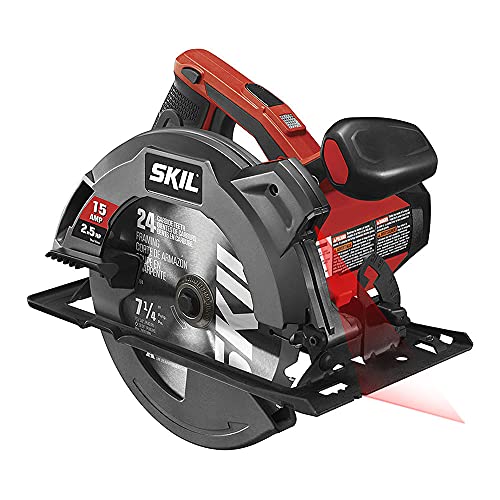
The SKIL 15 Amp model offers a robust motor and a single-beam laser guide to improve alignment on long cuts. The 7-1/4 inch carbide-tipped blade enables fast, deep cuts suitable for framing and deck projects. Bevel capacity reaches 51 degrees with a 45-degree positive stop, giving versatility for mitered joints. This saw is best for hobbyists or DIY enthusiasts who need reliable power and straightforward operation without excessive weight.
Who it’s best for: buyers who want a strong, mid-weight saw with a laser assist to stay on line through rough-cut tasks. Why selected: the combination of 15-amp power, convenient blade change via spindle lock, and a broad bevel range covers most wood-cutting needs in a typical workshop. Caution: thicker or denser hardwoods may require slower feeds and more blade care to prevent burning.
Skil 5080-01 13-Amp 7-1/4″ Circular Saw

The Skil 5080-01 uses a 13-amp motor, offering solid power with a lighter frame to reduce user fatigue during longer sessions. It features a 51-degree bevel with positive stops, enabling accurate angled cuts for framing and shelving. This model is better for users who want a balance of power and portability without stepping up to heavier professional units.
Who it’s best for: those upgrading from a beginner saw or seeking a lighter alternative that still handles most common wood cuts. Why selected: the lighter weight, combined with useful bevel stops, makes it a practical all-around option. Caution: not designed for heavy hardwood demolition; efficiency improves with sharp blades and proper feed technique.
DEWALT 20V Max Circular Saw (DCS391B)

This DEWALT model is a cordless sidewinder with a 6-1/2 inch blade and a high-performance 5150 RPM motor. Its magnesium shoe provides jobsite durability while keeping weight down, which helps on vertical cuts and overhead work. The design emphasizes comfort and control with a rubber over-molded grip. It’s best for contractors or DIYers who prioritize cordless convenience and reduced fatigue for extended use.
Who it’s best for: buyers who need mobility and quick setup without a cord to manage. Why selected: the combination of a magnesium shoe for durability and a robust motor makes it a dependable, portable option. Caution: battery life and runtime depend on battery choice and task complexity; plan for extra batteries for longer sessions.
GALAX PRO 11A Circular Saw

The GALAX PRO model delivers an 11-amp motor paired with a 6000 RPM no-load speed for quick wood cutting. It includes adjustable depth and bevel settings with a maximum 90-degree depth of 2-7/16 inches, making it versatile for framing and simple cabinetry tasks. Its safety features and a dual-insurance switch offer added protection during operation. Best for budget-conscious buyers who still want solid consistency.
Who it’s best for: those who need a cost-effective option for standard wood projects and occasional angled cuts. Why selected: strong RPM and adjustable depth/bevel help cover a wide range of common cuts without overspending. Caution: as an entry-level tool, it may lag behind higher-end models on dense hardwoods or demanding repeats.
SEESII Mini Circular Saw
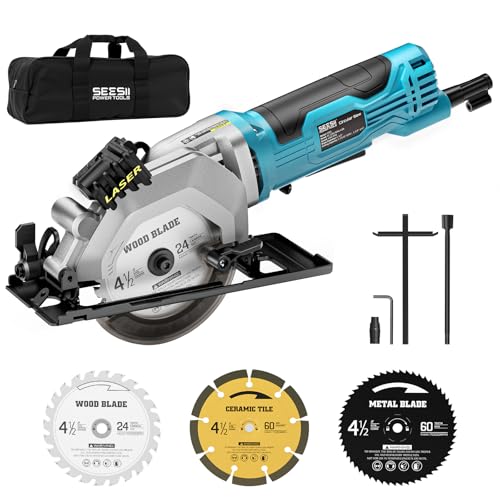
The SEESII mini circular saw combines a compact form with a laser guide and adjustable settings. It comes with multiple blades designed for wood, metal, tile, and plastic, expanding its utility for DIY projects beyond pure woodworking. Its laser alignment helps beginners achieve straighter cuts with shorter boards or tight spaces. Best for beginners or crafters who need precise, small-scale cuts and multi-material capability.
Who it’s best for: DIYers working in tight spaces or who want a versatile, multi-material tool in a compact package. Why selected: the bundled blades and laser guide enable quick setup and precise cuts for smaller projects. Caution: smaller blade diameter means shallower cuts and potentially slower progress on larger boards; not ideal for heavy-duty framing.
Buying Guide: Key Purchase Considerations
- Power vs. portability: Decide between corded (more consistent power) and cordless (more mobility). For large framing tasks, a corded model often performs better; for quick deck projects in varied spaces, cordless can be decisive.
- Blade size and cut capacity: A 7-1/4″ blade is standard for most framing and woodworking. Bevel range (0–45° or 0–51°) affects the flexibility of miter cuts.
- Bevel stops and laser guides: Positive stops and laser lines help ensure accuracy, especially for beginners and on repetitive cuts.
- Weight and ergonomics: Lighter saws reduce fatigue during extended sessions, though very light units may compromise stability on large projects.
- Dust collection: Integrated or compatible vacuum attachments improve workspace cleanliness and visibility, particularly for fine dust.
- Blade compatibility and replacement: Ensure blades available fit the saw’s arbor size and that blade changes are straightforward with a spindle lock or quick-change system.
FAQ
- What should I look for in a first circular saw?
- Is a cordless circular saw less powerful than a corded one?
- What blade is best for wood?
- Can I use the same blade for metal or tile?
- How important is bevel capacity?
- Is dust collection essential?
Choose a model with a comfortable grip, a solid base plate, adequate power for your typical materials, and a reliable blade system. A laser guide or cut line indicator helps with accuracy.
Generally, cordless saws have lower peak power and runtime limits, but modern 20V–60V models can handle most hobbyist tasks and light framing. Consider project length and battery strategy.
A high-quality carbide-tipped 7-1/4 inch blade is standard for wood. For hardwoods or veneer, consider a blade with a higher tooth count and proper Kerf design.
No. Use dedicated blades for wood, metal, and tile. Some compact saws include multiple blades, which improves versatility but requires swapping as needed.
Bevel capacity expands the range of cuts you can make without flipping the workpiece. A 0–50° or 0–51° range is usually sufficient for most household tasks.
Yes for visibility and health. A dust-collection attachment or vac-ready design helps keep the work area cleaner and reduces airborne particles.